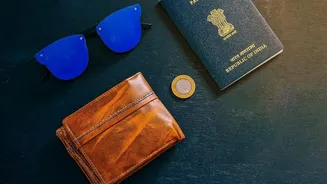








Start with Documents and a Budget
Before you even think about destinations, get your passport sorted. If you don't have one, apply immediately as it can take weeks. If you do have one, ensure it's valid for at least six months beyond your planned return date, a strict rule for many countries.
Next, create a realistic budget. A first trip to Southeast Asia (like Thailand or Bali) can range from ₹50,000 to ₹80,000 for a week, while Europe will be significantly higher, often starting at ₹1,50,000. Your budget should cover flights, accommodation, visas, food, local transport, and a buffer for unexpected costs. For an easy start, consider destinations like Thailand, Dubai, or Singapore, which have simpler visa processes for Indian passport holders.
Book Flights and Stays Strategically
Flights are often the biggest expense, so booking smart is crucial. Aim to book around 6-8 weeks in advance for the best prices. Using flight comparison sites like Skyscanner or Google Flights can help you find the cheapest days to fly. Be wary of flights with very long or multiple layovers; a slightly more expensive direct flight can save you a lot of hassle and exhaustion. For accommodation, read recent reviews before booking. For a first trip, staying in a central, tourist-friendly area can make navigation much easier. Don't just look for the cheapest option; focus on the best value in terms of safety, location, and comfort.
Handle Your Money Wisely
Managing money abroad requires a mixed approach. Relying solely on cash is risky, and using only one card can lead to trouble if it's blocked or lost. Before you leave, inform your bank of your travel dates to prevent your debit or credit cards from being frozen due to fraud alerts. The best strategy is a combination: a multi-currency forex card for most major purchases, a small amount of local currency in cash for taxis and small vendors, and your regular credit or debit card as a backup. Avoid exchanging currency at the airport, where rates are typically much higher. Getting a forex card and some cash from your bank or an authorised dealer in India before you travel is often the most cost-effective option.
Pack Smart and Stay Connected
Overpacking is a classic first-timer mistake. Stick to essentials, choose clothes you can layer, and remember that you can likely buy anything you forget at your destination. Always pack critical items in your carry-on luggage: your passport, visa, medicines, chargers, a change of clothes, and any valuables. Power banks must go in your cabin bag. A universal travel adapter is also a must-have, as plug points vary globally. To avoid huge phone bills, don't use your Indian SIM on international roaming. Instead, buy a local SIM card at your destination airport or download an e-SIM before you fly for affordable data. Downloading offline maps for your destination can also be a lifesaver.
Navigate the Airport and Arrival
For any international flight, arrive at the airport at least three hours early. The process is straightforward: airline check-in, followed by Indian immigration (where your passport is stamped for exit), then security check, and finally boarding. Keep your passport and boarding pass handy. Upon arrival in the foreign country, you'll go through their immigration. Have your hotel address and return flight details ready, as the officer might ask for them. Answer questions calmly and honestly. Once you clear immigration, you'll collect your checked luggage and pass through customs. After that, you are officially ready to begin your adventure.