







The Persistent Problem of Uranium
Uranium is a radioactive heavy metal that poses a significant threat to ecosystems and human health. When sites from mining, weapons production, or power generation become contaminated, the stakes are high. The main issue is solubility. In its hexavalent
state, or U(VI), uranium dissolves easily in water. This allows it to migrate through groundwater, spreading far from the original source and potentially entering drinking water supplies. For decades, the challenge has been to lock this mobile uranium in place, a process that is often costly, energy-intensive, and can create secondary waste streams.
Harnessing Nature's Cleanup Crew
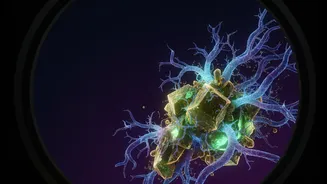
Enter bioremediation, a strategy that leverages the metabolic processes of naturally occurring microorganisms to treat contaminants. Certain types of anaerobic bacteria, such as those from the Geobacter and Shewanella families, have a remarkable ability: they can essentially "breathe" metals. In an oxygen-poor environment, these microbes can use U(VI) as an electron acceptor in their respiratory process, much like humans use oxygen. This metabolic activity converts the soluble U(VI) into insoluble tetravalent uranium, or U(IV). The U(IV) then precipitates out of the water as a solid mineral, effectively immobilizing the toxic contaminant.
A Complicated Success Story
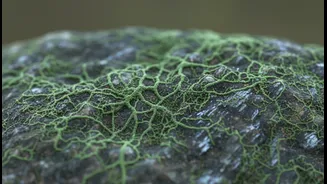
Early field studies were promising. By injecting simple carbon food sources like acetate into contaminated groundwater, scientists could stimulate the growth of native Geobacter populations, leading to a significant drop in dissolved uranium concentrations. Lab studies further showed that bacteria living in biofilms—slimy, matrix-encased colonies—were particularly effective, able to tolerate high uranium concentrations and sustain the reduction process. However, the headline-making success raised a critical question: how permanent is this fix? The long-term stability of the immobilized uranium has become a major concern for scientists.
The Question of Long-Term Stability
The primary "new question" revolves around reoxidation. If environmental conditions change and oxygenated water returns to a remediated site, the solid, immobilized U(IV) can be reoxidized back into soluble U(VI), releasing the contaminant back into the groundwater. Some studies showed this process can happen rapidly, on the order of minutes. Other research has focused on the exact form of the immobilized uranium. It was once thought that a stable crystalline mineral called uraninite was the main byproduct, but newer findings show that non-crystalline U(IV) is often abundant, and this form is more vulnerable to reoxidation. One study found that even after a year of aging, these non-crystalline forms did not transform into a more stable state, remaining susceptible to remobilization.
An Unexpected and Stable Compound
However, very recent research from July 2026 has introduced another fascinating wrinkle. Scientists studying water from a flooded German uranium mine found that when they fed native bacteria glycerol, the microbes removed about 95% of the dissolved uranium. They converted it into a rare, pentavalent form of uranium, U(V), which then combined with iron to form a new, unnamed compound: FeU(V)O4. Remarkably, previous analysis of this same compound, found in soil contaminated by uranium ammunition, showed it had remained stable for over 25 years, even when exposed to oxygen. This discovery suggests that under the right conditions, bacteria might create a far more stable end-product than previously thought, offering a new pathway for long-term remediation.