


The Foundation: Aromatic Rice and Roasted Dal
The soul of bhoger khichuri lies in its two main ingredients: rice and dal. The authentic taste comes from using Gobindobhog rice, a short-grain, aromatic variety from West Bengal. This isn't just any rice; its natural buttery fragrance and slightly sticky
texture are crucial for that divine flavour. Unlike long-grain rice like basmati, Gobindobhog blends beautifully with the dal, creating a creamy, unified consistency. The second non-negotiable step is dry roasting the Sona Moong dal. This process is what gives the khichuri its signature nutty aroma and deeper flavour, a characteristic that sets it apart from everyday khichdi. Skipping this step is like trying to build a temple without a foundation; the structure might stand, but the spirit will be missing.
The Mixed Vegetable Medley: Labra’s Charm
Labra is not just a simple mixed vegetable side dish; it's a carefully orchestrated symphony of seasonal produce. This semi-dry curry, which traditionally accompanies the khichuri, includes a medley of vegetables like pumpkin, potatoes, brinjal, cauliflower, and beans. The key to its unique taste is twofold. First, the use of Panch Phoran—a Bengali five-spice blend of mustard, fennel, cumin, nigella, and fenugreek seeds—in the tempering process adds a complex layer of flavour that is quintessentially Bengali. Second, many of the vegetables are fried separately in mustard oil before being combined in the main pot. This ensures each vegetable retains some of its individual texture and taste, preventing it from becoming a uniform mush.
The Flavour Enhancers: Ghee and Bhaja Moshla
Generosity with ghee is a hallmark of bhog. It's not just a cooking medium but a finishing touch that adds a rich, unmistakable aroma and flavour. A final spoonful stirred in just before serving takes the khichuri from good to divine. Alongside ghee, another secret weapon is 'Bhaja Moshla'. This is a dry-roasted spice powder, typically made by grinding cumin seeds, coriander seeds, and dried red chillies, sometimes with bay leaves and other whole spices. This powder is often sprinkled on top of the khichuri or labra at the end, providing a final burst of smoky, aromatic flavour that elevates the entire dish. While recipes for Bhaja Moshla vary, the simplest versions focus on cumin and red chilli.
Cooking Technique: Patience and Scale
One of the reasons pandal bhog tastes so unique is the sheer scale on which it is cooked. The large, heavy-bottomed pots (degchis) distribute heat more evenly, allowing the khichuri to cook slowly without scorching. This slow cooking process lets the flavours of the rice, dal, and spices meld together perfectly. At home, replicating this means using a heavy-bottomed pot and resisting the urge to rush the process. Furthermore, bhog is always 'niramish', meaning it contains no onion or garlic, which are considered non-vegetarian in this context. The flavour profile relies entirely on ginger, whole spices, and the quality of the primary ingredients.
The Intangible Ingredient: Community and Devotion
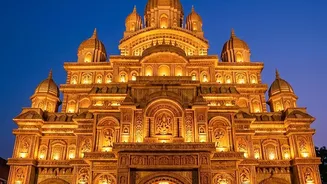
Ultimately, there is one ingredient that cannot be bought at any store: the atmosphere of the puja itself. The bhog is cooked as an offering to the goddess, infused with devotion and a sense of community. It is cooked in massive quantities to be shared with hundreds of devotees, and that act of community sharing is believed to enhance its taste. The sounds of the dhaak, the fragrance of incense, and the collective joy of the festival all contribute to the experience. While you may not be able to replicate the pandal environment, cooking with a sense of joy, patience, and the intention of sharing a meal with loved ones can bring you remarkably close to that cherished flavour.