






The End of 'Grunt Work' as We Know It
For decades, internships were a rite of passage where freshers cut their teeth on foundational, often tedious, tasks. Think data entry, transcribing meetings, or basic report generation. A recent study by Cognizant and Pearson, however, reveals a seismic
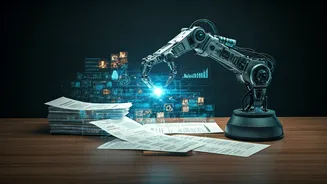
shift in India: AI is already performing 37% of these entry-level tasks, a figure higher than the global average of 33%. This automation of routine work is fundamentally altering the role of an intern. Instead of being assigned work that AI can do faster and more efficiently, companies now expect interns to work alongside these systems. The new entry-level role is evolving into one of AI oversight—where interns are expected to supervise AI, validate its outputs, and apply human judgment to its results.
The New Skillset in Demand: AI Literacy for All
This new reality demands a new skillset, and it’s not just for tech roles. While deep technical knowledge in machine learning, Python, and frameworks like TensorFlow is crucial for specialised AI internships, a broader 'AI literacy' is becoming a baseline expectation across all functions. According to one report, an overwhelming 91% of organisations in India now place greater importance on AI skills even for non-technical roles in areas like marketing, HR, and finance. Employers are looking for interns who can use generative AI for research, refine AI-generated content for clarity and tone, and understand how to write effective prompts. This practical skill set demonstrates an ability to use AI as a tool to enhance productivity, analyse data, and contribute to higher-value tasks from the outset.
Human-Centric Skills Are More Valuable Than Ever
Paradoxically, as technology takes over repetitive tasks, uniquely human skills have become more critical. With AI handling the 'what', employers need interns who can handle the 'why' and 'how'. A survey of HR leaders found that 97% believe soft skills have become more important since AI adoption accelerated. Skills like critical thinking, communication, collaboration, and complex problem-solving are now at a premium. Companies are even showing increased interest in candidates with liberal arts degrees, valuing their broader educational backgrounds. The ideal intern in 2026 is not a passive learner but an active problem-solver who can interpret AI-driven insights, communicate them effectively, and work with a team to make strategic decisions.
Your Game Plan: How to Become an AI-Ready Fresher
For students and recent graduates, this shift requires a proactive approach. Merely having a degree is no longer sufficient. The first step is to build foundational AI literacy. This can be achieved through online courses, workshops, and getting hands-on with publicly available AI tools. Second, build a portfolio that showcases practical application. This doesn't have to be a complex coding project; it could involve using AI for market research analysis, creating an AI-assisted content campaign, or building a simple AI agent. When applying for internships, your CV should explicitly highlight these AI skills and projects. Finally, be prepared to discuss AI in interviews. Articulate how you can use AI tools to contribute to the company's goals and demonstrate that you are an adaptable, forward-thinking candidate ready for the modern workplace.