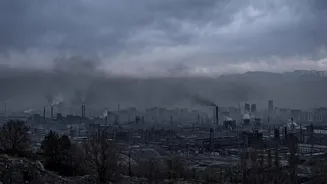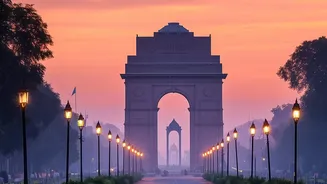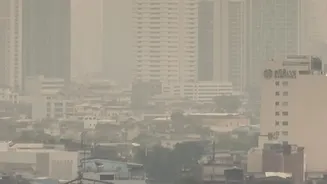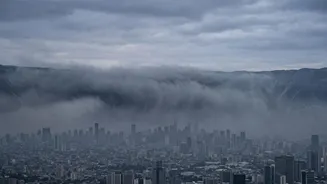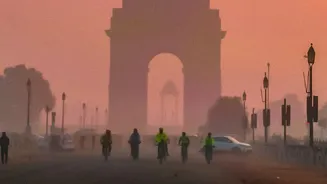







As winter arrives in North India, so does a familiar, unwelcome guest: a thick blanket of toxic smog. The crisp, cool air is replaced by a hazardous haze that chokes cities and sends the Air Quality Index (AQI) soaring to alarming levels.
A Perfect Meteorological Storm
The primary reason
for the sharp decline in air quality is a weather phenomenon called temperature inversion. Normally, the air near the Earth's surface is warmer and rises, dispersing pollutants. In winter, however, the ground cools rapidly, leaving a layer of cold, dense air near the surface, trapped underneath a layer of warmer air. This acts like a lid, preventing pollutants from escaping vertically. Compounding this is the fact that winter in North India is marked by low wind speeds. This atmospheric stagnation means there is little to no horizontal dispersal of the pollutants that are continuously pumped into the air, causing them to accumulate in the air we breathe.
The Geographic Bowl Effect
The geography of the Indo-Gangetic Plain plays a crucial role in this annual crisis. The region is effectively a large, land-locked 'bowl', hemmed in by the Himalayas to the north and the Vindhya and Satpura ranges to the south. This topography restricts the movement of air, trapping pollution over the plains. Dust from the Thar Desert to the west can also be carried into the region, adding to the particulate matter load. Historically, the Aravalli Range acted as a natural barrier against this dust, but degradation due to deforestation and mining has weakened this defence.
The Seasonal Surge from Stubble Burning
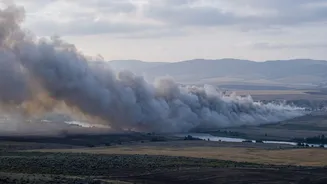
While meteorological and geographical factors set the stage, it is the massive infusion of smoke from agricultural fires that often pushes the AQI from 'poor' to 'severe'. In October and November, farmers in Punjab, Haryana, and western Uttar Pradesh burn the leftover stubble from their paddy harvest to quickly clear fields for the next crop. This practice releases enormous plumes of smoke containing fine particulate matter (PM2.5), which north-westerly winds carry directly towards Delhi and the surrounding National Capital Region (NCR). While the contribution of farm fires can vary, it can account for a significant percentage of Delhi's pollution on the worst days.
The Constant Urban Pollution Baseline
It's a mistake to blame stubble burning alone. North Indian cities suffer from a high baseline of pollution yearround, which is simply exacerbated in winter. Major local sources continuously foul the air. Vehicular emissions are a massive and consistent contributor, accounting for a large share of pollutants like PM2.5 and toxic compounds. Industrial emissions from factories and coalfired power plants add to the burden. Dust from the vast number of construction sites and unpaved roads is another significant source of particulate matter. Finally, the burning of biomass for heating during colder months and the open burning of municipal waste add to the toxic cocktail.
The Chemistry of Smog
The visible smog is more than just trapped smoke; it's a complex chemical soup. Pollutants like sulphur dioxide and nitrogen oxides, released from burning fossil fuels, react with other compounds in the atmosphere to form 'secondary particulate matter'. These secondary particles, which include ammonium sulfate and ammonium nitrate, make up a substantial portion of the PM2.5 that poses serious health risks. These fine particles are particularly dangerous because they can penetrate deep into the lungs and enter the bloodstream, leading to a surge in respiratory and cardiovascular illnesses, especially among children and the elderly.