





The Sneaky Problem of Imbalance
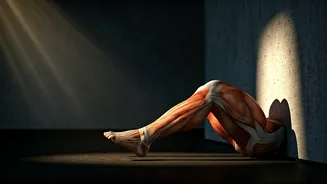
Muscle imbalances occur when one muscle or muscle group is stronger, weaker, tighter, or more active than its opposing or corresponding muscle on the other side of the body. Think about how you always carry your heavy bag on the same shoulder, or how a cricketer’s
bowling arm is far more developed than their non-bowling arm. Even prolonged sitting at a desk can cause imbalances between the front and back of your body. Over time, these asymmetries can lead to poor posture, decreased performance in your workouts, and even chronic pain or injury as the body compensates for the weaker link in the chain.
Why Working One Side Matters
This is where unilateral training comes in. Unilateral exercises involve working one limb at a time—think of a single-arm row or a single-leg deadlift. When you perform a standard two-sided exercise, like a barbell squat, your stronger side can unconsciously take over, masking and even worsening the imbalance. By isolating one side, you force the weaker muscles to pull their own weight. There's no hiding. This not only strengthens the target muscle but also fires up your core, which has to work overtime to prevent your body from rotating or tipping over. The result is better stability, improved mind-muscle connection, and a direct path to addressing those strength discrepancies.
The Magic of a Slower Pace
Now, let’s add the “slow” element. Rushing through your reps using momentum is a common mistake that lets your dominant, stronger muscles take over. By deliberately slowing down each movement—for instance, taking three to four seconds on the lifting phase and another three to four seconds on the lowering phase—you increase the muscle’s time under tension. This is a powerful stimulus for muscle growth and strength. More importantly, it forces you to maintain control through the entire range of motion. This mindful approach helps you truly feel the target muscle working, ensuring the weaker side gets the focused effort it needs to catch up.
Your Best Tool: The Resistance Band
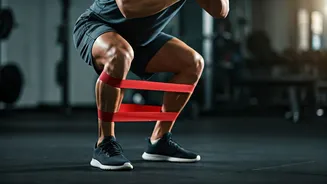
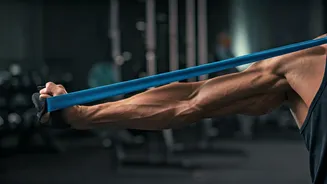
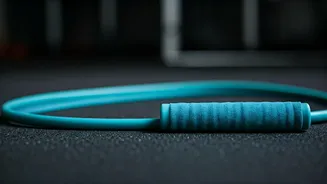
Resistance bands are the perfect partner for this technique. Unlike free weights, which are heaviest at one point in the lift due to gravity, bands provide accommodating resistance. This means the tension increases as you stretch the band further. This forces your muscles to work harder at the end of the range of motion, which is often where they are weakest. Bands are also low-impact, portable, and versatile. They allow for movement in multiple planes, making them ideal for targeting the small, stabilising muscles that are often neglected and contribute to imbalances.
Three Moves to Get You Started
Ready to try it? Focus on perfect form, not heavy resistance. Start with a light band. 1. Single-Arm Banded Row: Secure a band to a sturdy anchor point at chest height. Stand facing it, grab the band with one hand, and step back until there's light tension. Keeping your core tight and shoulders down, slowly pull the band toward your chest, squeezing your shoulder blade. Pause, then slowly return to the start. Complete all reps on one side before switching. 2. Banded Single-Leg RDL (Romanian Deadlift): Stand on one end of the band with your left foot, holding the other end in your right hand. Keeping your left leg slightly bent, slowly hinge at your hips, extending your right leg straight behind you for balance. Lower your torso until it’s nearly parallel to the floor. Feel the stretch in your left hamstring. Slowly return to standing. 3. Pallof Press: Anchor the band at chest height and stand sideways to it. Grab the band with both hands and step away until you feel tension trying to rotate your torso. Hold the band at your chest, then slowly press your hands straight out in front of you, resisting the urge to twist. Hold for a second, then slowly bring your hands back to your chest. This is a fantastic core anti-rotation exercise.