





Preparing Your Hair
Success starts before the first strand is crossed. Begin by brushing your hair thoroughly to remove any knots or tangles. While it may seem counterintuitive, fishtail braids often hold better in hair that is not freshly washed. Day-old hair has a bit
more texture and grip, which helps prevent the fine strands from slipping. If your hair is clean and silky, you can mimic this effect by applying a texturizing spray or a light dusting of dry shampoo. This prep work ensures the small sections you'll be working with are smooth and easy to handle, preventing snags that can disrupt the braid's pattern.
The Core Technique: A Two-Strand Weave
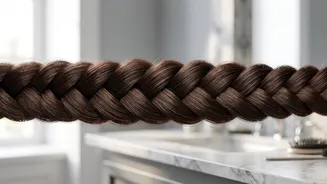
Unlike a classic three-strand braid, a fishtail uses only two main sections. Start by gathering your hair, either into a low ponytail for an easier start or simply divided at the nape of your neck. Split your hair into two large, equal sections. Now, the signature move: take a thin strand of hair, about a quarter-inch thick, from the outer edge of the right section. Cross this thin strand over the top of the right section and join it with the left section. Then, repeat the motion on the other side. Take a thin strand from the outer edge of the left section, cross it over the top of the left section, and add it to the inside of the right section. That's it. This simple, repetitive process of crossing small outer pieces to the opposite side is what builds the fishtail's unique pattern.
Mastering Tension and Consistency
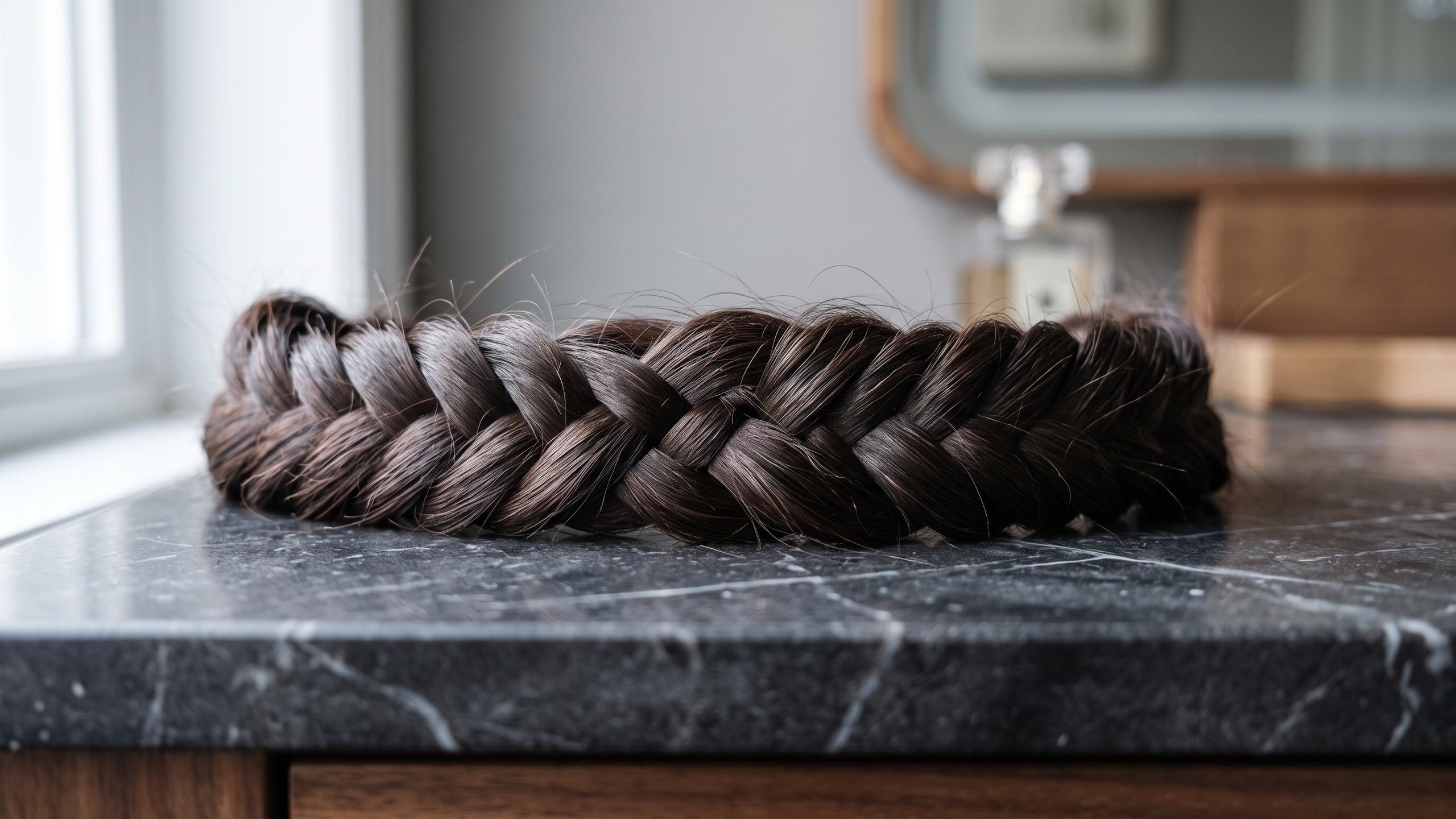
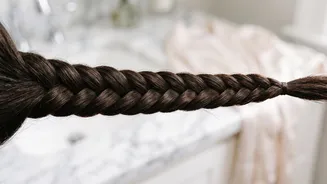
The key to a defined fishtail braid is consistency. Try to take strands of a similar thickness each time. Thinner strands create a more detailed, intricate 'fishbone' look, while thicker strands result in a chunkier, more casual braid that's quicker to complete. Maintaining consistent tension is equally important. As you weave, keep a firm but gentle grip on the two main sections, pulling them taut after each new strand is added. Keeping your hands close to the braid as you work will also help prevent it from becoming loose and uneven.
Common Mistakes to Avoid
If your fishtail braid ends up looking more like a standard three-strand braid, the most likely culprit is that your sections are too large. Remember to pull only a small, thin piece from the very outside of your main sections. Another common issue is the braid becoming loose or unraveling. This often happens with very clean, silky hair or when the tension is not consistent. Don't be afraid to pause and tighten your grip as you go. For beginners, starting with a side ponytail makes it easier to see your work in the mirror and control the strands.
Finishing Touches and Variations
Once you've braided to the end, secure it with a clear elastic. From here, you can personalize the style. For a fuller, more romantic look—a technique often called 'pancaking'—gently pull on the outer edges of the braid, starting from the bottom and working your way up. This loosens the weave and creates the illusion of more volume, which is especially effective for fine hair. Don't worry about a few flyaways; they can add to the braid's soft, effortless appeal. Once you've mastered the basic side fishtail, you can experiment with a French fishtail, which involves adding new hair from the scalp as you go, or even a crown braid.