



An Observatory Built for Speed
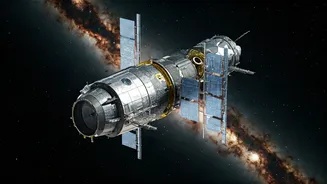
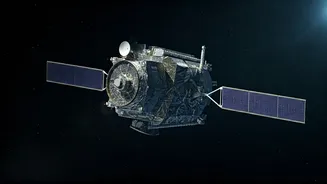
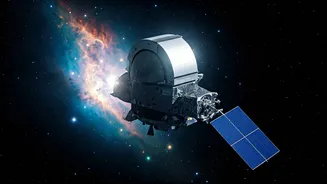
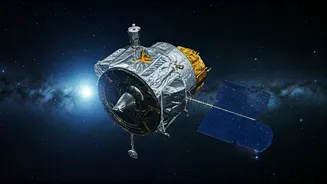
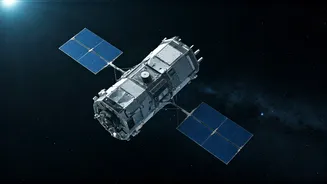
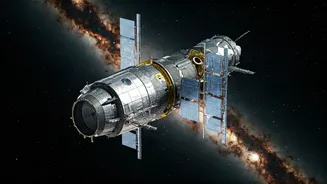
Launched in 2004, the Swift Observatory is not like other space telescopes. Its primary mission is to be the universe's first responder. Swift is designed to detect and study gamma-ray bursts (GRBs), the most powerful explosions known in the cosmos, which
can flare up and disappear in seconds. To do this, the observatory must be able to autonomously whip itself around to point at a new target with incredible speed—often within a minute of a burst being detected by its wide-field Burst Alert Telescope. This rapid-response capability has made Swift an invaluable tool for nearly two decades, helping to solve mysteries about the deaths of massive stars and the collision of neutron stars. It's a workhorse of astrophysics, a veteran explorer that scientists were not ready to lose.
A Critical System Falters
The drama began in earnest in early 2024. To point with precision, Swift relies on a set of three spinning gyroscopes. These devices, similar in principle to a spinning top, help the spacecraft maintain its orientation and slew accurately toward its targets. For months, the mission team had been monitoring one of the gyros, noting its performance was degrading. By March 2024, the situation became critical. The noise and instability from the failing gyro were so severe that the telescope could no longer reliably lock onto its targets. On March 15, with its scientific mission compromised, NASA placed the observatory into a protective "safe mode," temporarily halting all observations. The question hanging in the air was stark: could this 20-year-old telescope be saved?
The Race for an Ingenious Solution
Losing an entire gyroscope would normally be a catastrophic failure. However, the Swift team had a secret weapon born of foresight. Years earlier, in 2009, engineers had developed a contingency plan to operate the spacecraft using just two gyroscopes. The plan had sat on a shelf for 15 years, a theoretical solution to a problem they hoped would never arrive. Now, it was time to put it to the test. The concept involved creating a sophisticated software patch that would fundamentally change how Swift navigated. The new software would enable the spacecraft to use its star trackers—essentially its digital eyes—in a more complex way to supplement the data from the remaining two gyros, creating a kind of "digital" third gyroscope. This wasn't a simple update; it was a complex and risky remote-control brain surgery on a satellite flying hundreds of kilometers above Earth.
A Daring Software Upload
After extensive ground testing to ensure the patch was stable and effective, the engineering team took a deep breath. They uploaded the new flight software to the dormant observatory. This was the moment of truth. Any error in the code could have potentially rendered the telescope permanently unusable. The team remotely commanded Swift to reboot with its new operating system and transition to the two-gyro mode. The wait was tense. But then, the telemetry came back positive. The patch worked. On April 3, 2024, NASA announced that the Neil Gehrels Swift Observatory had successfully resumed science operations. The high-stakes gamble had paid off, pulling the mission back from the brink.
A New Lease on Life
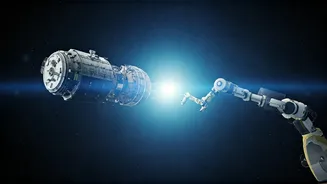
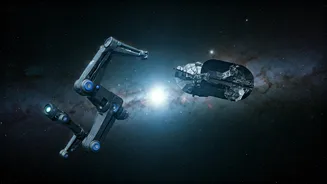
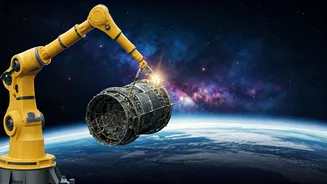
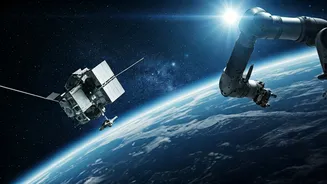
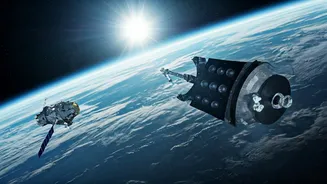
Remarkably, the fix didn't just save the telescope; it improved it. Scientists reported that the new two-gyro pointing mode was actually more accurate than the original system had been in years. This engineering drama has given the veteran observatory a new lease on life. However, another drama is unfolding, as Swift's orbit is decaying due to increased solar activity. A separate, ambitious robotic rescue mission is being planned to physically boost the telescope into a higher orbit. This mission, involving a spacecraft built by a private company to grab Swift with robotic arms, aims to extend its life by another decade. The dual sagas of software rescue and a future hardware boost showcase the incredible ingenuity and dedication of teams determined to keep one of astronomy's most agile tools watching the skies.