




The Unforgiving Lunar Night
Imagine a night that lasts for 14 Earth days. With no atmosphere to trap heat, the lunar surface, once baked by the sun, plunges into a deep freeze. Temperatures can plummet to below minus 170 degrees Celsius, and in some permanently shadowed craters
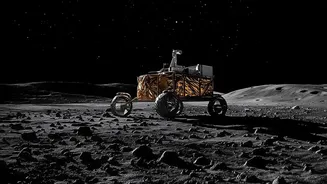
near the poles, it can get even colder. This extreme cold is lethal for the sensitive electronics, batteries, and scientific instruments that make up a rover. Without a source of warmth, circuits would crack, batteries would die, and a multi-million-dollar mission would come to a frozen halt. This challenge is precisely why some missions, like India's successful Chandrayaan-3 Pragyan rover, were designed for a single lunar day, powering down permanently as night fell.
A Constant Source of Warmth
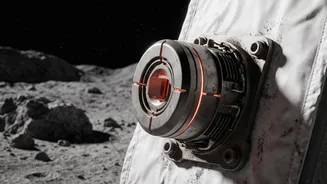
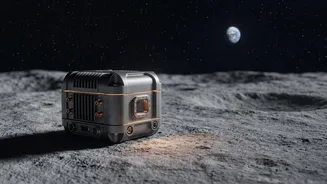
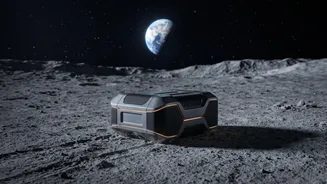
To endure this harsh environment, many long-duration rovers rely on a deceptively simple and incredibly reliable technology: self-heating power modules, most commonly known as Radioisotope Heater Units or RHUs. These are small, robust devices that provide a steady, continuous supply of heat to keep a rover's vital components within their operational temperature range. Unlike solar panels, which are useless during the long night, RHUs work independently of sunlight, providing a lifeline of warmth. This allows mission designers to allocate precious electrical power from batteries to other critical systems, rather than draining them on inefficient electrical heaters.
The Science of Radioactive Decay
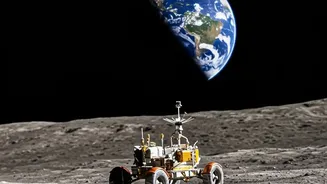
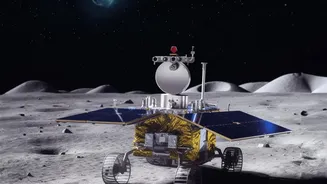
The genius of the RHU lies in its simplicity. Each unit contains a small, ceramic-encased pellet of Plutonium-238, a radioactive isotope. As the plutonium naturally decays, it releases a steady amount of heat—about one watt per unit, which is roughly the size of a C-cell battery. This process involves no moving parts or complex electronics, making it extraordinarily reliable for decades. The heat is directly transferred to the nearby components, keeping them from freezing. It’s not a nuclear reactor creating a chain reaction; it’s simply the passive, predictable heat generated by the natural decay of an element. This reliable warmth has been a cornerstone of space exploration, used in missions from the early Soviet Lunokhod rovers to China's Yutu explorers.
Enabling Future Lunar Ambitions
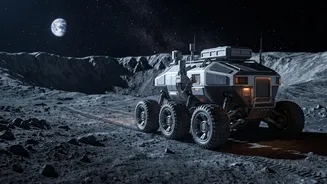
Surviving the lunar night is the single biggest hurdle to establishing a long-term presence on the Moon. Technologies like RHUs are therefore not just about keeping a single rover alive; they are fundamental enablers for the future of lunar exploration. While some missions are exploring alternatives like advanced batteries and thermal control systems, radioisotope heaters remain a proven, dependable solution. They are crucial for missions venturing into permanently shadowed regions, where solar power is never an option but where valuable resources like water ice are thought to be abundant. As space agencies and private companies plan for future lunar bases, scientific outposts, and resource mining, the ability to generate constant heat and power through the long, cold night will be paramount.