





The Landing That Made History
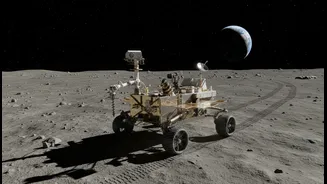
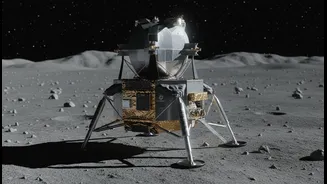
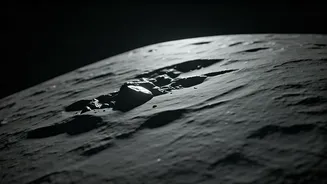
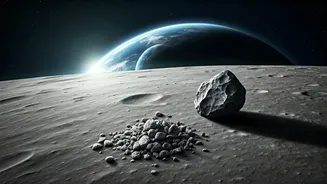
On August 23, 2023, India achieved a monumental feat in space exploration. The Chandrayaan-3 mission successfully executed a soft landing near the Moon's enigmatic south pole, making India the first nation to ever do so. For one lunar day, the Vikram
lander and Pragyan rover conducted a series of in-situ experiments, sending back a trove of data. Initial findings were thrilling: the unambiguous confirmation of sulphur in the lunar soil, the first-ever temperature profile of the topsoil, and readings of various other elements like aluminum, calcium, and iron. The mission's primary goals were to demonstrate a safe landing, rover mobility, and conduct on-the-spot scientific analysis. While the operational phase was short, the scientific mission was just beginning.
A Surprising Link Across Space and Time
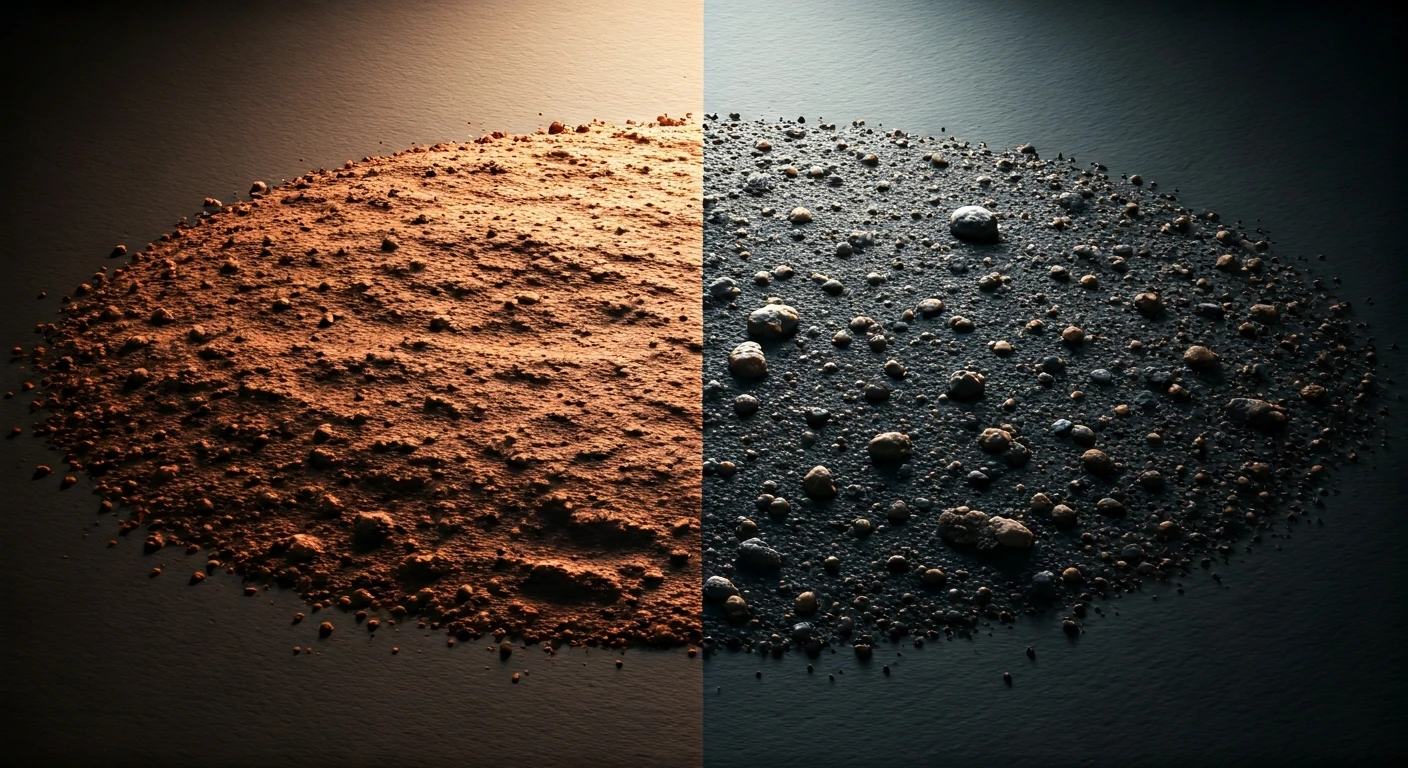
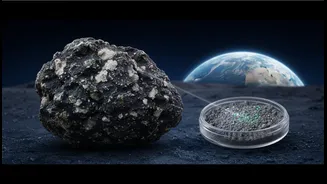
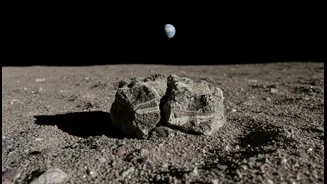
The most significant 'fresh context' comes from a groundbreaking study by scientists at the Physical Research Laboratory (PRL), Ahmedabad. By meticulously analysing the data from the rover's Alpha Particle X-ray Spectrometer (APXS), they made a startling connection. The chemical composition of the soil at the landing site, Shiv Shakti Statio, closely matches that of a specific meteorite found on Earth: ALHA 81005. Discovered in Antarctica in 1981, ALHA 81005 was the very first rock identified as having originated from the Moon. This recent study is one of the first to directly link in-situ measurements on the Moon with physical samples on Earth. This breakthrough allows scientists to cross-reference data sets, dramatically increasing confidence in their understanding of lunar geology.
Unraveling the Moon's Violent Past
The connection to the meteorite does more than just confirm the soil's composition; it tells a story about the Moon’s chaotic history. The soil at Shiv Shakti Statio contains higher levels of iron and magnesium and lower levels of aluminum than typical lunar highlands. This suggests the material isn't just from the surface crust. Instead, it likely includes rock that was violently excavated from the Moon's deeper layers. Scientists theorise this excavation happened during the cataclysmic impact that formed the South Pole-Aitken Basin, a massive crater located about 350 km from the landing site. This evidence provides strong support for the Lunar Magma Ocean hypothesis—the idea that the early Moon was covered in a sea of molten rock that slowly cooled and solidified into different layers.
Revisiting the Sulphur Surprise
One of Chandrayaan-3's first major discoveries was the clear presence of sulphur, which instruments on lunar orbiters had not been able to detect in the south polar region. At the time, its origin was a mystery. Now, with the new context of deep material being ejected to the surface, the presence of sulphur makes more sense. Sulphur is often associated with volcanic activity and is more common in the Moon's interior. The finding that the landing site is covered in material blasted from deep within the Moon could explain why this volatile element was found there. This adds a crucial piece to the puzzle, linking the surface chemistry directly to the Moon's ancient geological and volcanic processes.
A Mission That Keeps on Giving
These recent analyses demonstrate that a space mission's value extends far beyond its operational lifespan. Since the mission's conclusion, ISRO has made the complete dataset public, inviting researchers across India to delve into the findings and generate new science. Other studies have revealed new insights into the lunar plasma environment, which was found to be more active than expected, and detailed the unique thermal properties of the polar region's soil. Researchers even discovered that the Vikram lander touched down within a huge, ancient, and buried impact crater, roughly 160 km in diameter, which predates the massive Aitken basin. Each new paper and analysis builds upon the last, cementing Chandrayaan-3's legacy not just as a landing, but as a long-term scientific endeavor.