






The New Standard of Convenience
Not long ago, the convenience of e-commerce simply meant avoiding a trip to the store. Today, it's about a seamless, almost invisible experience from discovery to returns. Indian consumers now expect hyper-personalized shopping, where platforms anticipate
their needs using AI. This means showing rainwear to a user in Mumbai during the monsoon, not snow boots. The entire journey is being optimized for minimal friction. Mobile-first design, one-click checkouts, and intuitive interfaces are no longer premium features but basic expectations. A survey in 2024 revealed that the primary reasons for shopping online include the convenience of home delivery (cited by 82% of users) and the ease of hassle-free returns (61%). Brands understand that customer experience has become the key differentiator, with studies showing that a majority of customers expect brands to understand their unique needs instantly. This intense focus on a frictionless journey is fundamentally altering user behaviour, making loyalty dependent on ease-of-use as much as price.
The 10-Minute Delivery Revolution
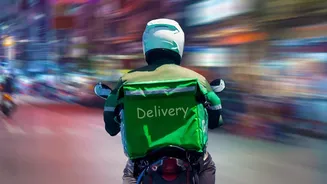
Perhaps the most dramatic shift has been in delivery. The promise of getting groceries, electronics, or apparel within 10 to 30 minutes has transformed from a niche experiment into a major retail channel. This 'quick commerce' boom is reshaping consumer habits, replacing planned purchases with impulse buys. A consumer who knows they can get an item in minutes doesn't need to plan; they just need to decide. In 2024, quick commerce already accounted for about two-thirds of all online grocery orders in India. This has been enabled by a sophisticated network of 'dark stores'—hyperlocal fulfillment centers in dense urban areas—and AI-powered route optimization. The impact extends beyond metros; rising aspirations and digital penetration are fuelling demand in Tier-2 and Tier-3 cities. While delivery expectations in these cities are slightly more forgiving than the 10-minute metro standard, the demand for reliable, fast, and trackable delivery is universal and growing. Logistics networks are rapidly evolving from centralized hubs to distributed models to meet this demand.
An Explosion of Consumer Choice
The third pillar reshaping the market is the sheer explosion of choice, largely driven by the rise of Direct-to-Consumer (D2C) brands. India is now home to over 800 active D2C brands across sectors like beauty, fashion, and food, built online and fueled by social media. These brands bypass traditional intermediaries, allowing them to build direct relationships with customers, gather immediate feedback, and innovate rapidly. For consumers, this means access to a diverse range of products that cater to specific needs and values, moving beyond the 'one-size-fits-all' model. E-commerce marketplaces have become discovery platforms, while social media channels like Instagram and YouTube serve as virtual storefronts where consumers find new products through influencers and targeted content. This has created a hyper-competitive environment where even large, established companies are adopting D2C strategies to stay relevant. The result is a vibrant, fragmented market that offers unprecedented choice but also challenges brands to fight harder for consumer attention.
The Road Ahead: Integration and Intelligence
The forces of convenience, delivery, and choice are not operating in isolation; they are converging. Quick commerce platforms are expanding their assortments beyond groceries to include electronics and apparel. D2C brands are leveraging these ultra-fast delivery networks to reach customers instantly. At the same time, the definition of D2C is expanding beyond a brand's own website to include a presence on marketplaces and even in physical stores, creating an omnichannel strategy. The underlying enabler for all three trends is technology. AI is critical for personalizing user experiences, optimizing complex logistics, and helping consumers navigate the overwhelming amount of choice. As the market continues to mature, success will depend on how effectively companies can integrate these elements into a single, cohesive, and intelligent customer experience. The future of Indian e-commerce is not just about selling online; it's about being present, predictive, and incredibly fast, wherever the customer is.