


The Hunt for Cosmic Fingerprints
NASA's search for life, a field known as astrobiology, is a systematic detective story. The strategy is to 'follow the water', identify potentially habitable worlds, and then scan them for 'biosignatures'. A biosignature is any substance, element, or feature
that serves as evidence of past or present life. These aren't necessarily little green men; scientists are looking for clues as subtle as certain gases in a planet's atmosphere or specific organic molecules in rock samples. For example, NASA's Perseverance rover is currently scouring Mars' Jezero Crater, an ancient lakebed, for these very signs. In 2025, scientists announced the rover had identified potential biosignatures in a rock sample, containing organic molecules and mineral patterns that, on Earth, are often linked to microbial life. While not definitive proof, it's the strongest hint yet that the Red Planet may have once hosted life.
Expanding the Definition of 'Habitable'
The search is also forcing a radical rethink of what makes a planet habitable. For decades, the focus was on the 'Goldilocks Zone'—the orbital range where it's not too hot and not too cold for liquid water to exist on a planet's surface. But life on Earth has shown us that biology is tougher than we imagined. Scientists have found 'extremophiles' thriving in the most punishing environments, from volcanic vents on the ocean floor to the sub-zero ice of Antarctica. This discovery has broadened our horizons. Missions like the Europa Clipper, which launched in October 2024, are headed to Jupiter's icy moon Europa. Scientists believe Europa hides a vast liquid water ocean—containing perhaps twice the water of all of Earth's oceans combined—beneath its frozen crust. Europa Clipper isn't a life-detection mission itself, but it will characterize this ocean to see if it has the right ingredients for life: liquid water, chemical nutrients, and an energy source. Its findings will determine if this distant, frozen world could be one of the most promising habitats in our solar system.
Listening to the Whispers of Distant Atmospheres
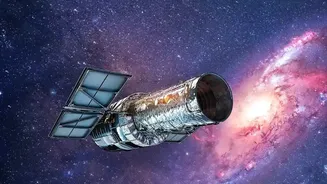
Perhaps the most revolutionary tool in the search is the James Webb Space Telescope (JWST). By analyzing the starlight that passes through an exoplanet's atmosphere, JWST can detect the chemical composition of alien skies. This has ushered in a new era of exoplanet research. For the first time, scientists have detected key molecules like carbon dioxide and methane in the atmospheres of planets hundreds of light-years away. In 2026, JWST even found strong evidence for an atmosphere around a scorching hot 'lava world', challenging ideas about how rocky planets retain atmospheres so close to their star. The ultimate prize would be finding a combination of gases, like oxygen and methane, that is hard to explain without biology. While no definitive biosignature has been confirmed, the ability to even perform these checks on worlds so far away is a monumental leap.
A Mirror to Our Own World
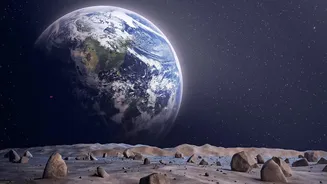
Ironically, the more we search for life elsewhere, the more we learn about Earth. The silence so far—the fact that we haven't found undisputed evidence of life—underscores just how special our planet might be. Every sterile rock and empty atmosphere we survey serves as a control group in a grand cosmic experiment, highlighting the extraordinary and perhaps rare combination of factors that allowed a complex biosphere to emerge and thrive here. Studying how our own planet's atmosphere and life have co-evolved over billions of years provides the very models scientists use to interpret data from distant worlds. The search for alien life is a journey of cosmic self-discovery; to understand what life is and how it begins, we must first understand our own planet's history.