


The Great European Eclipse
A total solar eclipse occurs when the Moon passes directly between the Sun and Earth, completely blocking the Sun's face. On August 12, 2026, this will happen along a narrow path stretching from Russia across Greenland, Iceland, and northern Spain. It
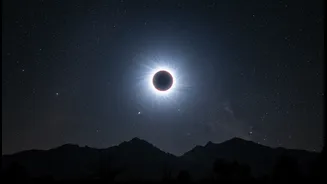
is the first time a total solar eclipse will be visible from mainland Europe since 1999, making it a major event for sky-watchers. While it won't be visible from India, its accessibility in populated areas makes it a global moment for science and wonder. The period of complete darkness, known as totality, will last for up to two minutes and 18 seconds, depending on the location. During these precious moments, day turns to a deep twilight, and the Sun's ethereal outer atmosphere, the corona, becomes visible to the naked eye.
What is Totality, Really?
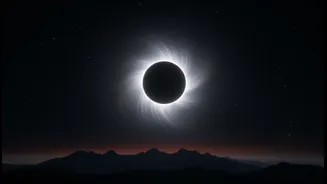
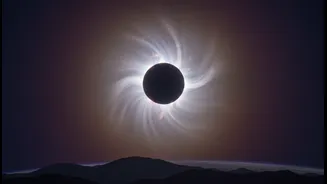
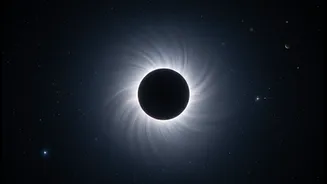
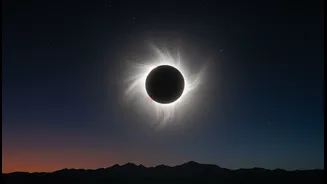
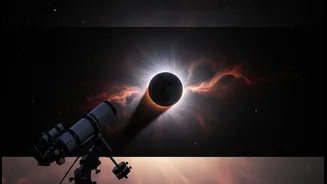
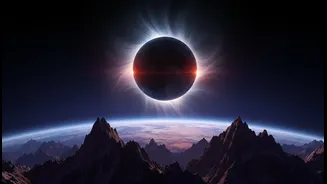
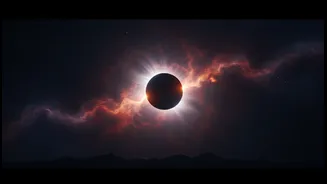
Totality is more than just darkness; it's a full-body experience. As the Moon's shadow approaches, the temperature can drop noticeably, and the ambient light takes on a strange, silvery quality. Animals may become quiet, and a sense of primal awe often settles over observers. When the last sliver of the Sun disappears, the world is plunged into an eerie twilight, with sunset-like colours ringing the horizon. This is the only time it is safe to look directly at the eclipse without specialized eye protection. The sight is a black hole where the Sun should be, wreathed in the ghostly white tendrils of the corona—a part of the Sun we can never see otherwise. It's a profound reminder of the vast, moving clockwork of our solar system.
A Sunset Spectacle
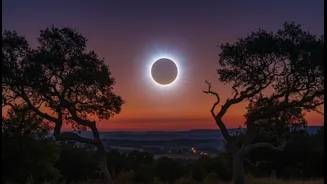
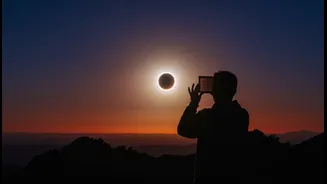
What makes the 2026 eclipse a particularly fantastic teaching moment is its timing. For observers in Spain, especially on the Balearic Islands like Mallorca, totality will occur just before sunset. The eclipsed Sun will hang low in the western sky, only a few degrees above the horizon. This creates the potential for a breathtakingly rare sight: a sunset eclipse. The combination of the dark, eclipsed Sun, the glowing corona, and the warm colours of a sunset promises an unforgettable spectacle. This unique positioning makes the event visually dramatic and easier to photograph, providing powerful imagery that helps explain the alignment of celestial bodies in a very tangible way. An unobstructed view to the west will be essential for those on-site.
The Shadow's Global Dash
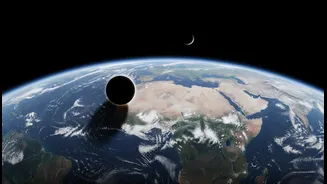
The headline's mention of "global totality" points to understanding the phenomenon on a planetary scale. A total eclipse isn't global in the sense that everyone sees it at once. Instead, the Moon casts a relatively small, dark shadow, called the umbra, which is typically only 100 to 200 kilometres wide. This shadow races across the Earth's surface at incredible speeds, creating a fleeting path of totality. The 2026 eclipse path begins in Siberia and ends in the Mediterranean, demonstrating this rapid transit. Watching maps that animate this path helps visualize how specific and rare the alignment must be. It's not the whole world that darkens, but a narrow, privileged strip that falls under the Moon's moving shadow for a few precious minutes.
Viewing Safely from Anywhere
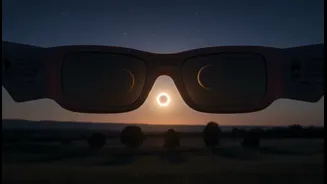
For those not in the path of totality, modern technology makes it possible to share in the experience. Live streams from organizations like NASA will undoubtedly broadcast the event, allowing a global audience to witness the darkness sweep across Spain. Even if you are watching a partial eclipse, it is crucial to use proper eye protection. Never look directly at the Sun, even when it's partially covered, without certified eclipse glasses or a special-purpose solar filter. Regular sunglasses are not safe. An alternative is to create a pinhole projector, which safely projects an image of the crescent Sun onto a surface. By watching this eclipse, whether in person or online, we can all gain a deeper appreciation for the celestial mechanics that govern our world.