








A Splash of Colour in the Monsoon Grey
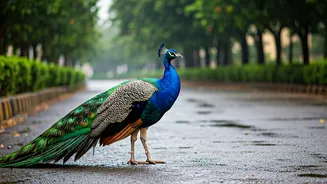
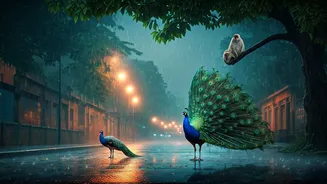
Just as the southwest monsoon arrived in Mumbai around June 24, residents were treated to a rare and beautiful sight. A peacock and a peahen were spotted strolling casually along the busy Pedder Road in South Mumbai, seemingly unfazed by the urban hustle.
The moment was quickly captured on phones, and videos went viral across social media platforms, showing the birds walking on roads and even perched on balcony railings against the city's high-rise backdrop. For many Mumbaikars, the sightings were a delightful and almost surreal experience, a moment of natural wonder amid the concrete jungle. The unexpected appearance of India's national bird, often associated with the arrival of rain, has been met with awe and curiosity, offering a charming respite from the city's fast pace.
Why Now? The Monsoon Connection
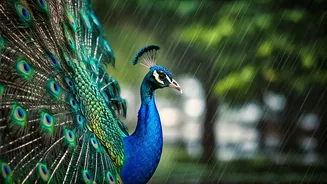
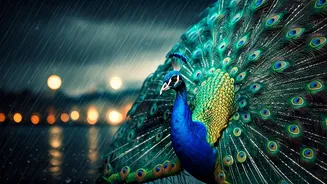
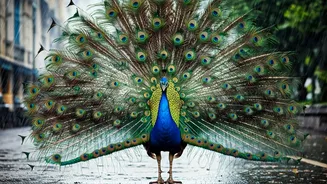
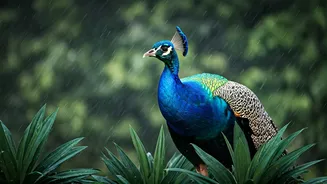
The timing of these sightings is no coincidence. The arrival of the monsoon is traditionally linked with increased animal and plant activity. The cooler temperatures and revitalised greenery brought by the rains create a more inviting environment for wildlife. For peacocks, the monsoon season is also their breeding season. The males' famous tail-feather displays are part of their courtship ritual to attract peahens. Seeing a peacock dance is often popularly believed to be a sign that rain is coming, and this is rooted in the fact that the season triggers their mating behaviour. Experts and residents speculate that the birds seen in areas like Pedder Road and Kemps Corner likely ventured out from nearby green pockets, such as Malabar Hill and the forested area of Doongerwadi, also known as the Tower of Silence, which hosts a known peacock population. The cooler, wetter weather may have encouraged them to explore beyond their usual boundaries.
An Urban Wildlife Puzzle
While the sight of peacocks in the city is joyous, it also raises important ecological questions. Is their presence a sign of urban green spaces successfully supporting wildlife, or is it an indication of shrinking natural habitats forcing them into human-dominated landscapes? Across India, peafowl populations are reported to be stable or increasing, partly due to their protected status as the national bird. They are highly adaptable birds, capable of living in various environments from forests to farmlands and even city outskirts. However, their increased visibility in dense urban cores like South Mumbai is a relatively new phenomenon. This could be a sign of 'habituation', where the birds are slowly losing their fear of humans due to frequent, harmless encounters. While this allows for wonderful moments of co-existence, it also points to the ever-blurring line between the city and the wild.
A Symbol of Joy and a Call for Coexistence
The Indian peafowl holds a special place in the nation's culture, revered in mythology and celebrated for its beauty. Their appearance in Mumbai, timed perfectly with the life-giving monsoon, feels like a scene from an ancient story playing out in a modern metropolis. The viral videos and delighted comments show a collective appreciation for this link to the natural world. However, as wildlife becomes more accustomed to city life, challenges can arise. In some parts of India, growing peafowl populations have led to reports of crop damage. The Mumbai sightings, for now, remain a source of harmless wonder. They serve as a powerful reminder of the rich biodiversity that persists even within one of India's most densely populated cities and the growing need to thoughtfully manage the spaces where human and animal worlds intersect.