






The Wind and the Will
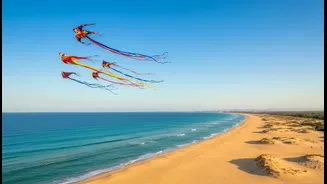
For an international kite festival, the wind is everything. It is both the fuel and the potential foe. Organisers and professional flyers speak of a ‘golden window’ for wind speed—not too gentle to leave giant kites grounded, and not too fierce to make
them uncontrollable. The ideal breeze along the East Coast Road allows multi-storey creations to ascend gracefully, but the Bay of Bengal is notoriously fickle. A sudden calm can leave thousands of spectators staring at a painfully empty sky, while a squall can turn the beach into a scene of frantic packing as flyers rush to save their delicate, often expensive, equipment from ruin. Every edition of the Tamil Nadu International Kite Festival (TNIKF), held annually around the Independence Day weekend in August, is a high-stakes gamble against the elements. The official website explicitly states the obvious but crucial disclaimer: kite events depend on weather conditions, and kites cannot be flown in rain or bad weather.
An Organiser's High-Wire Act
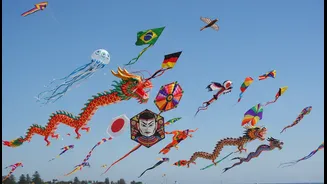
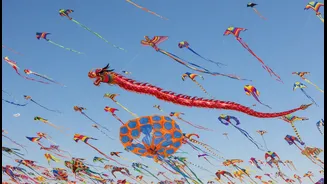
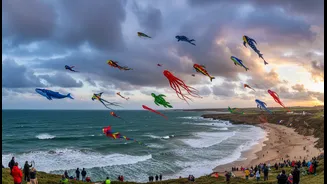
For the Tamil Nadu Tourism Development Corporation and event partners like Global Media Box, the festival is a year-long logistical marathon that culminates in a four-day tightrope walk. They invest heavily in attracting top-tier talent from countries like France, Germany, Thailand, and Vietnam, inviting over 40 skilled flyers to showcase more than 250 unique kites. These are not the paper kites of childhood memory; they are massive, intricately engineered pieces of art. Some are designed to resemble marine life to promote conservation, while others are tributes to Tamil culture, shaped like the Thiruvalluvar statue or featuring Jallikattu motifs. Months of planning, securing permits, and coordinating international travel all hinge on the weather forecast in the final days, turning meteorology reports into the most-watched show for the organising committee. Every successful flight is a victory, but every unexpected downpour threatens not just the schedule, but the festival's reputation.
The Flyer's Perspective
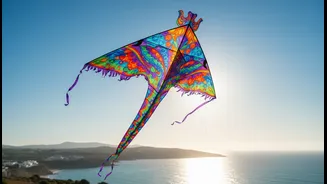
International kite flyers travel thousands of miles with their precious cargo. For them, a day of bad weather is more than just a disappointment; it’s a missed opportunity to showcase their craft. These are artists and athletes combined, whose performance medium is the wind itself. They bring kites that can take weeks or even months to build, representing the pinnacle of their country's kite-making traditions. Some kites from Indonesia and Vietnam are even designed to produce flute-like sounds as they fly, turning the sky into an orchestra. When the wind is perfect, they can perform aerobatic stunts and paint the sky with vibrant colours, captivating tens of thousands of onlookers. But when the weather turns, they can only wait, their giant fabric creations lying dormant on the sand, a testament to the fact that this is one art form where nature is the undisputed director.
The Economic Ripple Effect
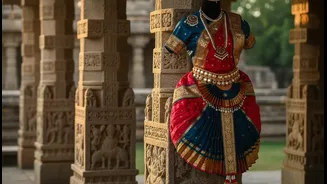
The success of the kite festival creates waves that extend far beyond the beach. For Mahabalipuram, a UNESCO World Heritage site, events like TNIKF and the Mamallapuram Dance Festival are critical drivers of the local economy. A well-attended festival means full hotels, bustling restaurants, and brisk business for local artisans and vendors. The event, which has seen attendance grow from 20,000 to an expected 30,000, is a boon for regional tourism. It draws visitors from across India and the world, shining a spotlight on Tamil Nadu's cultural and coastal attractions. A weather-disrupted event, therefore, doesn't just disappoint spectators; it translates into lost revenue for a community that increasingly relies on such large-scale tourism events to thrive.