







The Unseen Menace: Damp Kitchen Cloths
That seemingly harmless kitchen cloth can become one of the most contaminated items in your home. The combination of moisture, warmth, and food particles in a humid monsoon environment creates the perfect breeding ground for bacteria like E. coli and Salmonella.
A damp, smelly cloth is a clear sign that bacteria are multiplying. These germs can easily spread to your hands, countertops, and utensils, leading to cross-contamination and potential foodborne illnesses. To combat this, switch out your dishcloths daily. Wash them in hot water and ensure they are completely dry before the next use; if there's no sunlight, ironing them can help. Consider having a rotation of several cloths and using separate ones for wiping hands, counters, and dishes to minimise the spread of germs. Paper towels can be a safer alternative for wiping up spills, especially from raw meat.
Embrace the Airtight: The Power of Dry Storage
High humidity is the enemy of dry goods. During the monsoon, moisture in the air can quickly be absorbed by staples like flour, pulses, spices, biscuits, and salt, leading to clumping, mould, and pest infestations. Improperly stored dry goods are a major source of kitchen waste during the rainy season. The single most effective solution is to transfer everything from its original packaging into airtight containers. Glass, BPA-free plastic, or stainless steel jars with tight-sealing lids are ideal. This prevents moisture and pests from getting in and preserves the freshness and texture of your food. For items particularly prone to spoilage, like grains and flours, you can add natural moisture absorbers such as a few dried neem leaves or a bay leaf to the container. Avoid buying these staples in bulk during the monsoon, as smaller, faster-moving batches are less likely to spoil.
Your Refrigerator: The First Line of Defence
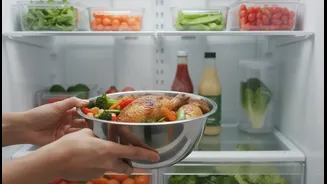
Your refrigerator works harder during the monsoon due to higher ambient humidity and temperature fluctuations. Every time you open the door, warm, moist air rushes in, leading to condensation and forcing the compressor to work overtime. To keep it running efficiently and your food safe, there are a few key rules. The Food Safety and Standards Authority of India (FSSAI) recommends cleaning your refrigerator regularly. Aim for a deep clean every two weeks during the monsoon. Wipe up spills immediately, ensure the rubber door seal (gasket) is clean and creates a tight closure, and avoid overcrowding the shelves to allow for proper air circulation. Store leftovers and other perishable items in covered containers promptly. Maintaining an internal temperature between 2°C and 4°C is crucial for slowing bacterial growth.
Beyond the Basics: More Monsoon Kitchen Habits
Beyond the three pillars of cloths, containers, and refrigeration, a few other habits can significantly boost your kitchen's hygiene. Ensure good ventilation by using an exhaust fan while cooking to pull steam and moist air out of the room. Wooden chopping boards and utensils can absorb moisture, so dry them thoroughly after washing and stand them upright to air out. Regularly clean and disinfect high-touch surfaces like cabinet handles, switches, and countertops. Pay special attention to the sink and drain areas, which can become sources of foul odours; cleaning them weekly with a mixture of baking soda and vinegar can help. Finally, be meticulous about waste disposal. Keep your dustbin covered and empty it daily to prevent attracting pests, which are more active during the rains.