

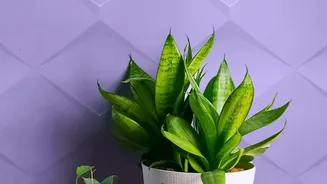
The Myth's Origin: A Famous NASA Study
The popular belief that houseplants are powerful air purifiers can be traced back to a landmark 1989 NASA study. Facing the challenge of keeping air clean in sealed space stations, researchers tested the ability of common indoor plants to remove airborne
pollutants known as volatile organic compounds (VOCs), such as benzene and formaldehyde. The results were promising. In small, airtight plexiglass chambers, certain plants did indeed absorb these chemicals from the air. The study concluded that for humans to move into closed environments, they must take nature's life support system with them. This exciting finding was widely reported, and the idea of plants as natural, living air filters took firm root in the public consciousness.
The Reality Check: From Lab to Living Room
The problem is that our homes are not small, sealed space chambers. The conditions of the NASA study were highly controlled and don't reflect a typical living environment. Our rooms are much larger, and the air is constantly changing through drafts, open windows, and ventilation systems. More recent analyses have put the original findings into perspective. A 2019 meta-analysis from Drexel University reviewed decades of research and concluded that the effect of plants in a real-world setting is minimal. The natural ventilation in a building cleans the air far more quickly and efficiently than a few potted plants ever could. Essentially, the air exchange rate in your home renders the slow purification work of a plant almost negligible.
The Power of a Purifier: Understanding CADR
To understand the difference in performance, it helps to know about the Clean Air Delivery Rate, or CADR. This is the standard metric used to measure an air purifier's effectiveness. It tells you how much clean air the device delivers in a specific amount of time. A typical air purifier can have a CADR of 100 cubic meters per hour or much more, meaning it can cycle and filter all the air in a room multiple times within an hour. These machines use high-efficiency particulate air (HEPA) filters, which are certified to trap 99.97% of tiny airborne particles like dust, pollen, pet dander, and smoke. Many also include activated carbon filters to trap gases and odors.
A Numbers Game Plants Can't Win
When you compare the CADR of plants to that of an air purifier, the difference is staggering. Research has calculated that a typical houseplant has a CADR of less than 1. This means you would need an impractically large number of plants to make a meaningful impact on your home's air quality. How many? Estimates from various studies suggest you would need anywhere from 10 to 1,000 plants per square meter of floor space to match the air-cleaning performance of either basic ventilation or a standard air purifier. For an average-sized living room, this could mean accommodating several hundred plants, which is simply not feasible for most people and could introduce other issues like mold or pests.
The True, Proven Benefits of Houseplants
While they may not be air-purifying powerhouses, indoor plants offer a wealth of other scientifically-backed benefits. Their biggest contribution is to our mental and psychological well-being. Studies have repeatedly shown that interacting with plants—even just being around them—can reduce stress and anxiety. The act of caring for a plant can lower levels of the stress hormone cortisol, reduce blood pressure, and improve mood. They can help us feel calmer, more focused, and more connected to nature, which is especially important when we spend so much time indoors. Plants also release water vapor, which can gently increase humidity in dry indoor environments.