





The Planet's Engine Room
Planet Earth is covered by massive, interlocking puzzle pieces called tectonic plates, which are constantly in motion. At their boundaries, deep beneath the oceans, lie vast underwater mountain ranges known as mid-ocean ridges. These ridges are the planet's
engine rooms, responsible for creating about two-thirds of the Earth's surface. Here, as plates pull apart, magma from deep within the Earth rises to fill the gap. This molten rock cools and hardens, forming brand-new oceanic crust in a process called seafloor spreading. For decades, this was a foundational theory in geology, pieced together from ancient evidence frozen in rock. But seeing it happen had been impossible, until now.
Right Place, Right Time
In a stroke of scientific serendipity, an international team of researchers captured a complete seafloor spreading event as it unfolded. Just two months after deploying a sophisticated network of over 20 underwater sensors across a 100-kilometer stretch of the Southeast Indian Ridge, the seafloor roared to life in April 2024. This ridge separates the Antarctic and Australian tectonic plates. The observatory, known as OHA-GEODAMS, was designed to monitor for subtle, long-term changes but instead caught a spectacular, short-lived geological drama. Marine geophysicist Jean-Yves Royer noted the team was hoping to measure a few centimeters of stretching but were instead treated to a once-in-a-generation event.
A Geological Drama in Four Acts
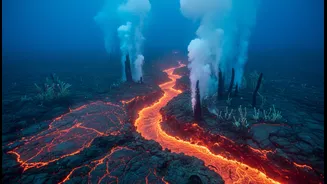
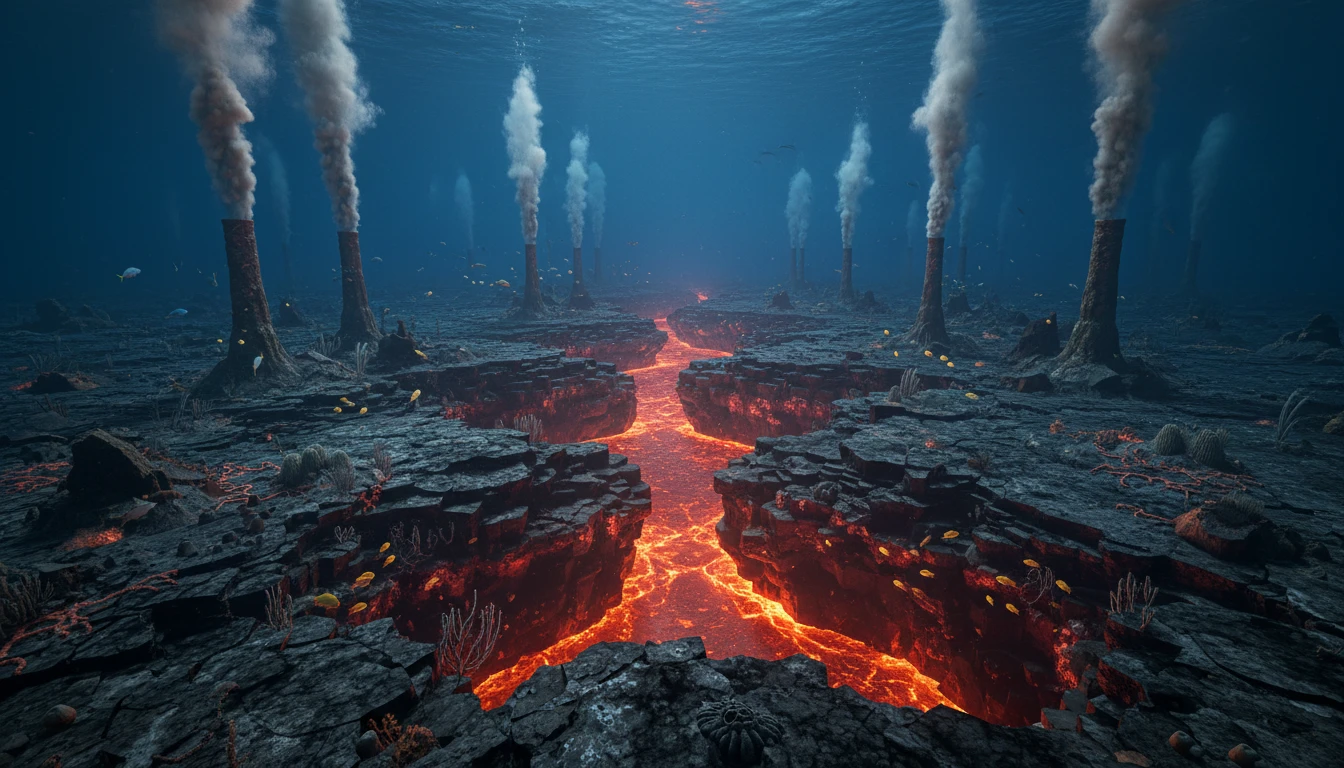
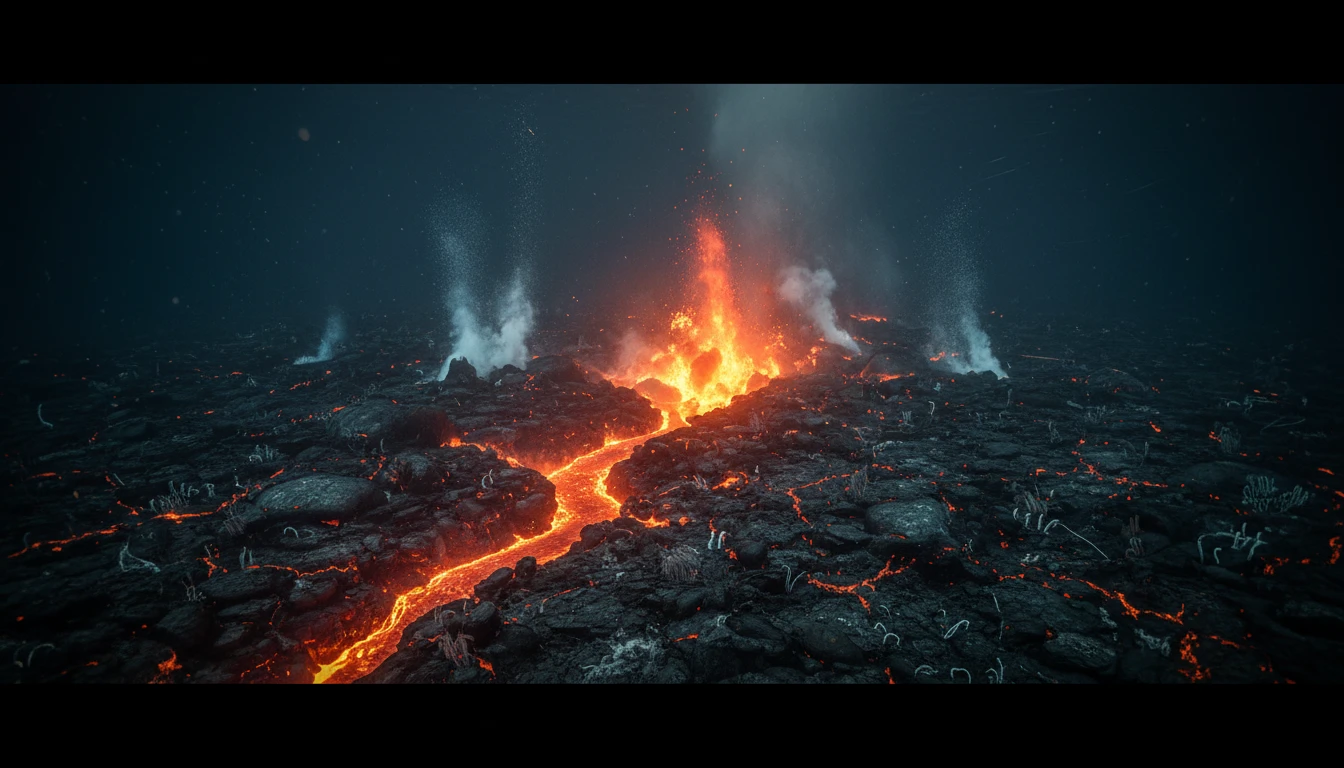
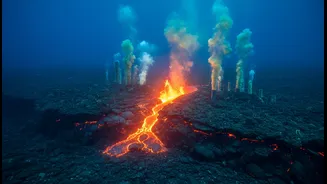
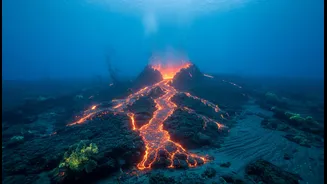
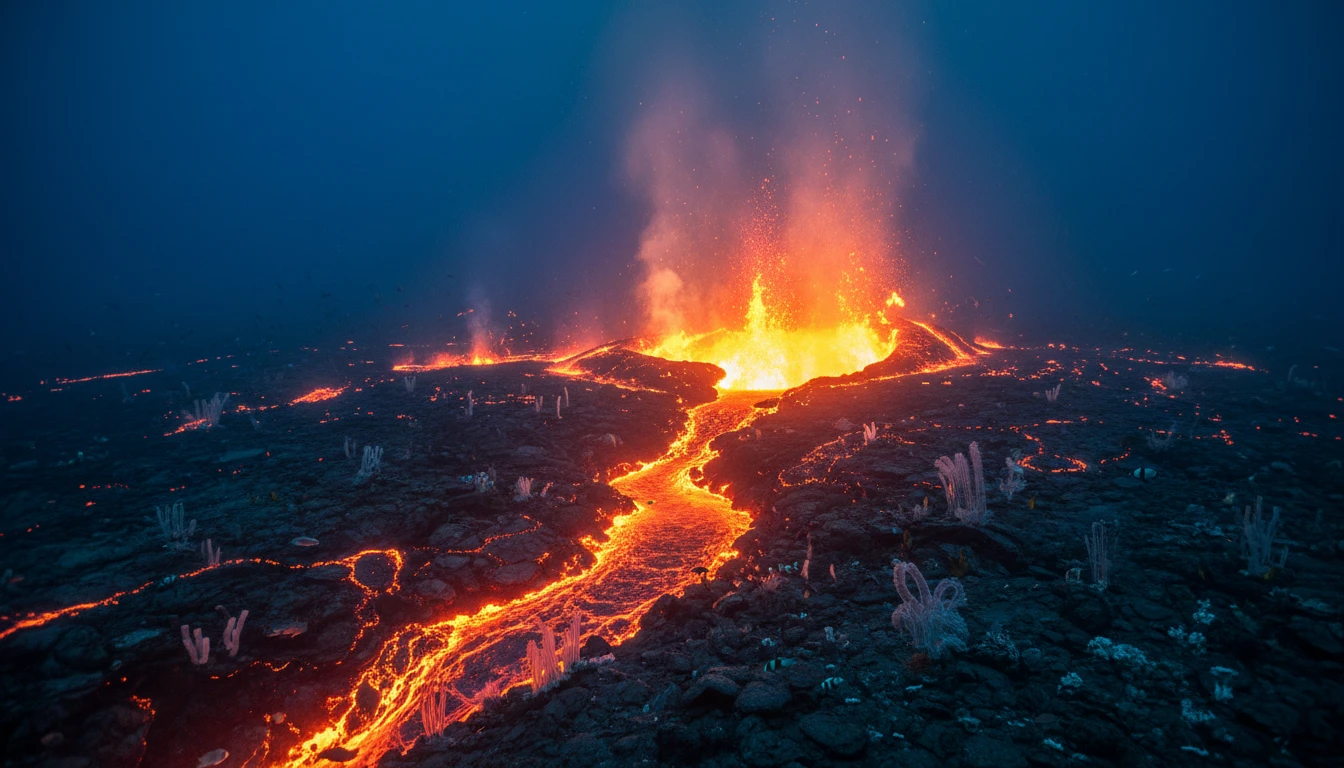
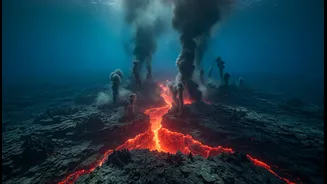
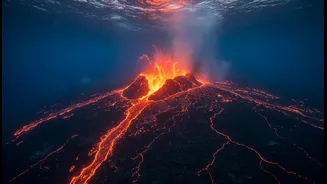
The event began with a swarm of earthquakes that raced along the ridge axis. Next, pressure sensors detected the valley floor collapsing with astonishing speed; it sank by roughly four meters in just a few days. This subsidence was caused by a vast magma reservoir, located about 3.6 kilometers beneath the crust, emptying as it forced molten rock upwards into fractures. Finally, by comparing seafloor maps from before and after the event, scientists confirmed that an enormous volume of lava—estimated at up to 160 million cubic meters—had erupted, creating new ocean floor. Some of the new lava deposits were over 90 meters thick.
From a Crawl to a Sprint
This observation fundamentally changes our understanding of how planets are built. It proves that seafloor spreading is not a slow, steady crawl but can occur in dramatic, violent bursts. The separation between the plates—over a meter in just days—was equivalent to the amount of movement that would normally take decades to accumulate. This confirms that the Earth's crust grows in sudden lurches, releasing decades of pent-up strain in a matter of weeks. The study, published in the journal Nature, gives scientists a rare play-by-play of a process that has shaped our world for billions of years.
Solving a Tectonic Mystery
The discovery also solved a long-standing geological puzzle. For years, scientists noted that the movement recorded from underwater earthquakes didn't add up to the total movement of the tectonic plates. This event revealed why: a significant amount of the fault movement happened without any seismic shaking at all. This 'aseismic slip' appears to be directly linked to the movement of magma. By witnessing the interplay between magma, faulting, and crustal extension, researchers now have a much clearer picture of the forces that drive plate tectonics, govern volcanic eruptions, and have shaped the ocean basins we see today.