







A Policy Shift Opens the Cosmos
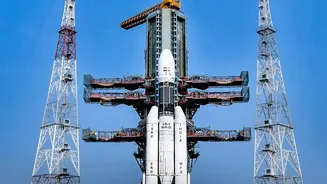
For decades, the Indian Space Research Organisation (ISRO) was the sole custodian of India's space ambitions. But a series of landmark reforms, culminating in the Indian Space Policy 2023, has opened the floodgates for private enterprise. The policy redefines
ISRO's role from being the primary operator to a facilitator and partner, focusing its immense expertise on deep space exploration and national security missions. The establishment of the Indian National Space Promotion and Authorisation Centre (IN-SPACe) has been pivotal. Acting as a single-window agency, IN-SPACe promotes, authorises, and regulates private space activities, giving entrepreneurs clear guidelines and access to ISRO’s world-class testing facilities and technologies. This new framework has dramatically lowered the barrier to entry, transforming the space sector from a government monopoly into a dynamic playground for innovation.
More Than Just Building Rockets
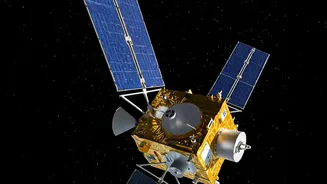
While rocket launches grab headlines, the opportunities extend far beyond. The private space revolution is creating a vibrant downstream market. Young entrepreneurs are building companies focused on satellite manufacturing, ground station services, and, most significantly, data analytics. Startups like Pixxel are developing constellations of high-resolution hyperspectral satellites to provide actionable intelligence for industries like agriculture, mining, and environmental monitoring. Others, such as SatSure, use satellite data to offer 'decision intelligence' for various sectors. This boom in satellite services is democratising access to space-based data, enabling businesses to track climate change, monitor infrastructure, and improve crop yields. The ecosystem also needs component manufacturers for everything from solar cells to advanced composites, creating a comprehensive domestic supply chain.
The New Breed of Space Trailblazers
This policy momentum has given rise to a new generation of ambitious startups founded by young engineers and former ISRO scientists. Skyroot Aerospace, co-founded by Pawan Kumar Chandana and Naga Bharath Daka, made history in July 2026 with Vikram-1, India's first privately developed rocket to successfully reach orbit. This milestone made India only the third country, after the US and China, with private orbital launch capability. Another key player, Agnikul Cosmos, is pioneering 3D-printed rocket engines to build cost-effective launch vehicles for small satellites. Dhruva Space is focused on building satellite platforms and components, while Digantara is working on space situational awareness to manage orbital traffic. These companies are not just vendors to ISRO; they are building end-to-end solutions for a global market.
Fuelling Ambition with Fresh Capital
The surge in entrepreneurial activity has been matched by a significant inflow of investment. Indian space startups have attracted hundreds of millions of dollars in funding over the last few years, with Skyroot Aerospace becoming the sector's first unicorn. In 2026 alone, companies secured between $150-160 million in investments. Recognizing the need for early-stage support, the government has also stepped in with initiatives like a dedicated venture capital fund and the Technology Adoption Fund to help startups commercialize their technologies. This blend of private venture capital and government support is creating a robust financial ecosystem, giving entrepreneurs the runway they need to tackle complex, long-term engineering challenges.
Challenges on the Final Frontier
Despite the incredible momentum, the path for India's space entrepreneurs is not without its obstacles. The sector still awaits a comprehensive Space Activities Act to provide a solid legislative foundation for private operations, which currently rely on administrative policies. Access to capital, especially for high-risk, deep-tech projects, remains a challenge compared to global counterparts. Furthermore, there is a critical need for a larger pool of skilled talent with hands-on experience in building and operating reliable space systems. As the sector grows, ensuring that engineering capabilities keep pace with public relations and fundraising narratives will be crucial for long-term, sustainable success.