





A Celestial Meeting of Cosmic Neighbours
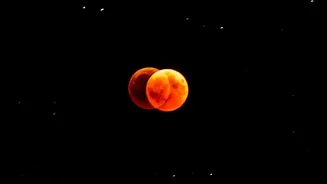
On the night of October 27 and into the morning of the 28th, the Moon will appear to pass very close to the Pleiades, one of the most recognisable star clusters in the night sky. This event, known as a conjunction, is a line-of-sight phenomenon. While
the Moon and the cluster will look like close neighbours, they are separated by an immense distance. The Moon is our closest celestial companion, while the Pleiades cluster is roughly 440 light-years away. The Pleiades, located in the constellation of Taurus, is an open star cluster of over 1,000 stars that were born from the same cloud of gas and dust around 100 million years ago. To the naked eye, it often appears as a small, shimmering dipper-shaped group of six or seven stars.
The Seven Sisters in Indian Culture
The Pleiades holds deep cultural significance worldwide, including in India, where it is known as Krittika. In Hindu mythology and Vedic astrology, Krittika is one of the 27 nakshatras, or lunar mansions. The Krittikas are often depicted as the six foster mothers of the war god Kartikeya, who is said to have developed six faces to be nursed by each of them. This nakshatra is associated with the fire god, Agni, and symbolises purification, courage, and energy. The visibility of Krittika has historically been used to mark seasonal transitions and align religious rituals, weaving it into the cultural and agricultural fabric of India.
When and Where to Look From India
The celestial encounter will be visible for most of the night of October 27-28, 2026. Look towards the eastern to northeastern horizon a couple of hours after sunset. As the night progresses, the pair will climb higher in the sky, making for an even better view. The Moon will be in its waning gibbous phase, meaning it will be quite bright. This intense moonlight might wash out the fainter stars of the cluster, so patience will be key. While the conjunction itself is the main event, in some parts of the world, the Moon will actually pass in front of the cluster in an event called a lunar occultation. This occultation will be visible from parts of Asia, Europe, and North Africa.
Tips for the Best Viewing Experience
You don’t need any special equipment to see this event; it will be visible to the naked eye. However, a pair of binoculars will dramatically enhance the view, revealing many more stars in the Pleiades cluster and offering a stunning close-up of the cosmic duo. For the best possible experience, find a location away from bright city lights. Light pollution can obscure the faint sparkle of the cluster, especially with the bright Moon nearby. Give your eyes about 20 to 30 minutes to fully adapt to the darkness; this will help you spot more stars. A clever trick to see the cluster more clearly is to position yourself so that the bright disk of the Moon is hidden behind a tree or building, reducing its glare. Also, try using averted vision—looking slightly to the side of the cluster instead of directly at it—to make its fainter stars pop into view.
Finding a Dark Sky in India
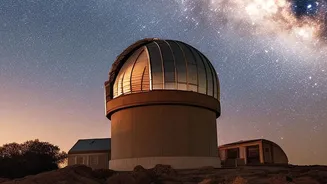
To truly appreciate the beauty of the night sky, escaping urban light pollution is essential. India has several locations known for their dark skies, making them ideal for stargazing. High-altitude regions like Hanle in Ladakh, which hosts India's first Dark Sky Reserve, and Spiti Valley in Himachal Pradesh offer pristine viewing conditions due to their altitude and dry air. Other excellent spots include the Rann of Kutch in Gujarat, parts of the Himalayas in Uttarakhand, and even some hill stations in the south like Coorg, provided you time your visit during clear seasons. Even if you can't travel to a designated dark-sky park, driving an hour or two away from a major city to a rural area can make a significant difference.