




Gaganyaan: India's Giant Leap into Human Spaceflight
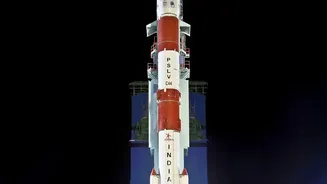
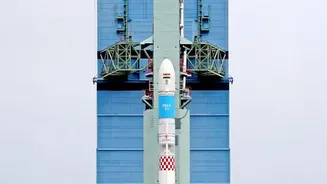
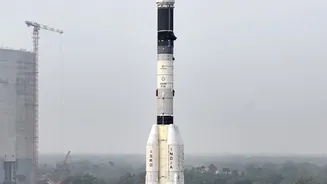
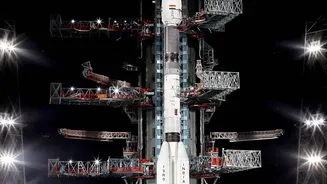
Perhaps the most anticipated mission is Gaganyaan, India's inaugural human spaceflight program. The objective is monumental: to launch a crew of three astronauts into a 400-kilometre orbit for a three-day mission and return them safely to Earth. This
mission represents a profound technological leap, moving India into an elite club of nations with independent human spaceflight capabilities, alongside the US, Russia, and China. The first uncrewed test flights are crucial steps, with the G1 mission expected in the latter half of 2026, paving the way for the first crewed flight around 2027 or 2028. Success would not only be a matter of immense national pride but would also lay the foundation for more complex future endeavours, like building an Indian space station.
Mangalyaan-2: A Bolder Return to the Red Planet
Building on the incredible success of its first Mars Orbiter Mission (MOM), ISRO is planning a far more ambitious sequel. Tentatively known as Mangalyaan-2 or Mars Lander Mission, this project aims to go beyond just orbiting. Plans include a lander, a rover, and even a helicopter, demonstrating technologies like a sky crane for a soft landing—a feat only achieved by the US and China. The mission's scientific goals are to study Mars' surface, atmosphere, and environmental conditions in greater detail, searching for clues about its ancient history and potential for habitability. While a firm launch date is yet to be set, it represents a clear shift from technology demonstration to in-depth planetary science, cementing India's status as a serious interplanetary player.
Shukrayaan-1: Unveiling the Secrets of Venus
ISRO is also setting its sights on Earth's mysterious twin, Venus. The Venus Orbiter Mission, or Shukrayaan-1, is planned for a 2028 launch. Often called a 'runaway greenhouse' planet, Venus has a thick, toxic atmosphere and scorching surface temperatures. Shukrayaan aims to study its complex atmospheric chemistry, surface, and subsurface features using instruments like a high-resolution synthetic aperture radar. This mission is significant because Venus is a cautionary tale for planetary climate change, and understanding its evolution could offer valuable insights into Earth's own future. The mission has been formally approved and will mark India's second foray into interplanetary exploration.
NISAR: A Global Collaboration to Watch Over Earth
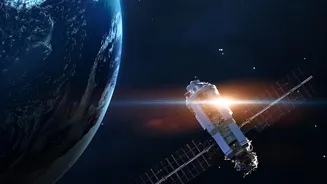
Highlighting India's growing role in international space partnerships, the NASA-ISRO Synthetic Aperture Radar (NISAR) is a groundbreaking Earth observation satellite. It is one of the most expensive Earth-imaging satellites ever built and launched successfully in July 2025. NISAR uses two different radar frequencies to produce incredibly detailed, high-resolution maps of Earth's surface. Its primary mission is to monitor some of the planet's most complex processes, including ice-sheet collapse, ecosystem changes, and natural hazards like earthquakes and volcanic eruptions. Scanning the entire globe every 12 days, NISAR provides critical data for managing climate change and disasters, showcasing how space technology directly benefits life on Earth.
SPADEX: Mastering the Art of Space Docking
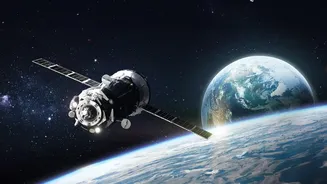
While not as glamorous as a Mars landing, the Space Docking Experiment (SPADEX) is a vital technology demonstrator mission for ISRO's future. The mission, successfully launched in late 2024, is designed to test and master the autonomous process of rendezvous and docking, where two spacecraft meet and connect in orbit. This capability is a fundamental building block for future advanced missions. It is essential for assembling a space station, conducting in-orbit satellite servicing, and executing complex sample-return missions from the Moon or other celestial bodies. Successfully demonstrating this technology places India among a handful of nations with this critical operational skill.