

The Sun's Hidden Danger
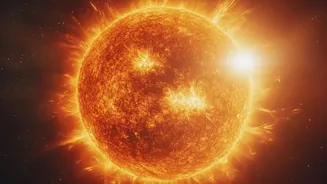
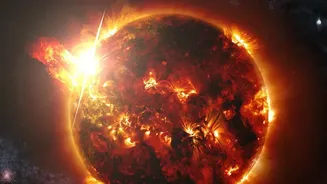
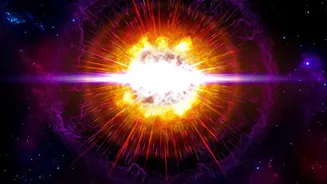
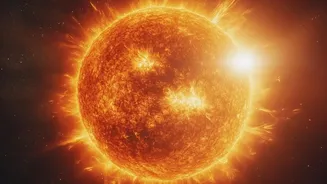
The Sun, the source of all life on Earth, has a violent side. It periodically erupts, launching enormous clouds of charged particles and magnetic fields into space. These events are called Coronal Mass Ejections, or CMEs. Most of these solar blasts miss
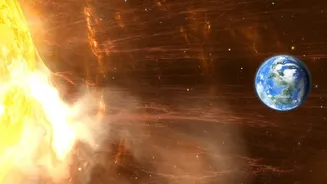
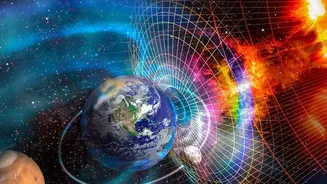
our planet entirely, but when a CME is aimed at Earth, it can have serious consequences. Travelling at speeds of millions of kilometres per hour, these storms can slam into Earth's magnetic field, triggering what is known as a geomagnetic storm. While our planet's magnetic field protects us from the worst of the radiation, the interaction can disrupt and damage the technological infrastructure that underpins modern civilisation, from communications satellites to electrical power grids.
A Leap Beyond Guesswork
For decades, predicting the impact of a CME was a process with wide margins of error. Scientists could see a storm erupt from the Sun and knew it was heading our way, but forecasting its arrival time and, crucially, its intensity, was challenging. Older methods might provide a warning window of five hours or more, which is often not specific enough for infrastructure operators to take effective preventative action. However, a new generation of advanced models, often powered by artificial intelligence and machine learning, is changing the game. By combining data from an array of solar-observing spacecraft with sophisticated algorithms, forecasters are moving from broad warnings to highly specific, actionable intelligence.
The Power of Predictive AI
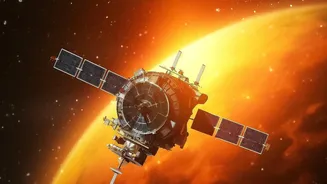
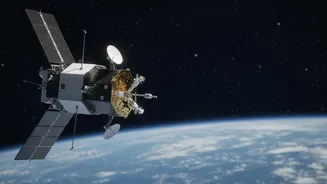
What makes these new models so advanced is their ability to process vast amounts of data and learn from past events. NASA's PUNCH mission, for example, uses four satellites to continuously track CMEs as they travel from the Sun, allowing models to refine predictions over time. In a recent test, this method predicted a CME’s arrival with an accuracy of within 30 minutes—a tenfold improvement on previous capabilities. Other AI models, like one developed by NASA and IBM called Surya, analyze years of solar imagery to detect patterns that precede solar flares, potentially doubling the warning time for dangerous space weather. These tools can analyse a CME's internal magnetic field, a key factor in determining how severely it will impact Earth.
Shielding Our Satellites
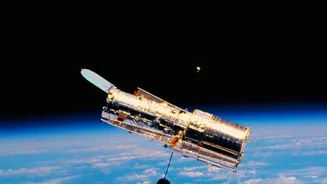
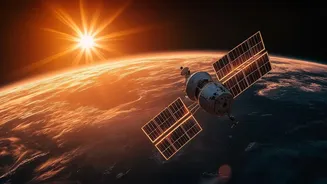
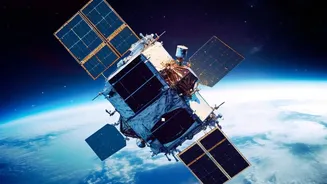
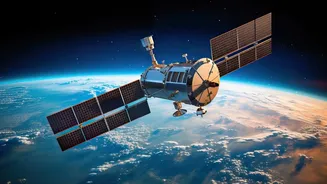
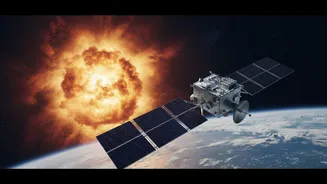
Thousands of satellites orbit Earth, providing everything from GPS navigation and television broadcasts to vital climate monitoring. These assets are highly vulnerable to solar storms. The influx of energy can heat the Earth's upper atmosphere, causing it to expand. This increases the atmospheric drag on low-orbit satellites, causing their orbits to decay faster than expected. Furthermore, high-energy particles can damage sensitive electronics, causing malfunctions or complete failure. Advanced warnings from new impact models give satellite operators crucial time to act. They can reorient satellites to protect sensitive components, switch to safe mode, or even perform small engine burns to counteract atmospheric drag, safeguarding these vital and expensive pieces of infrastructure.
Keeping the Lights On
Perhaps the most significant threat from a major solar storm is to our electrical power grids. Geomagnetic storms induce powerful, low-frequency currents in the Earth's surface, known as Geomagnetically Induced Currents (GICs). These currents can flow into the long transmission lines of a power grid, finding their way into the massive transformers at substations. GICs can cause transformers to overheat and saturate, leading to voltage instability, equipment damage, and potentially widespread, long-lasting blackouts. Advanced models can now predict the strength and location of GICs with far greater accuracy. This allows utility companies to proactively protect the grid by redirecting power flows or temporarily taking vulnerable transformers offline before the storm hits, preventing catastrophic failures.