







Imagine a cancer treatment as unique as your fingerprint. This is the promise of personalised vaccines, and now, a Hyderabad-based startup named PopVax is bringing this cutting-edge science to India with its experimental mRNA platform.
What is a Personalised Cancer Vaccine?
Unlike a traditional
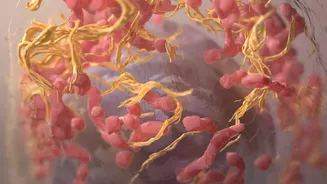
vaccine that prevents diseases like the flu, a personalised cancer vaccine is a form of treatment, not prevention. It’s designed to train your body's own immune system to fight a cancer that already exists. The 'personalised' part is key. No two cancers are identical; each person's tumour has a unique set of genetic mutations. Scientists take a sample of a patient's tumour, sequence its genetic code to find these unique mutations, and then create a vaccine that teaches the immune system to recognise and attack only the cells with those specific markers, known as neoantigens. Think of it as creating a custom 'wanted poster' for the immune system, showing it exactly which enemy cells to hunt down while leaving healthy cells alone.
Enter PopVax: The Hyderabad Hope
PopVax, a biotechnology company founded in Hyderabad in late 2021, is stepping into this highly advanced field. Founded by Soham Sankaran, a computer scientist who transitioned into biotech, the company's mission is to develop next-generation medicines and make them globally accessible. What began in a small lab has grown into a significant research and manufacturing operation. The company has attracted global attention and funding from notable backers like the Gates Foundation, Ethereum co-founder Vitalik Buterin, and Facebook co-founder Dustin Moskovitz. Their work on cancer is part of a broader platform that also includes developing vaccines for infectious diseases like COVID-19, influenza, and Hepatitis C.
The Science Behind the Shot: AI and mRNA
PopVax is harnessing two powerful technologies: artificial intelligence (AI) and messenger RNA (mRNA). The mRNA technology is the same platform that became famous during the COVID-19 pandemic. It works by delivering a set of instructions to your cells, telling them what protein to make. In this case, instead of an instruction for a viral protein, the mRNA carries the code for the unique neoantigens from the patient's tumour. PopVax uses AI and machine learning to analyse the tumour's genetic data and predict which neoantigens will trigger the strongest immune response. This combination of AI-driven design and mRNA delivery allows for the rapid creation of a vaccine tailored specifically for one person.
A 'Made in India' Game Changer?
The development of such advanced therapies in India is a significant milestone. PopVax recently launched its 'RNA Foundry' in Hyderabad, an integrated facility for the research, development, and production of these personalised vaccines. One of the company's notable innovations is a delivery system that allows its vaccines to be stored at standard refrigerator temperatures (2–8°C), a major logistical advantage over some first–generation mRNA vaccines that required deep–freezing. By building this capability in India, PopVax aims to leverage local talent and potentially lower manufacturing costs, a crucial step towards making these sophisticated treatments more accessible and affordable in the long run.
The Road Ahead: Hurdles and Hope
It is important to maintain a realistic perspective. The cancer vaccines from PopVax are still experimental and have not yet been administered to patients. The company is leveraging the experience from its COVID–19 vaccine candidate, which has entered Phase I clinical trials in Australia, to build out its cancer program. Developing any new therapy is a long and expensive journey involving rigorous clinical trials to prove safety and effectiveness. The initial plan is to offer these cancer vaccines to a small number of patients through compassionate use programs, subject to regulatory approvals. While a widely available 'vaccine for cancer' is still years away, PopVax's initiative represents a bold step forward for India's biotechnology ecosystem and a new ray of hope for treating some of the most challenging cancers.