





The Secret Clue Hidden in the Soil
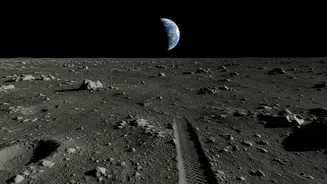
The key to finding buried ice on the Moon lies in a simple principle of physics: some materials conduct heat better than others. The Moon's surface is covered by a layer of loose, fine dust and rock called regolith. In its dry, porous state, this regolith is an incredibly
poor conductor of heat, acting like a fluffy blanket. This means it insulates the subsurface from the extreme temperature swings on the surface. However, the equation changes dramatically if water ice is present. When ice crystals fill the tiny gaps between soil particles, they bind the regolith together. This denser, more consolidated material becomes a much better conductor of heat. By measuring how well the ground beneath the surface conducts heat, scientists can infer its composition. Low conductivity suggests dry, loose soil, while higher conductivity points to denser ground, possibly held together by frozen water.
ISRO's Tool for the Job: ChaSTE
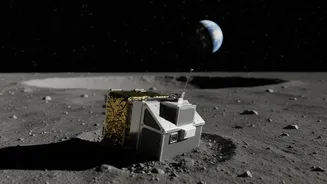
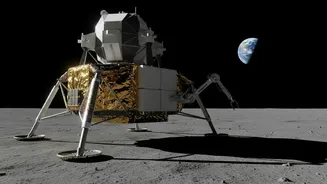
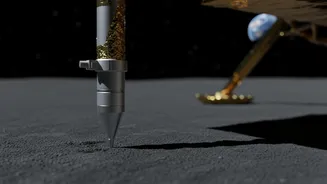
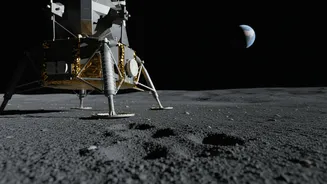
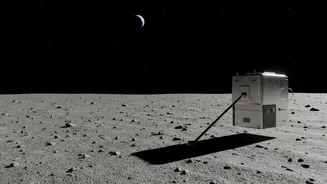
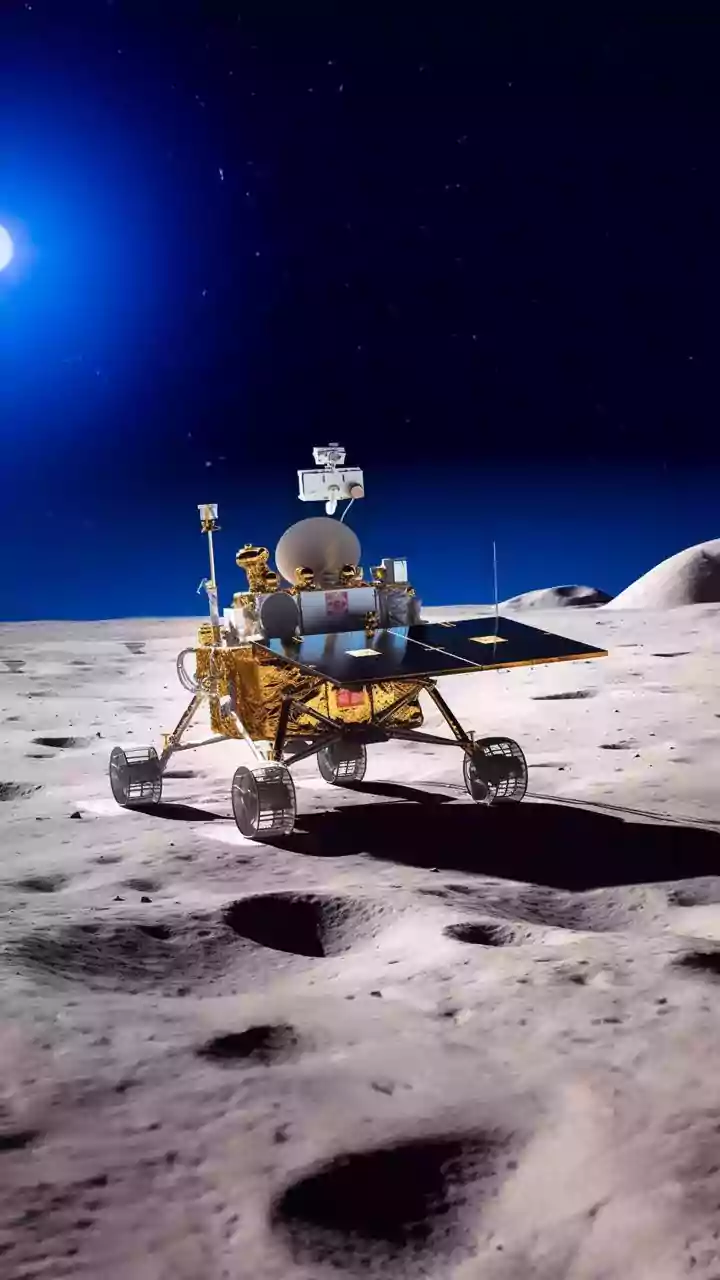
To perform this thermal investigation, ISRO equipped its Chandrayaan-3 lander with a specialized instrument: Chandra’s Surface Thermophysical Experiment, or ChaSTE. Developed by the Space Physics Laboratory and the Physical Research Laboratory, ChaSTE is essentially a high-tech thermal probe designed to penetrate the lunar surface and take direct measurements. The probe is about 10 cm long and contains ten highly sensitive temperature sensors spaced along its length. After the Vikram lander successfully touched down near the lunar south pole in August 2023, a motor-driven mechanism gently pushed the ChaSTE probe into the regolith, making it the first instrument to conduct such in-situ temperature profiling in this region.
An Active Heat Experiment
ChaSTE operates in two modes. In its passive mode, it simply records the temperature at different depths, creating a vertical profile of the natural thermal gradient in the top 10 cm of the lunar soil. This revealed a surprisingly sharp drop in temperature, from over 50°C at the surface to around -10°C just a few centimetres below, confirming the highly insulating nature of the topsoil. But its active mode is where the hunt for water truly begins. The probe has a small heater element located near its tip. Scientists on Earth can send a command to activate this heater, sending a known amount of thermal energy into the surrounding regolith. The ten sensors then meticulously track how the temperature changes over time and how quickly the heat dissipates through the soil. By analysing the rate of this heat transfer, the team can calculate the soil's thermal conductivity with remarkable precision.
From Heat Data to Water Maps
The data sent back by ChaSTE allows scientists to build a detailed picture of the subsurface. The initial measurements at the 'Shiv Shakti Point' landing site provided a crucial baseline value for the thermal conductivity of the high-latitude lunar regolith. While ChaSTE did not directly 'see' water, its findings on thermal properties are a vital proxy. Subsequent analysis, combining ChaSTE's data with models of solar radiation on sloped terrain, has helped identify conditions where water ice could be stable just beneath the surface. Researchers found that sun-facing slopes get quite warm, but adjacent pole-facing slopes, even just a metre away, can be cold enough to preserve ice. By using these principles, data from ChaSTE and other orbital instruments can be combined to create comprehensive maps that highlight areas with high potential for subsurface water retention. These maps are indispensable for planning future missions.
Paving the Way for Lunar Habitation
The success of ChaSTE is a landmark achievement, not just for India, but for global space exploration. It provided the first-ever direct, in-place measurements of the thermal properties of the Moon's polar regolith, data that previous international missions had failed to collect. This information is critical for designing future lunar habitats, rovers, and mining equipment that need to operate in the Moon's extreme thermal environment. The search for lunar water is a key part of making long-term human presence on the Moon sustainable, as this ice can be harvested for drinking water, breathable oxygen, and rocket fuel. By pioneering this clever method of using heat to find water, ISRO has provided a powerful new tool in the quest to unlock the Moon's secrets and turn it into a stepping stone for humanity's future in space.