




Understanding the Season: A Time for Rejuvenation
The story begins with the season. Karkidakam, the last month in the Malayalam calendar (mid-July to mid-August), coincides with the peak of the Southwest monsoon in Kerala. Historically, this was a challenging time of heavy rains and scarce work, often
called the 'month of scarcity'. However, Ayurvedic wisdom sees this differently. According to Ayurveda, the body's digestive fire ('Agni') is at its weakest during the monsoon, and the doshas (Vata, Pitta, Kapha) are easily imbalanced. Yet, this same climate, with its high humidity, softens the body and opens its pores, making it uniquely receptive to healing and rejuvenation. This turns a season of vulnerability into the perfect window for restorative care, known as 'Karkidaka Chikitsa'.
What Exactly is Karkidaka Kanji?
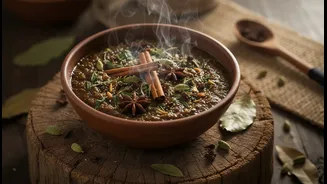
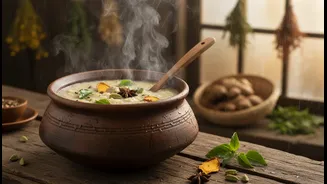
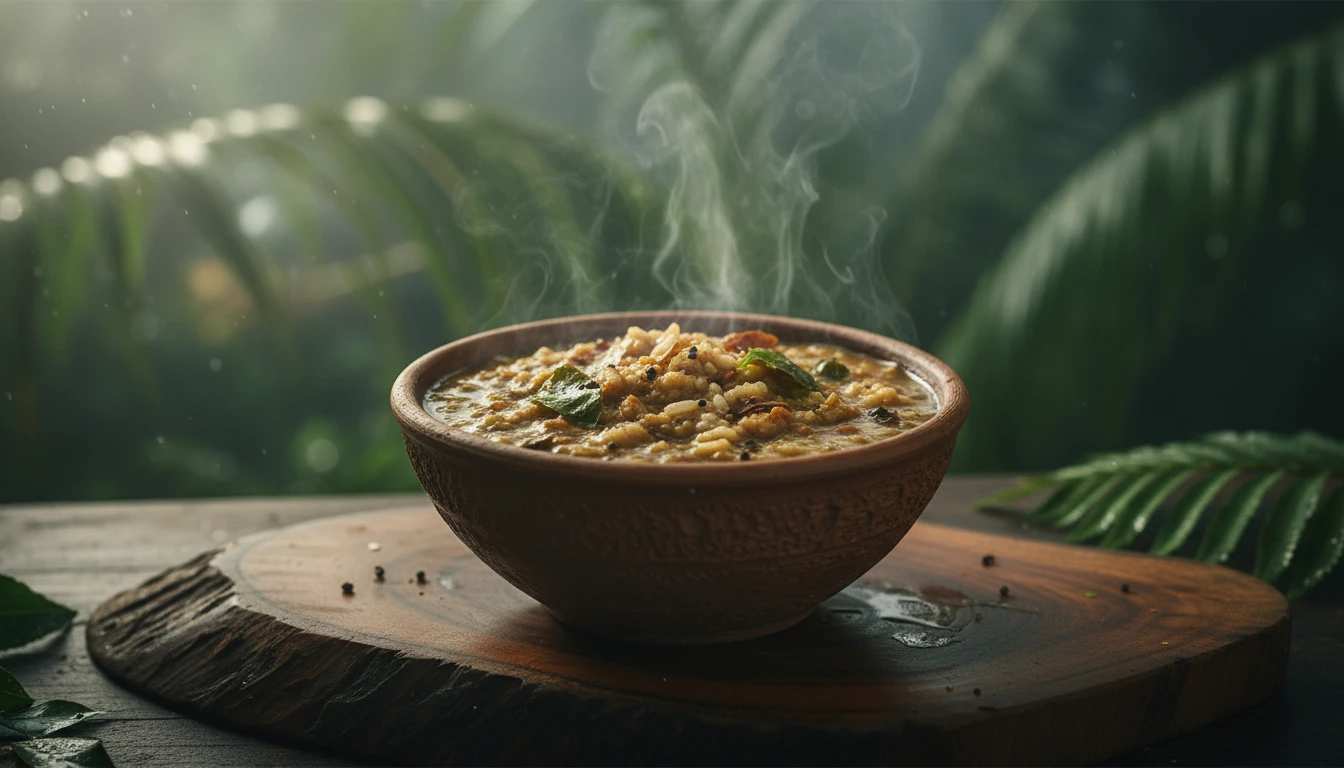
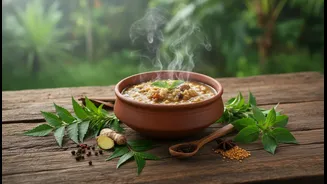
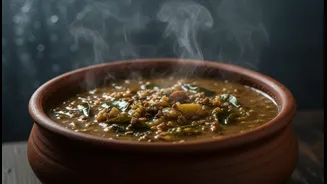
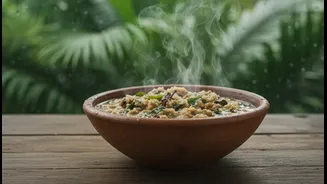
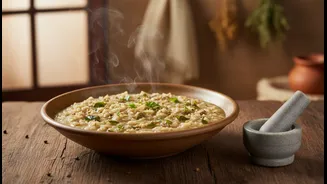
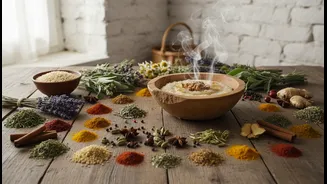
At the heart of this seasonal wellness practice is Karkidaka Kanji, also known as Oushadha Kanji (medicinal porridge) or Marunnu Kanji (medicine porridge). It is a carefully formulated, warm rice gruel designed to be both nourishing and therapeutic. The base is typically a special variety of red rice like Njavara, which is light and easy to digest. This is slow-cooked with coconut milk, palm jaggery, and a specific blend of warming spices and medicinal herbs. Every ingredient has a purpose: to be gentle on a weakened digestive system while providing the strength needed to weather the demanding monsoon season.
The Ayurvedic Wisdom in a Bowl
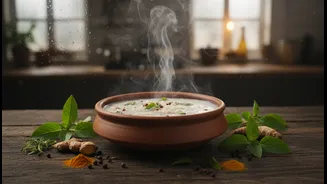
The 'smartest' part of this story lies in its ancient logic. Karkidaka Kanji is the practical application of 'Varsha Ritucharya', the Ayurvedic regimen for the monsoon season. The core belief is that food is medicine. During Karkidakam, when digestion is sluggish, the body is prone to issues like joint stiffness and low immunity. The kanji directly addresses this. Spices like dry ginger (chukku), cumin (jeeraka), and black pepper (kurumulaku) are included to rekindle the digestive fire. Fenugreek (uluva) helps with inflammation, while herbs from special medicinal mixes like 'Dashapushpam' (ten sacred flowers) and 'Dashamoola' (ten roots) work to boost immunity and help the body eliminate toxins. It’s a holistic system designed to restore balance from within.
For the Home Cook: Embracing the Spirit
If you're a home cook intrigued by this tradition, the key is to focus on the principle, not just a rigid recipe. While specific herbal formulations can be complex, a simple, effective version can be made at home. Start with red rice and soak it. The essential spices are fenugreek, dry ginger, cumin, and pepper. You can add a pinch of turmeric and some crushed garlic for their antimicrobial properties. Cook the rice until very soft with the spices, then finish with fresh coconut milk and a touch of palm jaggery for sweetness. The goal is a warm, fragrant, and easily digestible meal. For convenience, many Ayurvedic brands now offer 'Karkidaka Kanji kits' containing the specific rice and a pre-portioned herbal mix.
For the Food Reader: Appreciating the Narrative
You don't have to cook Karkidaka Kanji to appreciate its story. As a food reader, understanding it offers a window into a culture that deeply integrates food, season, and wellness. It’s a powerful example of 'food as medicine' in practice. This tradition speaks to seasonal eating not as a trend, but as a fundamental principle of health. It highlights a profound respect for nature's cycles—recognizing a time for work and a time for rest and repair. The story of Karkidaka Kanji is about how a community collectively cares for itself during a vulnerable period, using ancestral knowledge passed down through generations. It's a delicious, living piece of culinary history.