





Pothos: The Trailing Classic
Often called devil's ivy, Pothos (Epipremnum aureum) is a champion for beginner plant parents. Its heart-shaped leaves and long, trailing vines make it incredibly versatile for styling. Known for its resilience, it thrives in a wide range of lighting
conditions, from bright, indirect light to lower-light corners, though its variegation may fade in darker spots. It's also quite forgiving if you forget to water it, preferring its soil to dry out between drinks. This fast-growing plant is perfect for adding a sense of lushness without requiring constant attention, making it an ideal companion for a busy work-from-home life.
Styling Pothos at Your Workstation
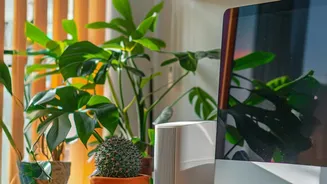
The beauty of Pothos lies in its cascading growth habit. Place it on a high shelf above your monitor and let the vines trail down, framing your screen in green. This uses vertical space effectively, keeping your desk clear. You can also train its vines to climb around a window frame or along the wall using small, clear hooks for a living art installation. For a simpler touch, a small Pothos in a decorative pot on the corner of your desk adds a soft, organic element. Because it can grow well in water, you can even place cuttings in glass bottles for a clean, minimalist aesthetic.
Snake Plant: The Architectural Survivor
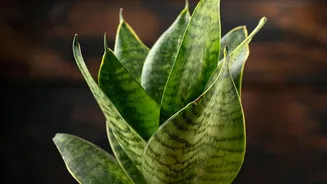
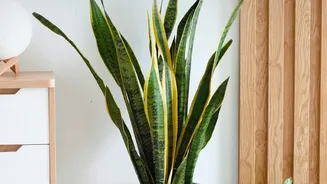
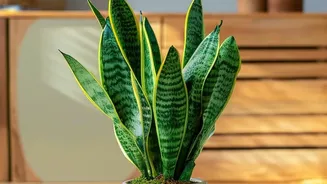
The Snake Plant (Dracaena trifasciata), also known as mother-in-law's tongue, is famous for being nearly indestructible. Its stiff, upright leaves provide a modern, architectural look that contrasts beautifully with the soft, flowing nature of Pothos. Snake plants are exceptionally tolerant of low light and thrive on neglect; their biggest threat is overwatering. A unique benefit for a bedroom workspace is that they perform a specific type of photosynthesis that allows them to release oxygen at night, which most plants only do during the day.
How to Position a Snake Plant
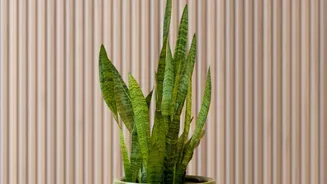
The vertical growth of a snake plant makes it a superb space-saver. Taller varieties can be placed in a stylish pot on the floor next to your desk, creating a statement without encroaching on your workspace. Smaller, 'bird's nest' varieties are compact enough to sit directly on your desk. Their upright form is particularly useful for workstations with adjustable standing desks, as the leaves won't interfere when the desk moves up and down. Grouping a few snake plants of different heights can create a dynamic, sculptural display.
Do They Really Purify the Air?
The idea that houseplants purify the air comes from a 1989 NASA study which found that certain plants could remove common volatile organic compounds (VOCs) like formaldehyde and benzene from a sealed chamber. Both snake plants and pothos were noted for their abilities. However, it's important to have realistic expectations. Subsequent reviews have shown that you would need a very large number of plants—some estimate 10 to 1000 per square meter—to replicate those results in a typical, ventilated room. While your desk plants are helping, their main benefits are aesthetic and psychological, reducing stress and boosting focus.
Creating Your Green Workspace
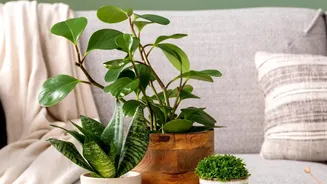
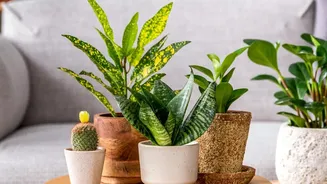
Combining Pothos and Snake Plants offers a perfect balance of texture and form. Pair the trailing vines of a Pothos on a shelf with the strong vertical lines of a Snake Plant on the floor. Choose pots that complement your bedroom decor—neutral ceramics for a minimalist look, or colourful containers to add a pop of personality. Don't be afraid to group them. A small cluster of plants always makes a bigger impact than single, scattered pots. By placing them thoughtfully, you create a small green sanctuary that not only looks great but also makes your workspace a more pleasant and calming place to be.