






From Awe to Action: ISRO's Youth Outreach
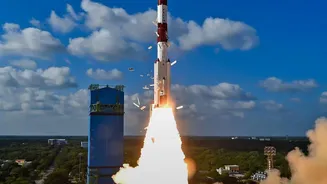
For many students, the journey to a space career begins not in a classroom, but with the thrill of watching a rocket launch. ISRO has been instrumental in nurturing this initial spark of curiosity into a deeper interest in science and technology. The
organisation runs several initiatives designed to "catch them young" and introduce them to the world of space. A flagship program is the "Young Scientist Programme," or YUVIKA, a two-week residential course for school students. Participants visit ISRO centres, interact with senior scientists, and engage in hands-on activities like building model rockets, giving them a firsthand glimpse into the mechanics of space exploration. These programs aim to create awareness and encourage more students to pursue careers in Science, Technology, Engineering, and Mathematics (STEM).
Beyond the Astronaut: A Universe of Roles
The popular image of a space career often defaults to astronauts or rocket scientists. However, the reality is far more diverse. India's space economy, projected to grow to nearly $44 billion by 2033, requires a wide array of skills. While aerospace and mechanical engineering remain core disciplines, the modern space industry is hungry for experts in data science and artificial intelligence. Satellites generate enormous amounts of data used for everything from climate monitoring to urban planning, creating a demand for specialists who can interpret this information. Furthermore, the sector needs professionals in robotics, software development, cybersecurity, and even space law and policy. As private companies enter the fray, roles in business development, finance, and communications are also becoming crucial.
The Rise of India's Private Space Sector
For decades, a space career in India largely meant working for ISRO. That landscape has dramatically changed. Since the sector was opened to private participation in 2020, more than 400 space startups have emerged. Companies like Skyroot Aerospace, Pixxel, and Dhruva Space are now building everything from launch vehicles to satellite constellations. This has created a dynamic new job market for young graduates. These private firms offer a different work environment, often faster-paced and with opportunities to work on niche technologies from an early stage. This private ecosystem, working in tandem with ISRO, is creating a full-stack space economy, with strengths across manufacturing, launch services, and data applications.
Building the Right Skill Set
For students aiming for a career in space, the path starts with a strong foundation in academics, typically by choosing the Physics, Chemistry, and Mathematics (PCM) stream in school. A bachelor's degree in an engineering discipline like aerospace, mechanical, or electronics is a common entry point. However, the skills required are evolving. Proficiency in software for computer-aided design (CAD), simulation, and programming languages like Python is now essential. Beyond technical skills, the industry values problem-solving, analytical thinking, and creativity. Practical experience through internships, university space clubs, and research projects is also highly valued by recruiters from both ISRO and private companies.