







As artificial intelligence reshapes how we work, a common fear is the demise of the traditional office. But a new report from Colliers suggests the opposite, finding that the need for human collaboration is driving a workplace evolution, not an extinction.
AI's Unanimous Impact
The integration of artificial intelligence into the workplace is no longer a question of 'if' but 'how'. According to the 2027 Colliers Asia Pacific Workplace Insights report, which surveyed over 300 corporate office occupiers in August 2026, the consensus is clear and absolute. Every single respondent expects AI to create new, specialised roles that demand entirely new skills, capabilities, and, most importantly, different models of collaboration. This unanimous agreement signals a fundamental shift in how business leaders across 11 Asia-Pacific markets view the future. The conversation has moved beyond simple automation to a more nuanced understanding of how AI will augment human potential, creating a workforce that is more dynamic and project-focused. The survey found that 62% of business leaders anticipate a rise in cross-functional and project-based teams, a structure that inherently relies on strong collaborative ties.
Challenging the 'Empty Office' Myth
A persistent narrative accompanying the rise of AI and remote work has been the impending contraction of corporate real estate. However, the Colliers survey directly challenges this assumption. Far from rendering the office obsolete, AI is reinforcing its purpose as a central hub for high-value human interaction. Nearly half of the respondents (47%) believe AI will actually drive demand for new and different kinds of workplace formats. The report indicates a strategic pivot away from footprint reduction and toward value creation. Even with 75% of occupiers citing costs as a major factor, most are not looking to shrink their space but rather to enhance it. This suggests a growing recognition that while AI can handle routine tasks, the physical office is indispensable for the complex problem-solving, innovation, and knowledge exchange that drive a business forward.
The Office Reimagined as a Collaboration Hub
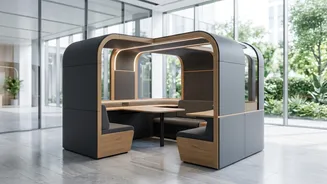
If AI is handling more individual, task-based work, what is the office for? The Colliers report answers decisively: collaboration and innovation. While productivity remains a primary driver for maintaining office space, it is followed closely by the need to foster teamwork and generate new ideas. Companies, especially in high-growth regions like India and Southeast Asia, are viewing their real estate not as a cost centre but as a strategic tool for talent acquisition and performance. The office is being reimagined as a destination—a tech-enabled environment designed to facilitate the very human interactions that AI cannot replicate. This means a shift away from seas of cubicles and toward more dynamic, flexible spaces that support project-based teams, brainstorming sessions, and spontaneous knowledge sharing.
The Critical Gap Between Insight and Action
Despite widespread agreement on AI's transformative potential, a dangerous gap is emerging between expectation and execution. The survey highlights that many organisations have not yet translated their understanding of AI's impact into concrete workplace and real estate strategies. While most companies remain committed to officecentric models—with 82% currently operating as such and 80% not planning policy changes in the next year—this stability could mask a lack of preparedness. Colliers' report suggests that the greatest risk for businesses is not AI itself, but the failure to plan for its integration. Companies that delay redesigning their physical spaces and organisational structures to support new, more collaborative ways of working may find themselves at a significant disadvantage in attracting and retaining the specialised talent needed in an AIdriven economy.