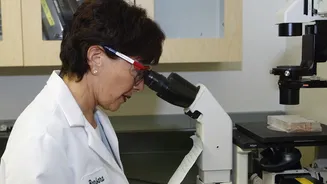








The holy grail of cancer treatment is a therapy that attacks tumours while sparing healthy tissue. Hyderabad-based startup PopVax is tackling this challenge with a bold strategy: creating bespoke vaccines matched to each patient's unique cancer.
A New Frontier in Oncology
For decades,
the idea of a cancer vaccine has been more science fiction than reality. Unlike preventative vaccines for viruses, a therapeutic cancer vaccine aims to treat the disease by training a patient's own immune system to recognise and destroy cancerous cells. The primary challenge is that cancer cells are notoriously good at hiding, often appearing to the immune system as normal, healthy cells. However, recent breakthroughs in mRNA technology, famously used in COVID-19 vaccines, and artificial intelligence have opened a new frontier. These tools allow scientists to rapidly decode a tumour's specific genetic mutations and design a vaccine that targets its unique fingerprint. This moves treatment away from a one-size-fits-all model towards something truly personal.
PopVax's Ambitious Bet
Enter PopVax, a biotechnology startup founded in late 2021 that has quickly positioned itself at the forefront of this revolution. Based in Hyderabad, the company is leveraging India's deep pool of scientific talent and lower operating costs to accelerate research and development. Founded by Soham Sankaran, PopVax aims to use a combination of AI, machine learning, and its proprietary mRNA platform to design and manufacture these highly personalized treatments. The company's work has attracted significant funding from prominent global entities, including the Gates Foundation and Good Ventures, signalling strong confidence in its high-risk, high-reward approach. PopVax is initially focusing on hard-to-treat solid tumours like liver and pancreatic cancer, which have grim survival rates.
How It Works: AI Meets Biology
The process behind a personalized cancer vaccine is a marvel of modern science. It begins by sequencing the DNA of a patient's tumour and healthy tissue to identify mutations exclusive to the cancer cells. These mutations can produce abnormal proteins called neoantigens, which act like red flags for the immune system. This is where PopVax's artificial intelligence platform comes in. The AI sifts through the genetic data to predict which neoantigens are most likely to trigger a powerful immune response. Once the best targets are selected, the company manufactures a custom mRNA vaccine containing the instructions for the patient's cells to produce those specific neoantigens. This essentially gives the immune system a personalised training manual on how to find and fight the cancer.
The Long and Winding Road to Approval
Despite the immense promise, the headline's crucial caveat remains: PopVax does not have an approved cancer treatment yet. The journey from a laboratory concept to a widely available therapy is long, expensive, and fraught with challenges. None of the company's experimental cancer vaccine candidates have been administered to patients. PopVax plans to begin its journey through compassionate-use pathways outside of India while preparing for the rigorous clinical trials needed to prove safety and efficacy. Manufacturing itself is a major hurdle. Instead of producing one product at massive scale, personalized medicine requires a 'scale-out' approach, with thousands of unique, patient_specific batches created on demand—a logistical and regulatory puzzle. To address this, PopVax recently launched its own integrated R&D and manufacturing facility in Hyderabad, called the RNA Foundry.
A Glimpse of the Future
PopVax is not alone in this race. Global pharmaceutical giants are also heavily invested in personalized cancer therapies, with some showing encouraging early results in cancers like melanoma. However, PopVax's strategy of building a fullstack, AI driven platform in India gives it a unique advantage in speed and cost effectiveness. While one of its other vaccine candidates, for COVID -19, has entered Phase I trials in Australia, its cancer program is still in its infancy. The road ahead is uncertain, and success is far from guaranteed. Cancer's ability to mutate and evade the immune system remains a formidable obstacle. Yet, the work being done at PopVax and similar firms represents a fundamental shift in how we approach cancer, moving from generalized treatments to algorithmic, precision guided therapies. The ultimate goal is to create treatments that can box in a tumour, cutting off its evolutionary pathways and offering real hope to patients with the most difficult diagnoses.