


Seeing the Invisible
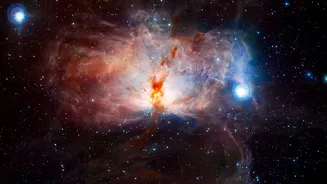
For centuries, astronomers were limited in their ability to study star formation because the very ingredients that build stars—dense clouds of gas and dust—are opaque to visible light. It's like trying to see a sapling grow inside a dense, dark forest
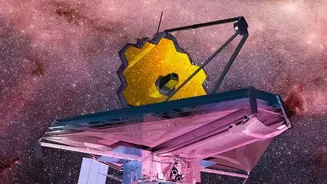
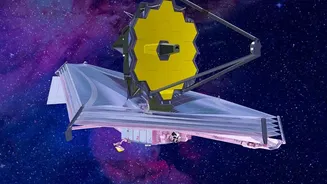
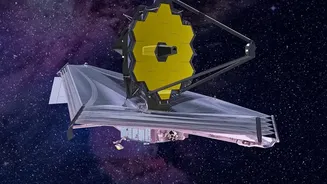
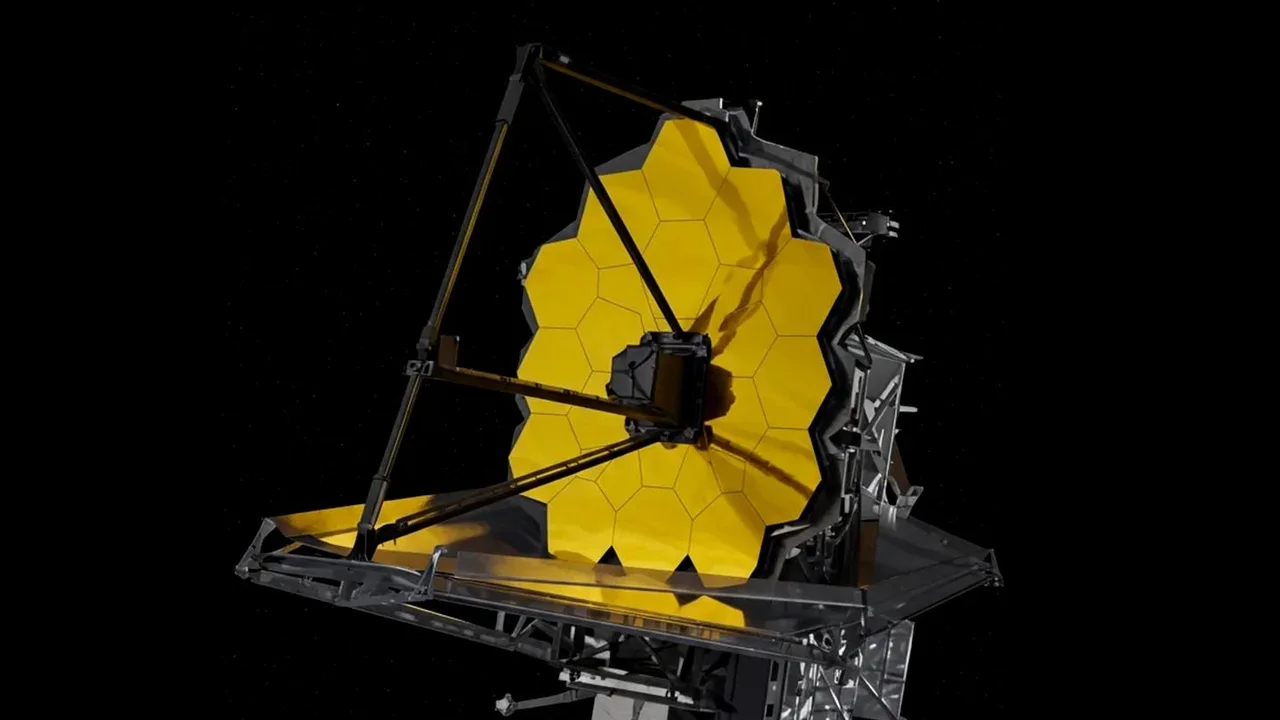
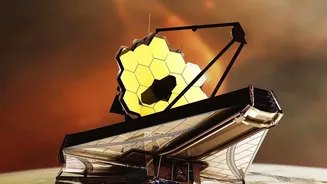
from miles away. These stellar nurseries effectively hide the most critical, early stages of a star's life. The James Webb Space Telescope (JWST) was specifically designed to overcome this challenge. By capturing infrared light, which can pass through these thick dust clouds, the telescope gives scientists a front-row seat to the formation of new stars and their planetary systems. This technological leap is providing a flood of new data, turning long-held theories into direct observations and revealing surprises along the way.
Inside the Cosmic Nursery
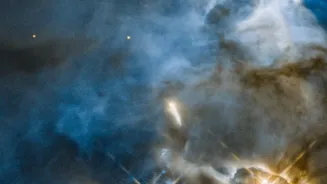
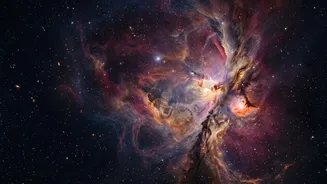
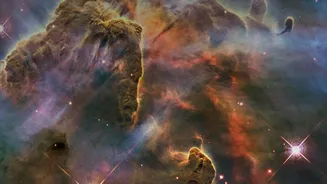
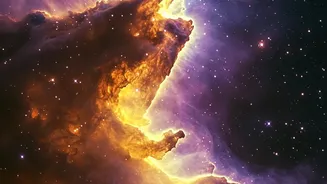
Recent images from the JWST have focused on regions like the FS Tau star system, a nursery for young, relatively low-mass stars. In these breathtaking pictures, we see protostars—infant stars that are still gathering mass from their parent cloud—glowing brightly. One of the most stunning features captured are the powerful jets and outflows of material being blasted into space by these young stars. Seen as wisps and sheets of glowing gas, these outflows are a crucial part of a star's development, helping to regulate its growth. Webb's high-resolution images show these jets in unprecedented detail, even revealing how they wiggle and create symmetrical patterns as they collide with the surrounding gas and dust. These structures had been theorized, but seeing them so clearly helps confirm how young stars interact with their environment.
The Blueprint for Planets
Beyond the stars themselves, Webb is providing revolutionary insights into the birth of planets. Surrounding many of these protostars are protoplanetary disks—swirling pancakes of gas and dust from which planets are born. Our own solar system likely looked very similar about 4.6 billion years ago. The telescope's instruments are so sensitive that they can analyze the chemical composition of these disks and observe how they evolve. Recent studies of dozens of young, Sun-like stars show how the way gas escapes from these disks changes over time. Early on, powerful jets and magnetically driven winds dominate, but as the system ages, radiation from the star itself begins to blow the gas away. This process sets a cosmic clock for the formation of gas giant planets like Jupiter, which must gather their immense atmospheres before the raw materials are gone.
Rewriting Cosmic History
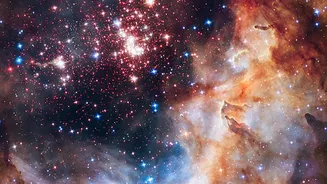
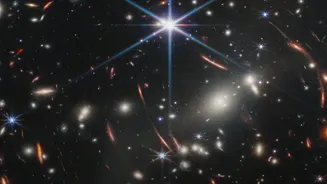
The details captured by Webb are not just confirming old ideas; they are also challenging fundamental assumptions about the universe. Some observations of very distant, early galaxies suggest they contain far more small, faint stars than previously thought. This implies that these ancient galaxies could be three to four times more massive than earlier estimates indicated. This finding deepens an existing cosmic puzzle, making it even harder for scientists to explain how such enormous and mature galaxies could have formed so soon after the Big Bang. By studying stellar nurseries in our own galaxy, like Sagittarius B2, which resemble conditions in the early universe, astronomers can get a local look at the processes that shaped the first galaxies.