




Beyond the Commercial Buzz
While popular hill stations grapple with peak season crowds, a quieter corner of Himachal’s Kullu district beckons. Tirthan Valley and the nearby hamlet of Shoja offer a refreshing alternative for those seeking solitude and nature in its purest form.
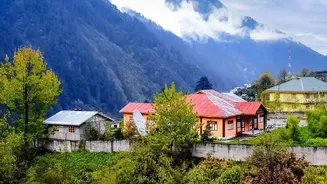
Unlike their commercial counterparts, these destinations are gateways to the Great Himalayan National Park, a UNESCO World Heritage Site. The vibe here is unhurried, focused on riverside relaxation, forest walks, and soaking in the tranquil atmosphere. It’s a place where doing nothing is as rewarding as the day’s trek, and the experience is defined by wooden cottages and pristine landscapes rather than bustling market roads.
The Golden Glow of Autumn
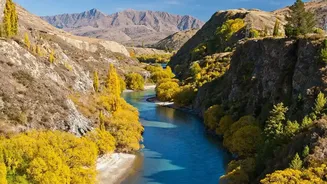
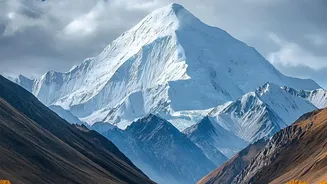
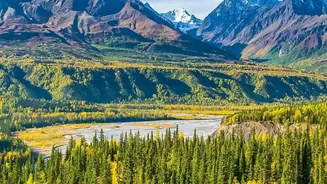
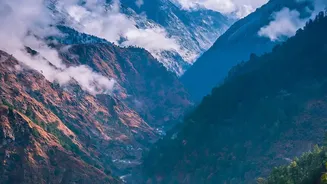
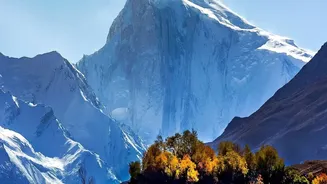
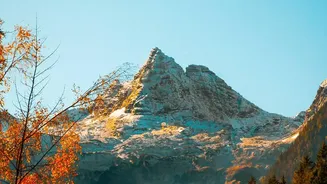
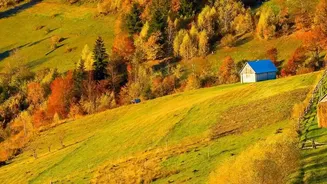
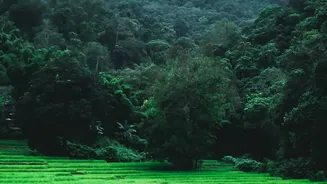
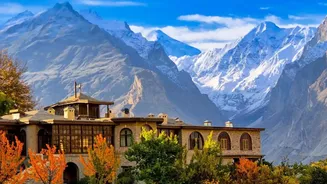
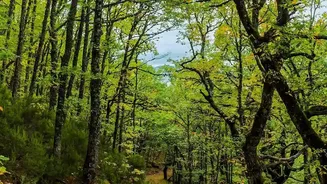
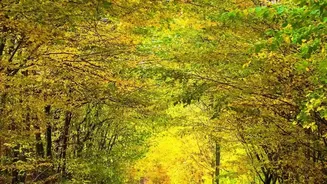
Autumn, particularly from October to November, is arguably the best time to visit this region. After the monsoons wash the landscape clean, the air becomes exceptionally clear, offering sharp, panoramic views of the surrounding Himalayan peaks. The weather is pleasant, with temperatures ideal for daytime hikes and cool evenings perfect for a bonfire. This season brings a unique palette to the forests of oak, maple, and deodar; the foliage turns into a spectacle of gold, orange, and russet hues, creating a picture-perfect setting for nature lovers and photographers.
Discovering the Tirthan Charm
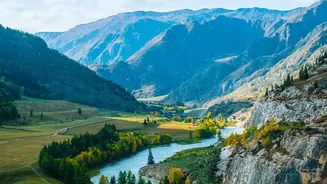
Tirthan Valley, set at an altitude of about 1600 metres, is defined by the pristine Tirthan River. The valley is dotted with charming villages like Gushaini and Banjar, where traditional Himachali homestays offer an authentic experience. The river itself is famous for its trout, making angling a popular and meditative activity. For many, the ultimate pleasure is simply finding a spot by the crystal-clear water, listening to its gentle flow, and watching the day go by. The valley serves as the eco-zone for the Great Himalayan National Park, and its trails lead into dense, biodiverse forests.
Shoja: A Quiet Hamlet in the Clouds
Perched higher up, about an hour’s drive from the main valley, is the serene village of Shoja. Quieter and less frequented than even Jibhi, Shoja is a haven of peace. Its main draw is its spectacular, unobstructed view of the snow-capped mountains. The village itself is small, encouraging slow walks through its deodar forests or simply relaxing on a balcony with a cup of tea. Shoja’s primary role for travellers is as a tranquil base and the starting point for adventures up to Jalori Pass. Its undisturbed calm makes it perfect for those wanting to disconnect completely.
Adventures from Jalori Pass
The motorable Jalori Pass, sitting at over 10,000 feet, connects the Kullu and Shimla regions and is the hub for the area's most famous short treks. A popular and relatively easy 5 km hike from the pass leads to Serolsar Lake, a pristine high-altitude lake surrounded by a dense oak forest. According to local lore, the lake is sacred to the goddess Budhi Nagin, and birds are said to keep its waters immaculately clean by picking up any fallen leaves. Another popular, though steeper, trail leads to the ruins of Raghupur Fort, which opens up to a stunning 360-degree meadow view of the Himalayas.
Planning Your Peaceful Escape
Reaching Tirthan Valley and Shoja from cities like Delhi or Chandigarh typically takes 12-14 hours by road. The common route involves taking an overnight Volvo bus towards Manali and getting off at Aut. From Aut, local taxis or buses make the final 1.5 to 2-hour journey into the valley. For those driving, the turn-off before the Aut tunnel is the key marker. Accommodation is a highlight, with a focus on charming homestays, riverside cottages, and eco-friendly guesthouses that offer a personal touch. It's advisable to carry sufficient cash, as ATMs are scarce and often out of service.