




The Silent Scourge in the Vineyards
Downy mildew is a water mould that thrives in the warm, humid conditions often found in Maharashtra. It appears as yellow, oily spots on leaves and a white, cottony growth on the underside, eventually spreading to the fruit itself. If left unchecked,
the disease can lead to severe crop losses, with some vineyards reporting losses of up to 80%. Traditionally, farmers have relied on blanket spraying of fungicides, a method that is not only costly but also labour-intensive and carries environmental risks. This broad approach often leads to using more chemicals than necessary, as healthy and infected plants are treated alike. The challenge has always been to detect the outbreak early and precisely, before it gets out of control.
The View from Above
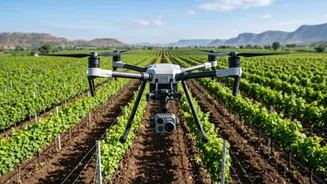
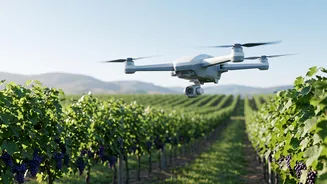
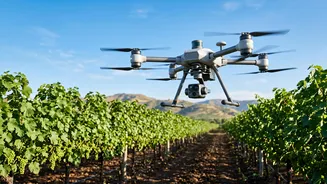
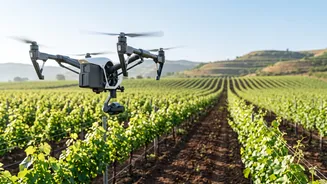
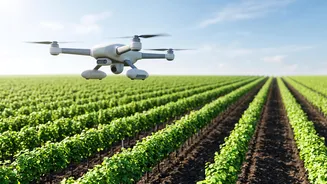
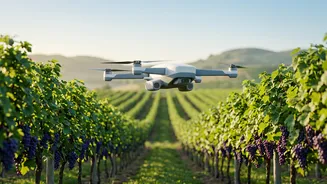
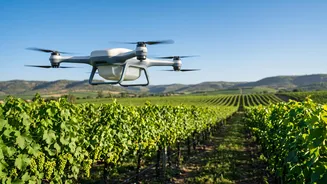
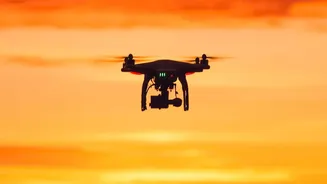
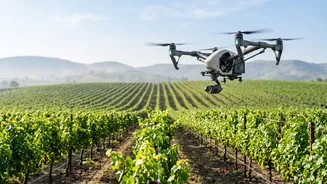
This is where precision agriculture drones come in. These are not just remote-controlled aircraft; they are sophisticated data-gathering tools. Equipped with advanced multispectral and thermal sensors, the drones fly over the vineyards, capturing detailed images that go far beyond what the human eye can see. These sensors can detect subtle changes in the light reflected by plants and variations in canopy temperature. A plant under stress from a fungal infection like downy mildew has a different thermal and reflective signature long before visible symptoms like yellow spots appear. This allows for the creation of a detailed health map of the entire vineyard, hectare by hectare.
AI as the New Farmhand
Gathering the data is only the first step. The real magic happens when Artificial Intelligence (AI) analyzes the thousands of images captured by the drone. The AI software is trained to identify the unique patterns and signatures associated with downy mildew. It sifts through the data, flagging specific areas—sometimes down to individual plants—that show early signs of infection. The system can distinguish between stress caused by disease, lack of water, or nutrient deficiencies, providing a highly accurate diagnosis. This analysis is presented to the farmer in a simple, color-coded map, highlighting the problem hotspots that require immediate attention.
From Data to Targeted Action
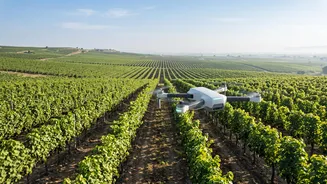
Armed with this precise information, smallholders in Nashik can now abandon the old spray-and-pray method. Instead of dousing the entire field with fungicides, they can take targeted action. For smaller plots, this might mean focused manual spraying on only the identified infected areas. For larger operations, the same or different drones can be deployed for precision spraying. These agricultural drones use GPS coordinates from the AI-generated map to deliver a specific dose of fungicide directly to the affected plants, avoiding healthy ones and minimizing chemical drift. This approach can reduce overall chemical usage by up to 30%, saving farmers money and reducing the environmental impact.
More Than Just Grapes
The benefits extend beyond just controlling a single disease. By detecting problems early, farmers can improve their overall yield and the quality of their grapes, which is crucial for the export market. Reduced chemical use also means safer working conditions for farm labourers, who have less exposure to potentially harmful substances. Furthermore, local startups in Nashik are developing their own indigenous software for these drones, making the technology more accessible and tailored to Indian conditions. This local innovation is creating a new ecosystem of tech jobs in the agricultural sector and empowering farmers to adopt more sustainable and profitable practices.