





The Air We Can't Bring With Us
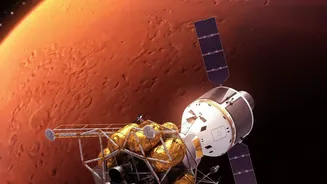
The dream of sending astronauts to Mars comes with a heavy price tag, and much of that cost is literal weight. Every kilogram of supplies launched from Earth is immensely expensive. For a long-term human mission, the two most critical resources are breathable
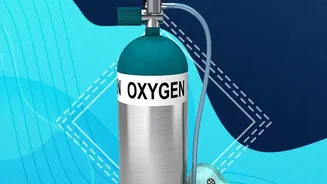
air and the rocket propellant needed for the return journey. The Martian atmosphere is about 96% carbon dioxide, making it toxic to humans. Transporting the estimated 25 metric tons of liquid oxygen needed just to launch a rocket off the Martian surface, let alone the air for a crew to breathe for months, is considered logistically prohibitive. The solution isn't to pack more, but to make it there. This concept, known as In-Situ Resource Utilization (ISRU), is the cornerstone of making Martian exploration sustainable, and it starts with making oxygen from the thin Martian air itself.
Meet MOXIE, The Martian Tree
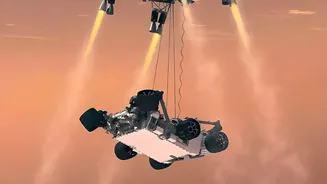
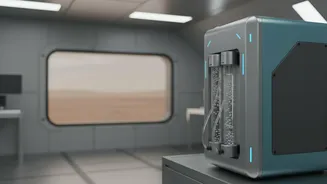
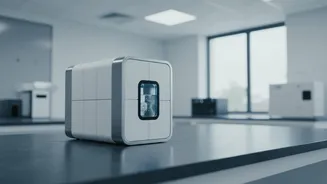
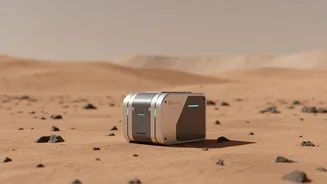
Enter the Mars Oxygen In-Situ Resource Utilization Experiment, or MOXIE. This toaster-sized instrument, which landed on Mars aboard NASA's Perseverance rover in 2021, was designed to do something extraordinary: breathe in the unbreathable and exhale pure oxygen. Functioning like a small, mechanical tree, MOXIE was a proof-of-concept mission led by researchers at MIT. Its goal wasn't to sustain a human crew, but to prove that the fundamental technology could work in the harsh, unpredictable Martian environment. Over its mission, which concluded in 2023, MOXIE ran 16 times under a variety of conditions, including different seasons and times of day. In every single test, it successfully produced high-purity oxygen, confirming that the theory works flawlessly in practice.
How to Make Air on Mars
The process behind MOXIE is a technology called solid oxide electrolysis. While the name is complex, the idea is quite elegant. First, the device pulls in the Martian atmosphere through a filter to remove dust. This air is then compressed and heated to a blistering 800 degrees Celsius. At this high temperature, the pressurized carbon dioxide is fed into an instrument that acts like a reverse fuel cell, using an electric current to split the CO2 molecules. The process separates the carbon dioxide (CO2) into pure oxygen ions (O) and carbon monoxide (CO). The oxygen ions are drawn across a ceramic membrane and recombine to form breathable oxygen (O2), while the carbon monoxide is vented back into the atmosphere as a harmless byproduct. The instrument then carefully measures the quantity and purity of the oxygen produced before releasing it.
A Proof of Concept, Not a Power Plant
It's important to understand the scale of MOXIE's achievement. Over its entire operational life, it produced a total of 122 grams of oxygen—enough to keep a small dog breathing for about ten hours. At its peak, it generated about 12 grams per hour, roughly the output of a small tree on Earth. These numbers may seem small, but the purpose of the experiment was never to generate large volumes. Instead, it was to prove reliability. By successfully operating through extreme temperature swings, dust, and changing atmospheric density, MOXIE de-risked the technology. It demonstrated that catastrophic failure wasn't likely and that the system could perform reliably over a full Martian year. This success provides the critical data and confidence needed to build the next generation of oxygen generators.
The Blueprint for a Martian Oxygen Factory
The success of the MOXIE prototype paves the way for what the headline truly signals: scaled-up systems capable of continuous production. Researchers are already designing what they call a 'Big MOXIE,' a system that would be roughly the size of a household freezer and hundreds of times more productive. This future oxygen factory would need to produce two to three kilograms of oxygen per hour and run continuously for thousands of hours to meet the demands of a human mission. Such a system would require a significant power source, on the order of 25 to 30 kilowatts, but would be capable of creating the tens of tons of oxygen needed for rocket propellant and life support. Companies like OxEon Energy are already developing mission-scale electrolysis stacks that are over 30 times the scale of the original MOXIE, transforming the experimental success into a viable industrial process for another world.