







The Real Problem with Sitting Still
Our bodies were not designed for the modern workday. For many of us, especially in an increasingly digital India, work means sitting for eight, nine, or even ten hours a day. While it might seem harmless, this prolonged sedentary behaviour takes a toll.
It’s not just about backaches or stiff necks. When you sit for too long, blood flow slows down, including to your brain. This can lead to that familiar feeling of mental fog, decreased alertness, and a sharp dip in creativity and problem-solving skills. Your metabolism slows, your muscles stiffen, and your mood can even be affected. The traditional 30-minute gym session, while beneficial, often isn't enough to counteract the negative effects of sitting for the other 23.5 hours of the day.
Enter the 'Movement Snack'
This is where tiny movement breaks, or 'movement snacks' as they are sometimes called, come in. The concept is brilliantly simple: instead of saving all your physical activity for one big session, you sprinkle it throughout your day in one- to five-minute bursts. It's not about breaking a sweat or changing into gym clothes. It's about intentionally and frequently interrupting periods of sitting with any form of light-to-moderate activity. Think of it as hitting a reset button for your body and mind. This approach is more manageable, less intimidating, and, according to a growing body of research, incredibly effective for both physical and cognitive health.
The Science Behind the Boost
Why does this work so well? When you stand up and move, even for a minute, you reactivate your physiological systems. Your heart rate increases slightly, pumping more oxygen-rich blood to your brain. This simple act can instantly improve executive functions like attention, memory, and focus. Studies, including those published in journals like the *British Journal of Sports Medicine*, have shown that even short bouts of stair climbing or walking can lead to measurable improvements in concentration and energy levels. Furthermore, these mini-breaks help regulate blood sugar, release mood-lifting endorphins, and prevent the muscular stiffness that comes from being locked in one position.
The Two-Minute Walk
This is the easiest break to start with. Set a timer for every hour. When it goes off, simply get up and walk around. It could be a lap around your office floor, a walk to the kitchen for a glass of water, or a quick stroll on your balcony if you work from home. The key is to change your posture and get your legs moving. Don't check your phone while you do it; use these two minutes to let your mind wander or focus on your breathing. This short mental and physical disconnect is powerful enough to help you return to your task feeling refreshed.
Try a Simple Squat Set
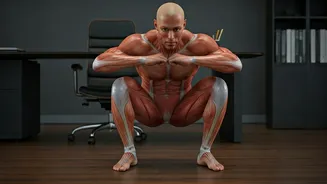
You don't need a gym to engage your largest muscle groups. Bodyweight squats are perfect for a tiny break. Stand up from your chair, place your feet shoulder-width apart, and perform 10-15 squats. Focus on your form: keep your back straight and chest up. This quick set gets your blood pumping, activates your glutes and leg muscles (which go dormant during sitting), and provides an immediate energy jolt. It takes less than 60 seconds and is a fantastic way to combat the lethargy that sets in after a long meeting.
The Desk-Side Stretch
Hours spent hunched over a keyboard can lead to a tight chest, rounded shoulders, and a stiff neck. Counteract this with a simple stretching break. Stand up and clasp your hands behind your back, pulling your shoulders back to open up your chest. Hold for 30 seconds. Then, gently tilt your head from side to side to release neck tension. Reach your arms overhead for a full-body stretch. These movements directly address the physical strain of desk work and can prevent long-term postural problems, all while giving your brain a welcome pause.