


The Universe as a Movie, Not a Photo
For most of human history, we have treated the cosmos like a static photograph. But astronomers now know it is more like a movie, filled with objects that change, move, and evolve. This is the foundation of 'time-domain astronomy', the study of how celestial
objects vary over time. Some cosmic events, like a supernova, are explosive and brief. Others are incredibly subtle, like the slow dance of stars in a distant galaxy or the gradual acceleration of the universe's expansion. To capture these slower, grander changes, you need more than just a powerful telescope; you need patience and a long-term strategy. Watching the same patch of sky for a decade or more allows scientists to create a time-lapse video, revealing processes that are invisible in a single snapshot and helping to solve long-standing cosmic puzzles.
A Decade: The Cosmic Sweet Spot
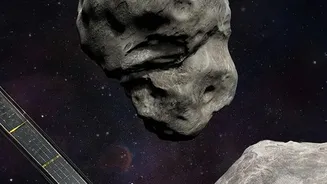
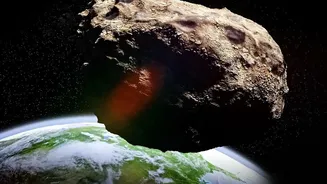
Why is a decade such a magical number in astronomy? It is long enough to provide a baseline to detect subtle but significant changes. For instance, the US National Academies facilitates 'Decadal Surveys', where scientists set community-wide priorities for the next ten years of research, often focusing on missions designed for long-term observation. A decade of data can reveal the slight wobble of a star caused by an orbiting exoplanet, track the path of a potentially hazardous asteroid, or measure the collective movement of millions of stars. Projects like the recently-launched Legacy Survey of Space and Time (LSST) at the Vera C. Rubin Observatory are designed specifically for a 10-year run, systematically scanning the entire southern sky every few nights. This creates an incredibly rich, deep, and time-sensitive dataset essential for tackling the biggest questions in cosmology.
Shedding Light on Dark Energy
One of the most profound mysteries is dark energy, the enigmatic force causing the universe to expand at an accelerating rate. Scientists believe it makes up about 70% of the universe, yet we know almost nothing about it. Decade-long projects like the Dark Energy Survey (DES), which ran from 2013 to 2019, have provided our best constraints on this phenomenon. By repeatedly observing hundreds of millions of galaxies and thousands of Type Ia supernovae — a specific kind of exploding star used as a 'standard candle' to measure cosmic distances — DES helped map the expansion history of the universe. The results from its six years of data confirmed that the expansion is consistent with a constant force, strengthening the standard model of cosmology. Future ten-year surveys will refine these measurements, searching for any hint that dark energy might be changing over time.
Creating a Galactic GPS
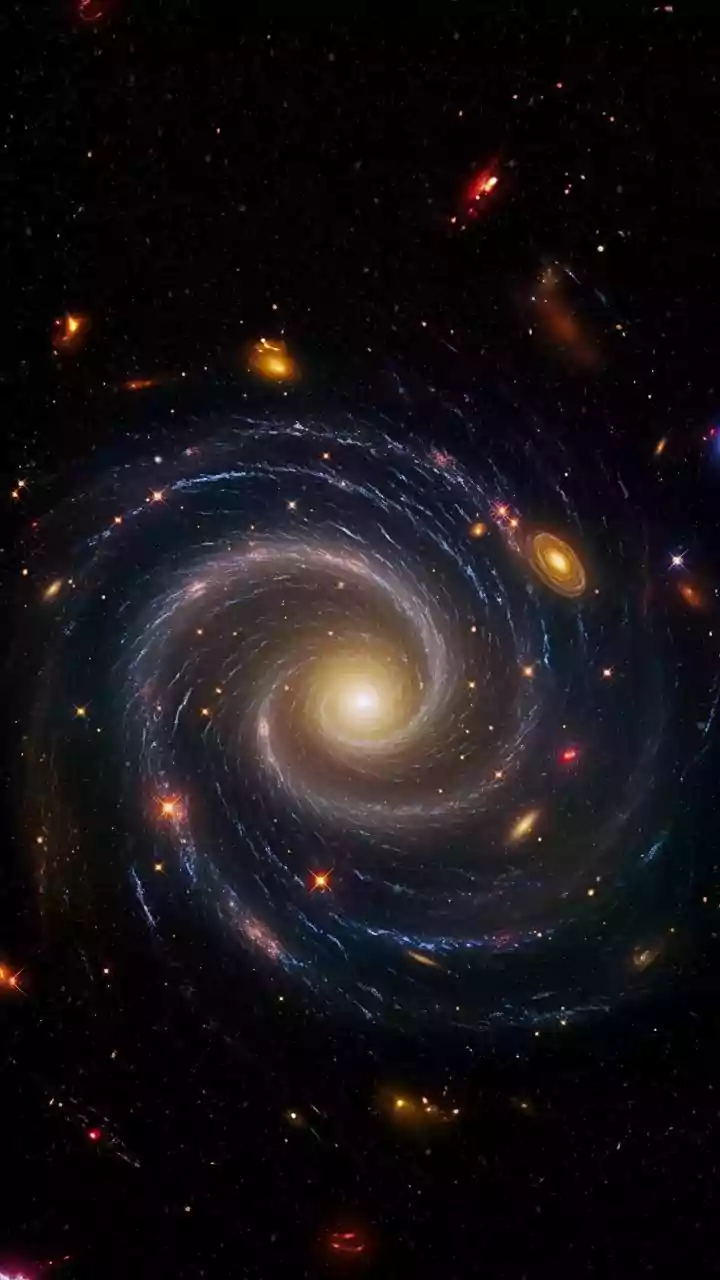
How did our Milky Way galaxy form? To answer that, astronomers need a detailed 3D map, not just of where stars are, but where they are going. This is where the European Space Agency’s Gaia mission comes in. Launched in 2013, Gaia spent over ten years meticulously charting the positions, distances, and motions of nearly two billion stars. This monumental effort has revolutionized our understanding of the galaxy. By tracking stellar movements, Gaia has uncovered the fossil record of ancient galactic collisions and mapped the galaxy's spiral structure with unprecedented detail. The complete ten-year dataset, with its final releases expected towards the end of the decade, will serve as the ultimate 'Galactic GPS', allowing scientists to rewind the history of our galaxy and see how it was built.
Discovering the Unexpected
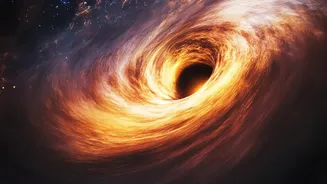
While long-term surveys are designed to answer specific questions, their greatest strength might be their ability to find things we were not even looking for. Systematically monitoring the sky means you are bound to catch rare, fleeting, and entirely new phenomena. These surveys have become 'discovery machines' for everything from stars being torn apart by black holes (tidal disruption events) to the faint flickers of distant, pulsating stars. NASA's upcoming Nancy Grace Roman Space Telescope will conduct several deep surveys, producing a daily deluge of data available to the global scientific community. By repeatedly imaging the same fields of view, it is expected to find thousands of new supernovae, hundreds of isolated black holes, and countless other 'things that go bump in the night', opening new windows into the dynamic universe.