





Could artificial intelligence make cancer a 're relic of the past' within a decade? That's the bold prediction from Dario Amodei, the CEO of AI company Anthropic. It’s a statement that sounds like science fiction but is rooted in real-world progress.
A Vision of Miracles
The claim comes from Dario Amodei, the chief executive of Anthropic, a major player in the AI industry and developer of the Claude family of AI models. In statements made during an investor presentation and in recent essays, Amodei has argued that powerful AI could compress 50 to 100 years of biological progress into the next five to 10 years. He believes AI can dramatically accelerate scientific discovery by analysing enormous amounts of biological data, identifying promising drug candidates, and helping design experiments. Amodei, a cancer survivor whose father died from a disease that was cured just a few years later, feels a personal urgency. He envisions an 'age of miracles' where AI helps humanity overcome diseases that have stumped researchers for generations.
How AI Is Rewriting Drug Discovery
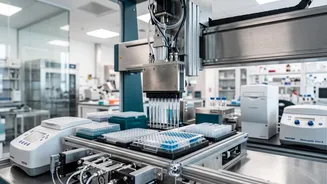
So, how could this actually work? The core idea is that AI can supercharge the slowest parts of medical research. AI models can sift through immense biological datasets to identify new 'targets' for drugs—proteins in a cancer cell you might want to change, for instance. One of the most significant breakthroughs is in understanding proteins. Google DeepMind's AlphaFold, for example, has predicted the structure of over 200 million proteins, a task that was once painstakingly slow. This helps scientists design drugs that fit these protein targets perfectly. Furthermore, generative AI can design millions of potential drug compounds computationally, allowing researchers to test only the most promising ones in the lab, saving enormous amounts of time and money. Anthropic itself has partnered with biotech firms, using its AI to redesign parts of cell therapies and improve potential drug candidates.
From Theory to the Clinic
This isn't just theory; AI is already making a tangible impact. In diagnostics, AI models trained on millions of scans can detect signs of cancer that are imperceptible to the human eye, leading to earlier detection when the disease is most treatable. Some tools can even predict which patients are at high risk for developing certain cancers like pancreatic cancer, even before clear symptoms appear. In treatment, AI is helping to create truly personalised medicine. Instead of a one-size-fitsall approach, AI can analyse the unique genetic makeup of a patient's tumour to predict which drugs will be most effective. The National Cancer Institute in the US, for instance, has a tool that analyses gene activity in individual cancer cells to guide treatment choices. These applications are moving from research labs into clinical trials, showing real promise in improving patient outcomes.
A Necessary Dose of Reality
Despite the optimism, many experts caution that a 10nd year timeline for a 'cure' is extremely ambitious. Critics, including medical professionals and biotech executives, have called the prediction an exaggeration, possibly intended to generate hype ahead of Anthropic's planned IPO. Cancer is not one disease but hundreds of complex diseases, each with its own biology. An AI might discover a promising drug candidate, but that discovery is just the first step. The drug must still go through years of rigorous and expensive clinical trials to prove it is safe and effective in humans, a process AI cannot skip. Furthermore, there are significant hurdles like ensuring the AI models are trained on diverse and high quality data to avoid bias, navigating regulatory approval, and addressing data privacy concerns.