





First, What is SAR?
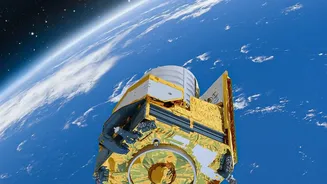
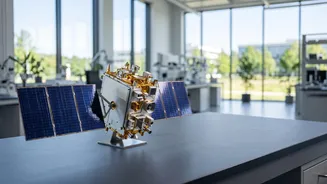
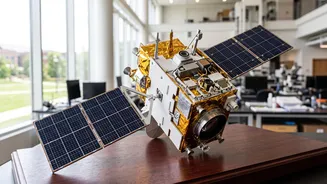
Think of Synthetic Aperture Radar (SAR) as a superpower for satellites. While a regular camera needs light and clear skies to take a picture, SAR doesn't. It's an active system that sends out its own microwave pulses towards the Earth's surface and then
records the signals that bounce back. This allows it to “see” through clouds, fog, smoke, and even darkness. This makes it incredibly reliable for monitoring our planet 24/7. The “synthetic aperture” part is a clever technique where the motion of the satellite is used to simulate a much larger antenna than it could physically carry. This engineering workaround allows it to capture high-resolution images from hundreds of kilometres up in space.
Why ISRO is Betting Big on SAR
ISRO's interest in SAR isn't just academic; it's deeply practical for India's strategic and developmental goals. The joint NASA-ISRO Synthetic Aperture Radar (NISAR) mission is a testament to this commitment. This mission, the first to use two different radar frequencies (L-band and S-band), will systematically map our planet every 12 days, tracking changes on the surface with incredible precision. The applications are vast. SAR is crucial for disaster management, helping to map flood-affected areas, track oil spills, and assess damage from earthquakes and landslides. It's also vital for agriculture, where it can monitor crop health and soil moisture regardless of cloud cover. For national security, SAR provides all-weather surveillance capabilities. Furthermore, it's a key tool for monitoring climate change by tracking deforestation, glacier melt, and changes in ice sheets.
The Training Push and New Opportunities
Recognising the growing importance of this technology, ISRO, through its premier centre, the Indian Institute of Remote Sensing (IIRS), has been actively promoting SAR expertise. The organisation has offered free online courses and in-person workshops on SAR data processing and its applications, targeting students, researchers, and government professionals. These courses aim to build capacity in handling complex SAR data, covering advanced techniques like polarimetry (PolSAR) and interferometry (InSAR), which allow for even more detailed analysis. This training push is a direct signal to the job market: India needs people who can work with this data. The goal is to create a pool of talent ready to exploit the wealth of information from satellites like NISAR and others.
Essential Skills for a SAR-Powered Future
For aspiring space professionals, this focus on SAR provides a clear roadmap. It's no longer just about building rockets; it's about interpreting the data they collect. To enter this field, a strong foundation in remote sensing and digital image processing is essential. Aspiring professionals should focus on acquiring skills in geospatial data analysis, which involves using specialised software (like GIS) to process and interpret radar imagery. Understanding concepts like radar backscatter, interferometry, and polarimetry will be a significant advantage. Furthermore, as the volume of data grows, skills in data science, machine learning, and programming (especially with languages like Python) are becoming increasingly valuable for automating analysis and extracting meaningful insights from massive datasets.
Your Career in the SAR Ecosystem
Expertise in SAR opens doors to a variety of roles within and beyond ISRO. Job titles like 'Remote Sensing Scientist', 'Geospatial Analyst', 'Image Processing Specialist', and 'Data Scientist' are common. These professionals are needed not only at government space agencies but also in a growing number of private space-tech startups that provide Earth Observation data and analytics services. Other sectors also have a high demand for these skills, including environmental management agencies, agricultural technology companies, disaster response organisations, and urban planning departments. As India continues to leverage space technology for national development, those with specialised skills in interpreting advanced data like SAR will find themselves at the forefront of a rapidly expanding and exciting industry.