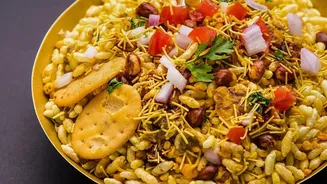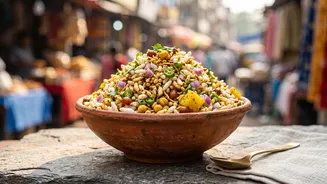






Close your eyes and imagine the sounds of a bustling Indian street. Now, imagine its flavour. That's Jhalmuri: a crunchy, tangy, and spicy puffed rice snack that captures the spirit of Kolkata in every single bite. Here's how to make it.
The Quintessential Bengali Snack
Jhalmuri is more
than just a snack; it's a cultural phenomenon. Found on countless street corners across West Bengal, Odisha, Bihar, and even Bangladesh, its name tells you everything you need to know: 'jhal' means spicy, and 'muri' is puffed rice. It's a symphony of textures and tastes, combining the lightness of puffed rice with the crunch of fried lentils, the sharpness of onions, the tang of tamarind, and the unmistakable pungent kick of raw mustard oil. It requires no real cooking, just a masterful, lightning-fast assembly by a vendor, known as a 'jhalmuriwala'. The magic lies in the fresh, on-the-spot mixing that ensures every ingredient retains its distinct character, creating a snack that is at once complex and incredibly simple. For Bengalis, it is the taste of home, of after-school treats, and of lazy afternoons spent with friends.
Capturing the Street-Style Spirit
The 'street-style' part of Jhalmuri is as much about the process as it is about the ingredients. A true jhalmuriwala is a performer. They work with incredible speed, their hands a blur as they scoop ingredients from various tins and jars into a steel container, or 'dabba'. A quick splash of oils and a sprinkle of secret spice mixes follow. Then comes the most crucial step: the shake. The container is sealed and shaken vigorously for just a few seconds, creating a rhythmic sound that is part of the street food soundscape. This action perfectly coats every grain of puffed rice without making it soggy. The final product is swiftly poured into a 'thonga'—a cone made from recycled paper or newspaper—and topped with a slice of coconut. Recreating this at home means embracing the speed and energy of the assembly. It's not about meticulous placement; it's about confident, energetic mixing.
Your Ingredient Checklist
To build your own Jhalmuri, you need a variety of components that hit all the right notes: savoury, spicy, tangy, and fresh. First, the base: plain, unsalted puffed rice (muri). For crunch and substance, you'll need a good quality 'chanachur' or Bombay Mix, which is a blend of fried lentils, nuts, and sev (crispy chickpea flour noodles). Roasted peanuts add another layer of texture. The fresh elements are non-negotiable: finely chopped red onion, tomato (deseeded to avoid excess moisture), fresh coriander, and green chillies, adjusted to your heat preference. For the signature flavour, you need a trio of spices: chaat masala for tang, a pinch of red chilli powder for heat, and black salt (kala namak) for its sulphurous funk. The two most important liquid elements are a drizzle of tamarind water (or a squeeze of lime) for acidity and, crucially, a teaspoon of raw, pungent mustard oil. This oil is not for cooking; its sharp, almost wasabi-like kick is the soul of the dish.
The Art of Assembly
Making Jhalmuri is an art of speed. Have all your chopped and measured ingredients ready before you start. Find a large bowl or, for true authenticity, a container with a tight fitting lid. Begin by adding the puffed rice to the container. Immediately follow with all the dry ingredients: the chanachur, peanuts, and your powdered spices. Give this a quick toss. Now, add the wet ingredients: the chopped onion, tomato, green chillies, and coriander. The final touch is the liquids. Squeeze in your lime juice or add the tamarind water, and then drizzle the mustard oil over everything. The moment the oil hits, put the lid on your container and shake. Don't be gentle; shake it hard and fast for 10–15 seconds. The goal is to get a light even coating on the muri without letting it sit and absorb the moisture. Open the lid than you should be hit with a pungent fresh aroma. Your Jhalmuri is ready to be served immediately.
Customise Your Creation
While the classic recipe is a thing of beauty than Jhalmuri is endlessly customisable. This is where you can get creative and tailor it to your personal taste. Many vendors will ask if you want it 'mishti' (sweet), 'tok' (sour), or 'raag' (spicy). You can add finely diced boiled potato for a soft starchy element that contrasts beautifully with the crunch. Sprouted moong or black chickpeas (kala chana) can add a healthy earthy note. For an extra layer of texture and freshness some recipes call for thinly sliced or grated raw coconut. You can also experiment with different types of chanachur; some are spicier while others have more nuts and dried peas. The key is to maintain a balance of textures and flavours. If you add something soft like potato make sure you have enough crunchy sev and peanuts to compensate. The perfect Jhalmuri is one that makes you happy.