




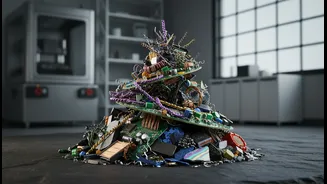



The Treasure in Our Trash
From the smartphone in your pocket to the electric vehicle you might soon drive, modern life runs on critical minerals like lithium, cobalt, nickel, and rare earth elements. These materials are essential for everything from renewable energy and advanced
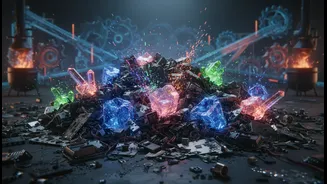
electronics to national defence. For India, which is currently import-dependent for many of these resources, securing a stable supply is a matter of economic and strategic urgency. This has led to the concept of 'urban mining'—recovering these valuable materials from millions of tonnes of discarded electronic products. The potential is enormous; our e-waste contains minerals often in concentrations 10 to 50 times higher than in natural ores. The government has recognized this opportunity, launching initiatives like the National Critical Mineral Mission to boost domestic capabilities and reduce reliance on volatile global supply chains.
The Collection Conundrum
The first major roadblock is simply getting the waste. Currently, over 95% of India's e-waste is managed by the informal sector—a vast, unorganized network of 'kabadiwalas' or scrap dealers. While this network is highly efficient at door-to-door collection, it is not integrated into a formal, scientific recycling system. A significant portion of e-waste never reaches a proper recycling facility because consumers are unaware of how to dispose of it correctly, or find it easier to sell to local collectors. This creates a bottleneck for formal recyclers who need a consistent, large-scale supply of segregated waste to operate efficiently. A January 2026 NITI Aayog report highlighted that while India's e-waste stream holds immense economic value, current systems capture only a fraction of it, with just 5% handled by the formal sector.
A Question of Safety
The dominance of the informal sector brings grave safety and environmental consequences. In thousands of unregulated workshops across the country, workers, often including women and children, dismantle complex electronics with bare hands and crude tools. Hazardous methods like open-air burning of wires to extract copper and using acid baths to recover precious metals are common. These practices release a cocktail of toxic substances—including lead, mercury, cadmium, and carcinogenic fumes—into the air, soil, and water, posing severe health risks to workers and nearby communities. Formal recycling facilities are designed to handle these materials safely, but they cannot compete on cost with an informal system that operates without investment in personal protective equipment, ventilation, or pollution control.
The Economic Equation
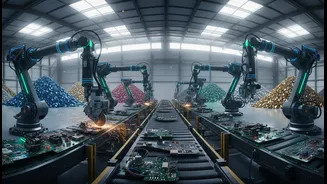
For urban mining to succeed at scale, it must be economically viable. Formal recycling of critical minerals requires sophisticated technology and significant capital investment. However, the inconsistent supply from a fragmented collection system makes it difficult for these plants to achieve the necessary scale to be profitable. Furthermore, they face stiff competition from the informal sector, which operates with extremely low overheads and recovers only the most valuable metals, discarding the rest. While the government has introduced policies like Extended Producer Responsibility (EPR), which holds manufacturers accountable for managing their products' end-of-life, weak enforcement remains a challenge. Until the economics favor formal, safe, and efficient processing, large-scale investment will remain tentative.