




A New Frontier for India
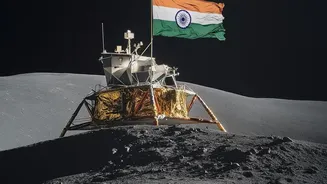
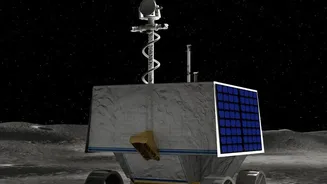
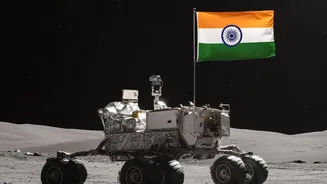
Chandrayaan-4 is not just another mission; it's a quantum leap in complexity and ambition for India's space program. While Chandrayaan-3 successfully demonstrated a soft landing and robotic roving, its successor is designed to perform a full round trip.
The primary objective is to land on the Moon, collect samples of lunar soil and rock (regolith), and return them safely to Earth for detailed scientific analysis. If successful, India will become only the fourth country in history to accomplish this feat, joining an elite club with the United States, the former Soviet Union, and China. This mission is a crucial stepping stone in India's long-term vision, which includes landing an Indian astronaut on the Moon by 2040.
The Prize: Lunar Regolith and Water Ice
The mission is targeting the Moon's south polar region, an area of immense scientific interest. This region is believed to host deposits of water ice in permanently shadowed craters, where sunlight never reaches. The headline-making goal is to collect and bring back not just soil, but soil that potentially contains this pristine, frozen water. Studying these samples on Earth, with equipment far more advanced than anything that can be sent to space, could unlock secrets about the Moon's history and the origins of water in our solar system. Furthermore, this water ice represents a potential future resource. It could be mined for drinking water, breathable oxygen, and even converted into rocket fuel, making the Moon a potential staging post for deeper space exploration.
An Engineering Marvel in Five Parts
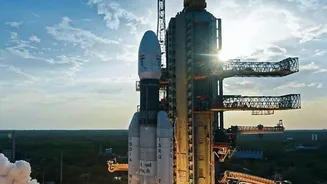
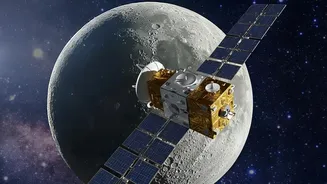
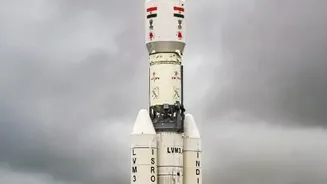
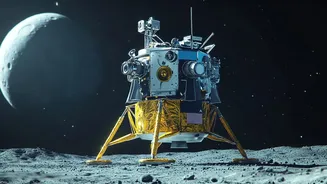
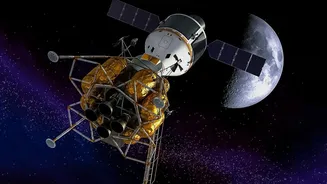
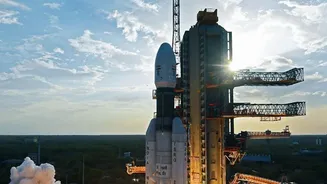
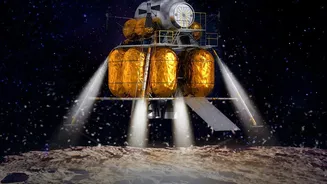
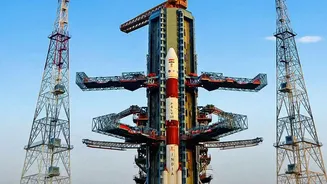
The complexity of Chandrayaan-4 is staggering, requiring five separate spacecraft modules working in perfect concert. Because the entire assembly is too heavy for a single rocket, ISRO plans to use two of its powerful LVM3 launch vehicles. The modules—a Propulsion Module, Descender Module (lander), Ascender Module, Transfer Module, and Re-entry Module—will be launched in two stacks. These stacks will then perform a crucial manoeuvre never before attempted by ISRO: docking in Earth orbit to form the complete Chandrayaan-4 spacecraft before the journey to the Moon begins. This dual-launch and orbital rendezvous strategy is a major technological hurdle that showcases the mission's advanced design.
The Intricate Dance of Return
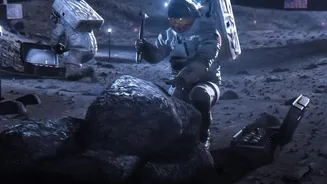
Getting the samples is only half the battle. The return journey is a ballet of precision engineering. After landing, a robotic arm and a drill will collect around 2-3 kilograms of surface and sub-surface samples and place them into the Ascender Module. This module will then launch itself off the Moon's surface—another first for India—and dock with the Transfer and Re-entry modules waiting in lunar orbit. The precious cargo will be transferred to the Re-entry Module for the trip home. The final, fiery challenge is surviving a high-speed plunge through Earth's atmosphere to deliver the pristine lunar samples to scientists on the ground. Every step, from the launch off the Moon to the final landing on Earth, must be executed flawlessly.
Building on a Legacy of Success
Chandrayaan-4, with a projected launch around 2028, is a direct evolution of its predecessors. The experience gained from Chandrayaan-2's orbiter and Chandrayaan-3's landmark landing provides the foundation for this next ambitious phase. ISRO has been systematically building the required capabilities. A key technology, orbital docking, was successfully demonstrated with the SPADEX (Space Docking Experiment) mission, which de-risks a critical part of the Chandrayaan-4 plan. The mission represents not just a scientific goal but also a strategic one, cementing India's status as a major power in space exploration and paving the way for even more complex human and robotic missions in the decades to come.