


What Are Mother Sauces?
Codified by legendary chef Auguste Escoffier, the five mother sauces are foundational recipes from which countless other sauces, known as 'daughter sauces', can be derived. Four of them start with a roux—a simple mixture of cooked flour and fat—and a liquid,
while the fifth is a classic emulsion. By learning the basic technique for each, you gain a framework that allows you to improvise, adapt, and create an incredible variety of dishes without ever feeling tied to a specific recipe.
Béchamel: The Creamy Foundation
Béchamel is likely the mother sauce you're most familiar with, even if you don't know it by name. It’s a creamy white sauce made by whisking milk into a white roux (flour and butter cooked for just a minute or two). Seasoned simply with salt, pepper, and a hint of nutmeg, it's the versatile base for some of the ultimate comfort foods. Add cheese, and it becomes a Mornay sauce, perfect for a classic macaroni and cheese or a croque monsieur. Use it between layers of pasta for a rich lasagne, or pour it over vegetables for a delicious gratin.
Velouté: The Silky Sibling
Translating to 'velvety', Velouté is made almost identically to Béchamel, but with one key difference: instead of milk, it uses white stock (like chicken, fish, or vegetable). This gives it a lighter body but a deeper, more savoury flavour. While not often used on its own, it’s a workhorse in the kitchen. Enriched with cream and lemon juice, it transforms into Sauce Suprême, a classic accompaniment for chicken. It's also the starting point for creamy chicken noodle soup, decadent gravy, and a variety of sauces for poached fish.
Espagnole: The Rich Powerhouse
Espagnole is the richest and most complex of the mother sauces. It begins with a dark roux (cooked longer for a nutty flavour), mirepoix (diced onion, carrot, and celery), tomato purée, and a dark, flavourful stock, like beef or veal. Simmered for hours, it develops an intense, deep flavour. Espagnole is rarely served as is; its true power lies in its derivatives. When combined with more stock and reduced by half, it becomes the legendary demi-glace, a chef's secret weapon for adding incredible depth to pan sauces for steak or rich stews like boeuf bourguignon.
Sauce Tomate: The Familiar Friend
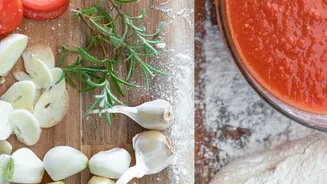
While we all know and love tomato sauce, the classic French version is a bit more structured than a simple marinara. Traditionally, it was built on rendered pork fat and aromatics, sometimes even thickened with a roux, and simmered with stock to create a deeply flavourful base. Today, most versions skip the roux and rely on reduction for thickness. This sauce is the foundation for countless dishes, from pasta and pizza to Creole, Portuguese, and Spanish sauces, each distinguished by unique herbs and spices.
Hollandaise: The Emulsified Marvel
The only mother sauce not thickened with a roux, Hollandaise is an emulsion of egg yolk, melted butter, and an acidic element like lemon juice or vinegar. While it has a reputation for being tricky, a little temperature control is all you need to master this rich, tangy sauce. It's most famous for blanketing eggs Benedict, but its potential is far greater. Add fresh tarragon and shallots, and it becomes Béarnaise, the perfect partner for a grilled steak. With whipped cream folded in, it becomes airy Mousseline sauce, wonderful on fish or asparagus.