






The Artisanal Philosophy
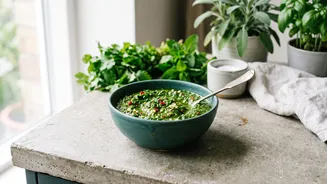
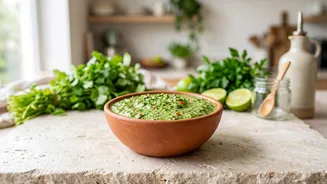
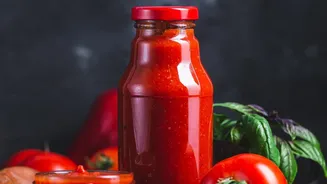
The term 'artisanal' can feel overused, but in the world of condiments, it points to a specific philosophy. It means small-batch production where quality trumps quantity. Artisanal makers are often chefs or food lovers who prioritise flavour development
above all else. They can select ingredients based on taste rather than just cost or uniformity, often sourcing fresh produce directly from farmers. This hands-on approach allows them to make adjustments based on the seasonal variations of ingredients—a batch of chillies might be spicier, or tomatoes might be sweeter. This level of care and attention is difficult to replicate on a large industrial scale, resulting in a product that often has more character and complexity.
The Challenge of Mass Production
Mass-produced condiments face a different set of challenges. The primary goals are consistency, cost-effectiveness, and a long shelf life. To ensure every bottle of sauce tastes and looks identical, whether it was made yesterday or six months ago, manufacturers rely on precise, unvarying formulas. The journey from a factory to a supermarket shelf and then to a customer's pantry can take months. During this time, the product must remain stable, meaning the oil and water components shouldn't separate, and the texture must remain perfectly smooth. To achieve this reliability at scale, manufacturers turn to specific food additives known as stabilisers.
Understanding Chemical Stabilisers
If you read the label on a typical supermarket salad dressing or sauce, you might see ingredients like xanthan gum, guar gum, or polysorbates. These are common stabilisers used to maintain structure and texture. Gums like xanthan, for instance, are incredibly effective thickeners, creating a uniform, viscous consistency with just a small amount. Emulsifiers work by keeping oil and water from separating, which is crucial for creamy dressings and sauces. While many of these stabilisers are approved as safe for consumption, they are functional additives designed to solve a manufacturing problem—not to enhance flavour. Their job is to create a consistent texture and prevent separation during long-term storage.
How Artisanal Makers Achieve Texture Naturally
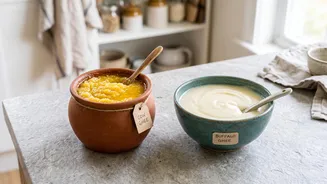
So, how do small-batch producers create stable, pleasant textures without these additives? They rely on culinary techniques and the natural properties of their ingredients. For example, mustard itself is a natural emulsifier, helping to bind oil and vinegar in a vinaigrette. High-quality ingredients like honey, or simply the careful process of slowly cooking down fruits and vegetables, can create thickness and body. The process of creating an emulsion—like slowly whisking oil into a base—is a technique used by chefs to build a stable sauce from scratch. Since artisanal products are often made and sold on a shorter timeline, the need for a shelf life measured in years is replaced by a focus on fresh, vibrant quality.
The Difference You Can Taste
The most significant difference is in the flavour. Artificial stabilisers and thickeners can sometimes create a slightly generic or muted mouthfeel that can mask the nuance of the underlying ingredients. When a sauce isn't filled with gums or synthetic emulsifiers, the pure taste of ripe tomatoes, fragrant herbs, or fiery chillies shines through. The flavour is often described as 'brighter' or more 'vibrant' because you are tasting the ingredients in their most direct form. An artisanal sauce might have subtle variations from batch to batch, reflecting the craft-based approach—a sign that real, fresh ingredients were used.