






The Romance of the Touge
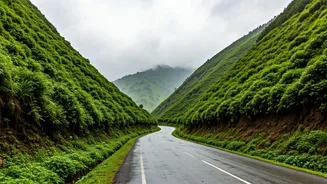
They call it ‘touge’ in Japan—a term for mountain passes that became the backdrop for a subculture of thrilling, high-stakes driving. In India, from the misty climbs of Nandi Hills to the hairpin bends of the Western Ghats, a similar romance is unfolding.
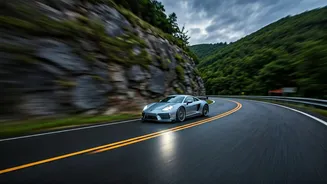
Car and bike enthusiasts are drawn to the challenge these roads present. It’s a test of skill, a dance between driver and machine against a backdrop of stunning scenery. Every perfectly executed turn, every smooth gear change, feels like a personal victory. This isn't just about speed; it's about control, precision, and the feeling of mastering a difficult environment. The appeal is undeniable. It’s a powerful cocktail of freedom and adrenaline, far from the chaotic crawl of city traffic. But the line between a spirited drive and a reckless chase has become dangerously blurred.
Likes, Reels, and Recklessness
The game changed with the arrival of the vertical video. What once might have been a private thrill is now public performance art. Young drivers are increasingly treating public roads as personal film sets for Instagram Reels and YouTube Shorts. The script is often the same: swerving across lanes, executing dangerous overtakes on blind curves, and pushing cars to their limits, all for the sake of capturing a few seconds of 'breathtaking' content. Social media platforms, with algorithms that reward extreme and eye-catching behaviour, have created a perverse incentive where risk translates directly into digital validation. Recent incidents include drivers blocking entire highways to shoot cinematic videos and bikers performing 'no-hands' stunts that end in tragedy. This isn't just about showcasing driving skill anymore; it's a deliberate act of risk-taking, staged and broadcasted for an audience that rewards danger with views and likes.
The High That Kills
To understand the 'why,' we need to look at our own brain chemistry. The intense rush of a high-speed corner or a near-miss triggers a flood of adrenaline and dopamine. Adrenaline sharpens your senses and quickens your heart, preparing you for 'fight or flight', while dopamine delivers a potent feeling of pleasure and reward. Together, they create a 'high' that can be deeply satisfying and, for some, addictive. Psychologists refer to this as sensation-seeking—a personality trait where individuals actively pursue novel and intense experiences, often despite the risks. These individuals may not perceive danger in the same way others do. Their brains may produce less of the stress hormone cortisol and more pleasure-inducing dopamine in chaotic situations, reinforcing the risky behaviour. This chase for a chemical rush can become a compulsion, much like an addiction to a substance.
The Inevitable Crash
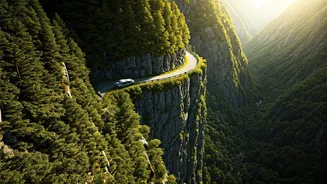
The brutal reality check arrives with the screech of tyres and the sickening crunch of metal. Just this past weekend, a minibus carrying young trekkers plunged into a gorge in Pune's Pabe Ghat, killing two and injuring nineteen others after the driver allegedly lost control on a bend. Weeks ago, a luxury car reportedly travelling at extreme speeds on a Maharashtra highway crashed, killing two of its occupants. These are not isolated incidents; they are the predictable outcomes of a dangerous game. Ghat roads are inherently treacherous. They are narrow, often lack guardrails, and are prone to unpredictable conditions like fog, rain, and landslides. A blind corner hides oncoming traffic, not an open apex. There are no runoff areas, only steep drops. The margin for error is zero. For every stylised, slow-motion video of a car drifting perfectly through a corner, there are countless unfilmed moments of tragedy that serve as a grim counter-narrative.
Beyond Fines and Seizures
Law enforcement agencies across the country are responding. Police in cities like Mumbai, Chennai, and Vizag have intensified crackdowns, seizing dozens of vehicles involved in illegal street racing and dangerous stunts. Cases are being filed not just under the Motor Vehicles Act for dangerous driving, but also under criminal law. Yet, these measures are largely reactive. A lasting solution requires a cultural shift. The automotive community, including media and influencers, has a responsibility to champion safety and skill over reckless speed. Social media platforms must grapple with their role in amplifying dangerous behaviour. But most importantly, the reality check needs to happen within the community itself. The thrill of driving should not be measured by proximity to death, but by the skill and respect shown for the machine, the road, and everyone who shares it.