




The Full Sturgeon Moon and a Lunar Eclipse
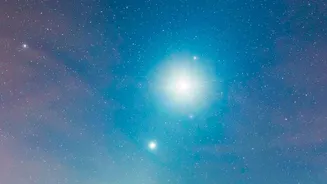
August’s full moon, known as the Sturgeon Moon, will reach its peak illumination on Friday, August 28. The name comes from the giant sturgeon fish of North America's Great Lakes, which were said to be most easily caught during this time. While a full moon’s
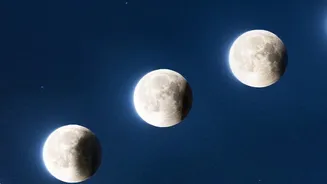
brightness can wash out fainter stars, it offers a beautiful spectacle on its own, especially as it rises. This year, the Sturgeon Moon comes with a special treat: a deep partial lunar eclipse visible across North and South America. On the night of August 27-28, the Moon will pass through Earth's shadow, causing it to dim and potentially turn a reddish hue. At its peak, about 90-96% of the Moon will be covered by Earth's darkest shadow, the umbra, creating a dramatic sight that doesn't require any special equipment to view safely.
Saturn Nears Its Brightest
While the ringed planet Saturn won't reach its official "opposition"—the point where it is closest and brightest for the year—until October 4, late August is an excellent time to get a preview. The planet will be visible for most of the night, rising in the east around sunset and appearing as a steady, yellowish-white point of light. In late August, you can find it high in the sky before sunrise. After the full moon on August 28, the waning moon will pass near Saturn in the sky from August 28-31, making for a lovely celestial pairing. Even a small telescope will begin to reveal its famous rings, which are slowly tilting to become more open to our view after being nearly edge-on in 2025.
The Summer Triangle Overhead
For those without a telescope, one of the easiest and most rewarding sights is the Summer Triangle. This is not a constellation, but a large asterism (a prominent pattern of stars) formed by three of the brightest stars in the sky: Vega, Deneb, and Altair. Vega, in the constellation Lyra, is the brightest of the three and will be almost directly overhead in the mid-evening for observers in the Northern Hemisphere. Deneb (in Cygnus, the Swan) and Altair (in Aquila, the Eagle) form the other two corners of the giant triangle. It’s a perfect landmark for navigating the summer sky and remains prominent throughout the month.
A Glimpse of the Milky Way's Core
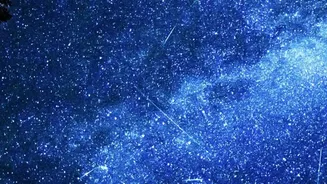
August is one of the best months of the year for viewing the heart of our own galaxy, the Milky Way. To see it, you'll need to escape the light pollution of cities and towns and find a truly dark sky. The two-week window around the new moon (which occurred on August 12) provides the darkest conditions, but there's still opportunity in late August once the bright full moon has set. Look toward the southern horizon for a faint, glowing band of light stretching upwards through the Summer Triangle. What you're seeing is the combined light of billions of distant stars in the galaxy's core. The dark dust lanes that appear to split the band in two, known as the Great Rift, are also visible from dark sites.