





A Celestial Event for India
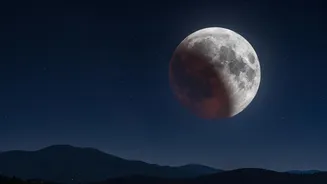
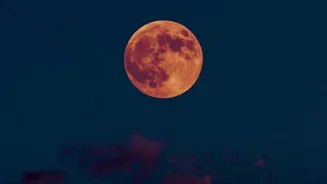
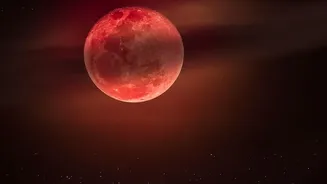
Mark your calendars for a significant astronomical event. In 2026, India will witness two lunar eclipses. While a total lunar eclipse on March 3rd will only be partially visible during moonset in eastern India, a deep partial lunar eclipse on the night
of September 7-8 will be fully visible across the entire country. This partial eclipse will be particularly dramatic, with nearly 92% of the moon passing through Earth's darkest shadow, making it an excellent opportunity for families to observe the spectacle together. Scientifically, a lunar eclipse occurs when the Earth passes directly between the Sun and Moon, casting its shadow on the lunar surface. Unlike a solar eclipse, a lunar eclipse is perfectly safe to view with the naked eye.
The Power of Tradition and Belief
In India, a Chandra Grahan is far more than just an astronomical alignment; it is a moment steeped in spiritual significance. Ancient stories, like that of the demon Rahu swallowing the moon, frame the eclipse as a time of cosmic instability. This has led to a rich tapestry of traditions designed to protect oneself from negative energies. Many families observe fasts, avoiding food and water during the eclipse. It is also a common practice to chant powerful mantras, such as the Mahamrityunjaya Mantra, to foster a positive and protective environment. Temples often close their doors to shield the deities' consecrated spaces from disruptive energies, reopening for purification rituals after the event concludes. These customs, passed down through generations, highlight a deep cultural respect for the rhythms of the cosmos.
Lesson 1: Shadows are Temporary
One of the most powerful metaphors an eclipse offers is the temporary nature of darkness. As the Earth's shadow creeps across the moon, it can feel all-encompassing. This mirrors times in family life when conflicts, misunderstandings, or hardships cast a long shadow, making things feel bleak. The eclipse is a profound visual reminder that this phase will pass. The moon always emerges from the shadow, restored to its full brightness. For families, this teaches resilience. It’s a chance to talk about how problems are temporary and that by sticking together, the light of understanding and harmony will always return.
Lesson 2: The Importance of Alignment
A lunar eclipse is a marvel of cosmic alignment, requiring the Sun, Earth, and Moon to be in a perfectly straight line. This celestial precision can be a beautiful metaphor for family dynamics. When a family is 'in alignment'—sharing values, communicating openly, and supporting one another—it creates a powerful, harmonious unit. Misalignment, on the other hand, can lead to friction and blockages, much like a celestial body out of place would prevent an eclipse. This event encourages families to reflect: Are we aligned in our goals and support for one another? Is our communication clear? The eclipse teaches that great things happen when everyone is on the same page.
Lesson 3: A Time for Reflection, Not Fear
Historically, eclipses were seen as fearful omens. However, we can reframe this powerful moment as an opportunity for introspection and release. Instead of fearing the darkness, we can embrace it as a quiet pause from the hustle of daily life. For families, the eclipse period can be a designated time to disconnect from screens and connect with each other. It's a time to let go of old grievances and negative patterns, just as the moon sheds the Earth's shadow. The spiritual practice of taking a purifying bath after an eclipse symbolizes this renewal, washing away the old and welcoming a fresh start.