

The Search for Cosmic Oceans
For decades, the search for extraterrestrial life focused on Mars. But as our understanding of the universe has grown, so has our target list. The new mantra for astrobiologists is 'follow the water,' and this has led them to the icy outer moons of our solar
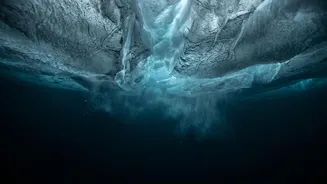
system's gas giants. While their surfaces are frozen and blasted by radiation, evidence strongly suggests that at least two of these worlds, Europa and Enceladus, hide vast, liquid water oceans beneath their icy shells. These are not just frozen wastelands; they are dynamic worlds with internal heat, offering the tantalizing possibility that they harbour the three key ingredients for life as we know it: liquid water, essential chemical elements, and an energy source.
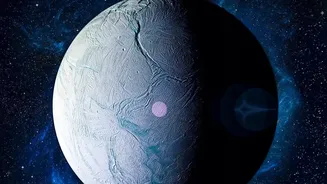
Enceladus: The Geyser Moon
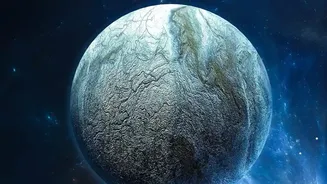
Saturn’s moon Enceladus is small, only about 500 kilometres in diameter, but it punches far above its weight. The game-changing discovery came from the Cassini spacecraft, which witnessed gigantic geysers erupting from deep fissures near the moon's south pole. These plumes shoot water vapor, ice particles, and other materials hundreds of kilometres into space. In essence, Enceladus is actively spewing its subsurface ocean out for us to study. Analysis of these plumes has revealed they contain not just water, but salts, methane, and a variety of complex organic molecules — the building blocks of amino acids. This makes Enceladus incredibly compelling; it’s offering free samples of its potentially habitable ocean, eliminating the need for a complex drilling mission. The presence of these chemicals strongly suggests that hydrothermal vents, similar to those on Earth's ocean floors that teem with life, could be active on Enceladus's seafloor.
Europa: The Hidden Ocean World
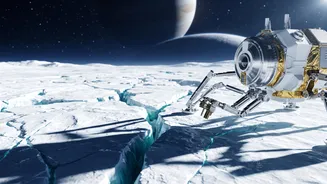
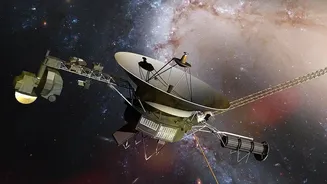
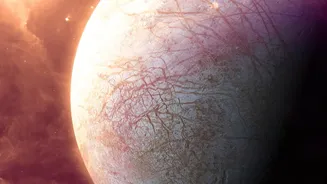
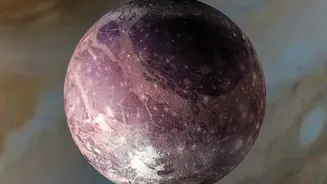
Jupiter's moon Europa presents a different, but equally exciting, proposition. Evidence gathered since the Voyager missions points to a colossal global ocean hidden beneath a thick crust of ice. This ocean may contain more than twice the amount of liquid water found in all of Earth's oceans combined. The evidence for this ocean comes from several sources, including magnetic field data from the Galileo spacecraft, which suggested the presence of a global, salty, conductive layer — most likely a liquid water ocean. The surface, though frozen, shows signs of movement and fracturing, indicating a dynamic interior. Like Enceladus, Europa is heated by the immense gravitational pull of its host planet, Jupiter, creating the potential for a warm, rocky seafloor with hydrothermal activity. This makes its ocean one of the most promising places in the solar system to find a currently habitable environment.
Two Moons, Two Methods
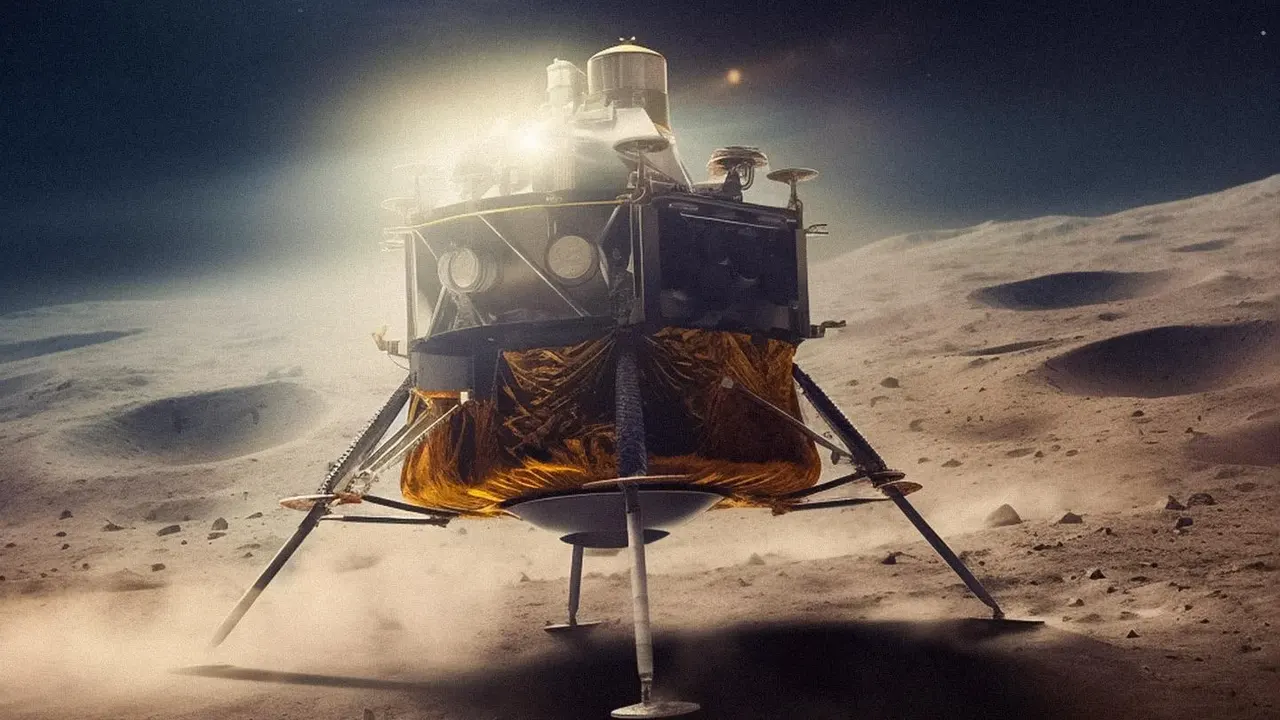
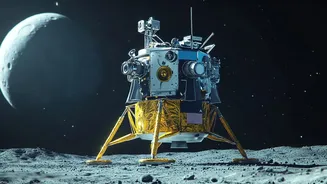
While both moons offer the prospect of discovering alien marine life, they require very different approaches. Enceladus provides a direct sampling opportunity. A spacecraft could fly through its plumes and analyse the contents in real-time with sensitive instruments, looking for complex organic compounds that could be biosignatures. This is the core idea behind proposed flagship missions like the Enceladus Orbilander, which would orbit the moon, sample the plumes, and then land on the surface to analyse the fresh fallout from the geysers. Europa, on the other hand, guards its secrets more closely. Its massive ocean is locked beneath a thick, solid ice shell, possibly tens of kilometres deep. This makes direct access incredibly challenging. The first step is detailed reconnaissance, which is the primary goal of NASA’s Europa Clipper mission. Launched in October 2024, the Clipper will perform dozens of close flybys to map the surface, determine the ice shell's thickness, and confirm the ocean's properties, all while searching for any potential plumes. Finding definitive proof of life on Europa would likely require a future lander capable of drilling through the ice.