






The Reign of the Relatable Hero
When Ranbir Kapoor arrived on the scene, he quickly became synonymous with a specific brand of character: the charming, often confused, urban young man. After a stylized debut in 'Saawariya' (2007), his career found its footing with films that felt deeply
personal and relatable to a whole generation. In 'Wake Up Sid' (2009), he wasn't a larger-than-life hero but Sid Mehra, a privileged and aimless Mumbai boy figuring out responsibility. This was followed by a string of roles that solidified his status as a youth icon. Films like 'Ajab Prem Ki Ghazab Kahani' (2009) and the massively successful 'Yeh Jawaani Hai Deewani' (2013) presented him as the lovable, commitment-phobic friend you knew or the ambitious wanderer you wanted to be. These characters weren't fighting villains; they were wrestling with internal conflicts about career, love, and the quarter-life crisis, making Kapoor the definitive on-screen voice of his generation's anxieties and aspirations.
A Turn Towards Complexity and Pain
Just as the industry had him pegged, Kapoor pivoted towards more complex, tormented characters. The turning point was Imtiaz Ali’s 'Rockstar' (2011). As Janardan, who transforms into the self-destructive musician Jordan, Kapoor channelled a raw, visceral pain that was a stark departure from his previous work. Critics were unanimous in their praise for his intense and soul-baring performance, which earned him numerous awards. This willingness to explore darker shades continued with 'Barfi!' (2012), where he delivered a masterful, heartwarming performance as a deaf-and-mute man, and 'Tamasha' (2015), where he portrayed a man struggling with a dual identity. These roles showed an actor unafraid to shed his commercial, boy-next-door image to embrace artistically demanding and emotionally draining parts. The culmination of this phase was 'Sanju' (2018), a biopic where he uncannily transformed himself to portray actor Sanjay Dutt, a performance that was both a critical and massive commercial success.
Entering the Astraverse and Mythological Epics
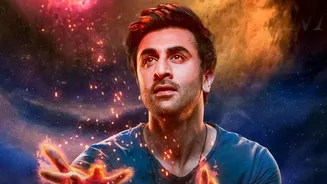
The latest and most dramatic phase of his career has seen him leap from the human to the superhuman. His role as Shiva in 'Brahmāstra: Part One – Shiva' (2022) marked a definitive shift. Here, he wasn't just a man in love; he was a conduit for divine power, a modern man discovering his connection to ancient Indian mythology. The film, a spectacle of visual effects, placed Kapoor at the center of a new cinematic universe rooted in Indian lore. This wasn't just a fantasy film; it was a stepping stone. It prepared audiences to see him in a completely new light, moving beyond the confines of contemporary stories into the vast, timeless world of mythology. The film's success proved that audiences were ready to follow him on this epic journey.
The Ultimate Role: Portraying Lord Ram
Kapoor’s evolution is set to reach its zenith with his role as Lord Ram in Nitesh Tiwari's highly anticipated epic, 'Ramayana'. This is arguably the most significant and challenging role of his career, moving him from playing a character with the power of a god in 'Brahmāstra' to portraying God himself. Taking on a figure as revered as Lord Ram requires more than just acting prowess; it demands a certain gravity and understanding of the cultural and spiritual weight the character holds for billions. Director Nitesh Tiwari noted he chose Kapoor for his ability to portray the deep nuances of the character, who required both inner strength and physical presence. Early glimpses and promotional materials have been met with widespread anticipation, with many, including veteran actor Arun Govil who famously played Ram, praising Kapoor's casting and dedication. By taking on this role, Kapoor isn't just playing a character; he's stepping into a legacy.