





What is an AI Agent, Exactly?
Before diving into specifics, it's crucial to understand what we mean by 'AI agent'. Unlike a simple chatbot that follows a script, an AI agent is a more autonomous system. It can understand a goal, break it down into steps, use various digital tools,
and make decisions to accomplish a task with minimal human intervention. Think of it less like a talking FAQ page and more like a junior employee you can delegate a task to, such as 'book a flight' or 'process a refund'. This ability to act, not just talk, is what separates true agents from their simpler AI cousins.
The Sobering Reality of Consumer-Facing Agents
Despite the futuristic vision, the adoption of consumer-facing AI agents for tasks like ordering food or booking a ride has been minimal. Recent data from late 2026 shows just how small the numbers are. During its busy Halloween week, Uber, a company that handled 320 million trips and deliveries, recorded only four rides booked by an external AI agent. Uber Eats saw slightly more activity, with around 500 orders placed by agents. DoorDash reported a similarly modest figure of 'several hundred orders' placed via agents, while Airbnb CEO Brian Chesky described agent-driven bookings as 'very non-material'. These figures paint a clear picture: consumers are not yet rushing to use AI agents for everyday tasks that are already quick and easy to do in a dedicated app.
Uber's Real AI Revolution is Internal
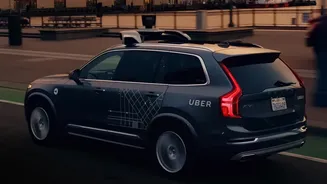
The real story of AI agent usage at Uber isn't about passengers ordering rides, but about how the company builds its software. Internally, Uber has aggressively deployed 'agentic AI' to help its engineers. These agents are not customer-facing but act as tireless coding assistants. They handle repetitive but necessary tasks like code migrations, bug fixes, and documentation, freeing up human engineers to focus on more creative problems. In a few months, Uber saw the share of code written entirely by these agents, with only human review, jump from less than 1% to 8%. Over 90% of Uber's engineers now use AI tools monthly, demonstrating a quiet but profound shift in workflow from writing code to delegating and supervising it.
DoorDash: Agents for Efficiency and Support
DoorDash's strategy also focuses on internal efficiency and support rather than revolutionary consumer interfaces. The company uses AI agents to automate high-volume, repetitive tasks. For example, it partnered with Replicant to automate over 350,000 outbound calls per day for food ordering and tax form verification, tasks that are crucial but difficult to scale with human agents alone. For its delivery drivers ('Dashers'), DoorDash rolled out a generative AI solution that handles hundreds of thousands of support inquiries daily, significantly reducing call volumes and freeing up human agents for complex issues. Internally, its agentic platform helps employees query data and generate reports, integrating directly into tools like Slack to make data access more democratic and efficient.
Airbnb: Cautious Steps Toward an AI Travel Agent
Airbnb is taking a more measured and forward-looking approach. While third-party agents are not making a dent in bookings, the company is developing its own proprietary AI travel agent, slated for release in the first half of 2027. This agent aims to be more than a simple booking tool. The vision is for a rich, interactive interface that can help guests plan entire trips, change reservations, and get 24-hour safety support. In the meantime, Airbnb has successfully used AI to streamline its customer service, with AI assistants now able to resolve nearly 45% of support tickets without human intervention. This has allowed the company to improve service while reducing costs, showing a practical, immediate return on investment.
Why the Gap Between Hype and Reality?
The disparity exists for several reasons. First, implementing reliable, autonomous agents is incredibly difficult and expensive. Issues like data privacy, system integration with legacy software, and the risk of 'hallucinations' (when an AI makes things up) make companies cautious, especially in customer-facing roles where a mistake can damage the brand. Second, as the Uber and DoorDash data shows, many existing app-based services are already highly efficient. An AI agent has to offer a significantly better experience to change entrenched user habits. Finally, many companies are finding the most immediate and measurable value in using AI agents internally to boost productivity and cut operational costs, far from the public eye.