






A New Space Race Begins
India’s space ambitions are no longer solely in the hands of the storied Indian Space Research Organisation (ISRO). A vibrant, privately-funded ecosystem is taking flight, aiming for the stars. After years of development, homegrown startups are now preparing
to do what was once the exclusive domain of national space agencies: launch rockets into Earth's orbit. This isn't just about building rockets; it's about launching a new, self-reliant commercial space industry that can compete on the global stage. The sound you hear is the countdown to a new era for Indian technology and enterprise.
The Trailblazers: Skyroot and Agnikul
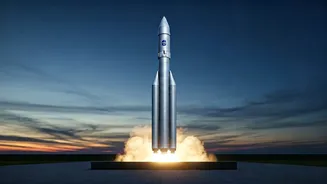
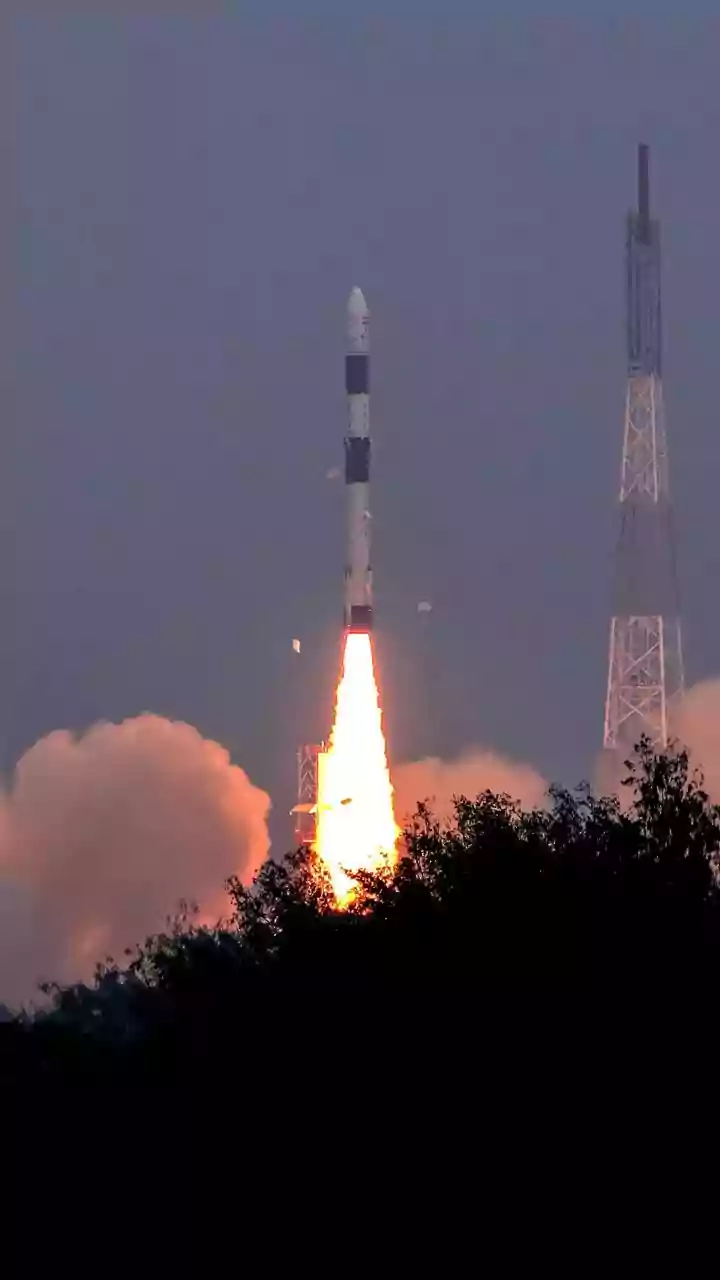
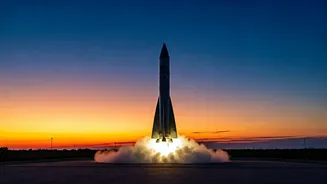
Leading the charge are two formidable startups: Skyroot Aerospace and Agnikul Cosmos. Hyderabad-based Skyroot Aerospace is set to make history with its Vikram-1 rocket, India's first privately developed orbital-class launcher. The launch window for its first test flight, named 'Mission Aagaman' (Arrival), is scheduled between July 12 and August 4, 2026. This mission follows Skyroot's successful suborbital flight of Vikram-S in 2022, which was the first private rocket to reach space from Indian soil. The Vikram-1 is a seven-storey, multi-stage vehicle designed to carry satellites weighing up to 350 kg into low Earth orbit. Not far behind, Chennai-based Agnikul Cosmos, incubated at IIT-Madras, has also demonstrated its prowess. In May 2024, it successfully launched 'Agnibaan SOrTeD', a suborbital technological demonstrator. The flight was a landmark achievement, being the first in India to use a semi-cryogenic engine and the world's first to fly with a single-piece, 3D-printed engine called Agnilet. Agnikul is developing its Agnibaan launch vehicle to be highly customizable, capable of carrying payloads up to 300 kg to a 700 km high orbit.
The Government's Guiding Hand
This private-sector boom didn't happen in a vacuum. It is the direct result of deliberate and strategic policy reforms by the Indian government. The establishment of the Indian National Space Promotion and Authorisation Centre (IN-SPACe) in 2020 was a watershed moment. IN-SPACe acts as a single-window agency, streamlining regulations and enabling private companies to use ISRO's world-class facilities, from launchpads to testing labs. The Indian Space Policy 2023 further clarified the roles, defining ISRO as the nation's primary R&D arm, while empowering private entities (Non-Governmental Entities or NGEs) to undertake end-to-end space activities. This policy shift was designed to transform private players from mere component suppliers for ISRO into independent, innovative forces, fostering competition and efficiency. The government's vision is clear: to grow India’s share of the global space economy from its current 2% by unleashing entrepreneurial energy.
More Than Just a Launch
The implications of these first orbital flights are immense. A successful launch by Skyroot will make India one of a handful of countries with private orbital launch capability, a major strategic and commercial milestone. It signifies the arrival of an industry that can offer 'on-demand' and cost-effective launch services for the booming global small satellite market. This capability is the cornerstone of a much larger space economy, encompassing satellite manufacturing, ground station services, and data analytics. Innovations like Agnikul's 3D-printed engines are not just impressive feats of engineering; they fundamentally change the economics of space access. This technology drastically reduces manufacturing time, complexity, and cost, allowing for a higher frequency of launches. As Skyroot's CEO Pawan Kumar Chandana noted, building a rocket is the toughest feat in engineering, and doing it privately in India demonstrates a new level of technological maturity. This is India's private sector proving it has the 'right stuff'.
India's Next Big Flex
So why is this India's 'next space flex'? Because it's about more than just business. It's a powerful statement of national capability and ambition. For decades, India has been a space-faring nation; now, it is transitioning into a true space power with a dual public-private engine. Having a domestic, private launch capacity reduces reliance on foreign rockets, enhances national security, and creates a high-tech job multiplier effect. As these companies move from test flights to commercial operations, they will attract global customers and investment, bolstering India's economic and technological credentials. The successful suborbital launches by Skyroot and Agnikul were the 'Prarambh' (Beginning); the upcoming orbital missions are the 'Aagaman' (Arrival). It's the moment India's private space industry stops emerging and starts arriving on the world stage, ready to flex its technological muscle.