




The dream of autonomous ships navigating the world’s oceans is closer than ever, but it comes with a monumental challenge: how do you test a self-driving container ship without massive risk and cost? IIT Madras has unveiled a powerful answer.
The High Stakes of the High Seas
More than
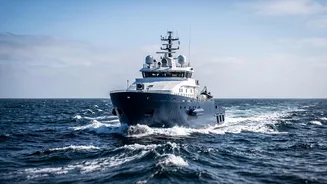
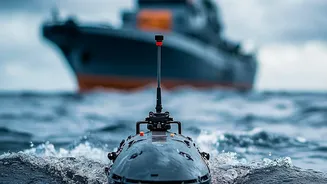
80% of global trade travels by sea, making the shipping industry the backbone of the world’s economy. In this high-stakes environment, companies are racing to develop autonomous vessels that promise to be safer, more efficient, and more cost-effective. The logic is compelling: automation can reduce human error, which is a factor in a majority of maritime accidents, and optimise routes to save fuel. However, the journey from algorithm to reality is perilous. Testing an unproven navigation system on a multi-million-dollar vessel in unpredictable weather and busy shipping lanes is incredibly complex, expensive, and potentially dangerous. A single coding error could lead to catastrophic collisions or environmental disasters, making real-world trials a logistical nightmare that slows down innovation.
Enter SeaNav: A Digital Twin for the Ocean
Researchers at the Indian Institute of Technology Madras's Department of Ocean Engineering have developed a game-changing solution called SeaNav. It is a real-time digital twin platform designed specifically to test, validate, and train autonomous maritime navigation systems in a completely virtual—and completely safe—environment. Instead of deploying physical ships, developers can use SeaNav to simulate a vast range of scenarios. The platform, built using the Unity3D engine, creates a highly realistic digital replica of the maritime world, complete with accurate ocean wave physics, vessel movements, and complex navigation conditions.
How the Virtual Proving Ground Works
The power of SeaNav lies in its incredible detail. It is far more than a simple video game; it's a sophisticated simulator that combines digital twin technology with artificial intelligence, advanced sensor fusion, and virtual reality. To ensure the simulation's accuracy, the research team calibrated the system using a benchmark model of a 320-meter-long tanker, a common size for commercial shipping. This means that the results generated within the virtual environment closely mirror how a real ship would behave under the same conditions. Navigation algorithms can be pushed to their limits, tested against simulated storms, heavy vessel traffic, and complex port manoeuvres, all without risking a single piece of actual hardware. This allows for rapid iteration, debugging, and training in a fraction of the time and cost of physical tests.
A Boost for India’s Maritime Vision
SeaNav is not just a technical achievement; it's a strategic asset for India. The platform directly aligns with national initiatives like the 'Sagarmala Programme' and 'Maritime India Vision 2030', both of which emphasize the need for smart ports, digital technologies, and autonomous systems to modernise the country's maritime sector. Dr. Suresh Rajendran, an Associate Professor at IIT Madras involved in the project, noted that the platform can significantly strengthen safety at major Indian ports, including Chennai, Mumbai, Visakhapatnam, and Kochi. By fostering the development of AI-assisted navigation, SeaNav can help reduce the risk of collisions and groundings in these critical hubs.
Beyond Testing: Broader Applications
The potential applications for SeaNav extend far beyond the initial testing of commercial cargo ships. Its ability to simulate multiple vessels at once makes it a valuable tool for a range of complex operations. For instance, it could be used for coastal surveillance, allowing authorities to model and predict vessel movements in sensitive areas. It also has significant potential for planning and executing search-and-rescue missions, where coordinating multiple ships and aircraft is critical. Furthermore, the platform's capabilities are being explored for maritime defence applications, where training for complex naval scenarios can be conducted safely and repeatedly. By enabling smarter navigation strategies, the technology also promises environmental benefits by helping reduce fuel consumption and lowering the risk of incidents like oil spills.